

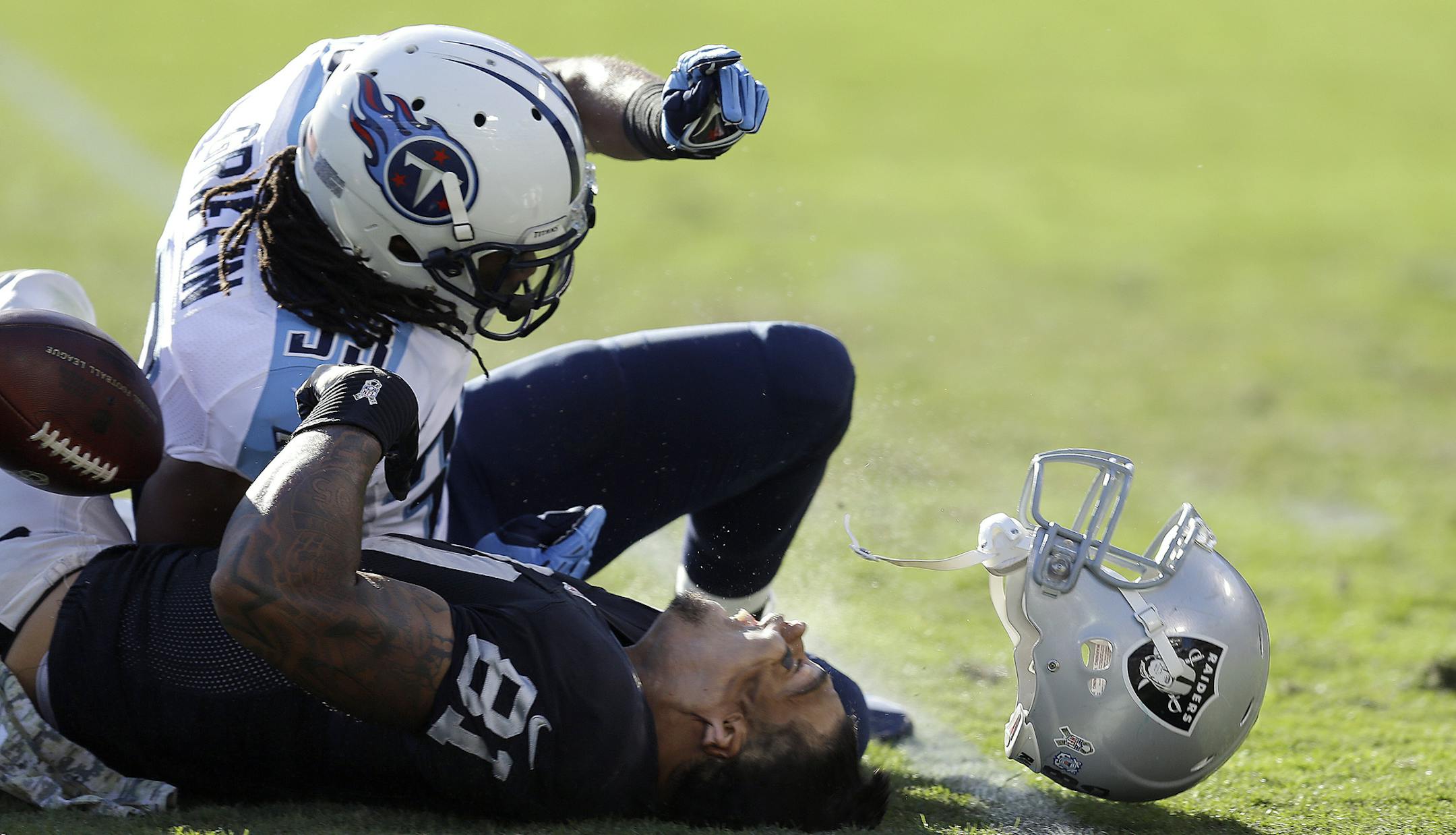
The play ended, almost. The ball carrier was face up on the turf with one of my defensive colleagues clutching his legs, but the whistle had not blown. I was in motion, arriving just a little late from the far side. I could've stopped or dodged. Instead, I dove at the halfback. I heard the whistle in midair. My right shoulder bashed him at the intersection of his left shoulder and neck. He yelped in pain. Now it was over. As I rose, I saw his face contorted. For a moment I was afraid and ashamed. But exhaling a curse, he also rose and "shook it off," as our high school coaches were fond of ordering us to do.
Why didn't I check my rush? Short answer: It wasn't required; the whistle hadn't sounded. A blatant rationalization. The play was over, especially during that practice scrimmage. My superfluous dive — I made no attempt to strip the ball — was mean-spirited. I punished the running back. Why? Perhaps because a coach had recently chided me: "You're not mean enough to play defense." You want mean? I can do that.
What seems so alien to me now, as a relatively fragile-framed senior citizen, is all the hitting. Hit, hit, hit! ("Great hit! That's the way! Kill 'em!") Smacking people was entirely routine. A "good hit" was pleasurable, whether delivered or absorbed, a kind of militant hug. I have an image of lying on the grass, my vision rimmed by a dark band alive with little sparkles, and someone looming over me saying, "You got your bell rung? Get up and give it back!" I suppose I tried. Now, of course, it seems brainless.
More than three decades later, as I studied my MRI scan prior to surgery on a ruptured disk, the halfback's face came to mind. My injury was unrelated to football, but it had occurred years before, finally manifesting itself as debilitating pain. I realized I could've easily inflicted that brand of spinal injury on the running back with my late/not-late hit, and I wondered: was he in pain all these years later? Had he undergone surgery as he aged? Was he disabled? Did he remember my assault and credit it as cause? I felt a twinge of shame all over again.
Still, I also recall the day, at age 10 or 11, when I found an autographed 8-by-10 glossy photograph of Fran Tarkenton. I snatched it up from the sidewalk, joyously astonished by good fortune. A few years later, I was thrilled to open a letter from John Gagliardi, the legendary coach at St. John's University, soliciting me to play for him: "You have been recommended to us as the type of young man who can help us continue our proud football tradition." Curiously, I doubted it, and didn't reply. To my sorrow at the time, I knew I still wasn't mean enough — had never repeated the kind of hit I'd laid on that running back. Vince Lombardi, coach of the Green Bay Packers, said football is "a game that requires the constant conjuring of animosity." Apparently I wasn't up to the task, and through the end of my high school years was privately embarrassed by this failure.
Nevertheless, I remained a football fan, and one golden autumn day in the 1980s, I was watching a Vikings game on TV. Herschel Walker, the new hope for the offense, had just fumbled the ball and lost it — again. I launched into a rage, yelling at the screen, practically spitting. Then I stopped. I heard myself. More important, I sensed my heart rate, the tautness of my body, a buzzing in the ears. That was nuts. Could it possibly matter who won a football game? A fumble was worth damaging my health? It's well-known that such bursts of wrath on a regular basis can shorten your life. I switched off the TV, walked out into the sunshine and fall splendor, and never returned. Back in the '70s, Vikings quarterback Joe Kapp wondered: "Is it normal to wake up in the morning in a sweat because you can't wait to beat another human's guts out?" I decided it wouldn't be my normal to rage about professional football, and unless occasionally compelled by a social event and the demands of courtesy, I haven't watched a Vikings game since.
But I haven't stopped thinking about football. In America you can't avoid it — our culture is saturated with football. The Super Bowl, case in point, has evolved into a de facto national holiday, sharing important characteristics with Christmas: It has measurable economic impact, and just as non-Christians gather for a meal or party on Dec. 25, so people who have no intention of watching the game — except perhaps the commercials — gather on Super Bowl Sunday. The National Football League enjoys statutory exemption from some antitrust laws, and state and local governments compete to expend prodigious amounts of public revenue on stadiums that fabulously rich team owners could bankroll themselves.
There is some attention being paid these days to the neurological damage suffered by many players from high school on up, and especially by professionals, who've been hitting and being hit for a couple of decades. As early as 1960, Frank Gifford, famed running back and later colleague of Howard Cosell, quipped: "Pro football is like nuclear warfare. There are no winners, only survivors." Yet we love it. Gifford himself, despite the nuclear-war analogy, helped to boost and glamorize the game via the potent social catalyst of "Monday Night Football," one of the most popular and lucrative television slots of all time.


