

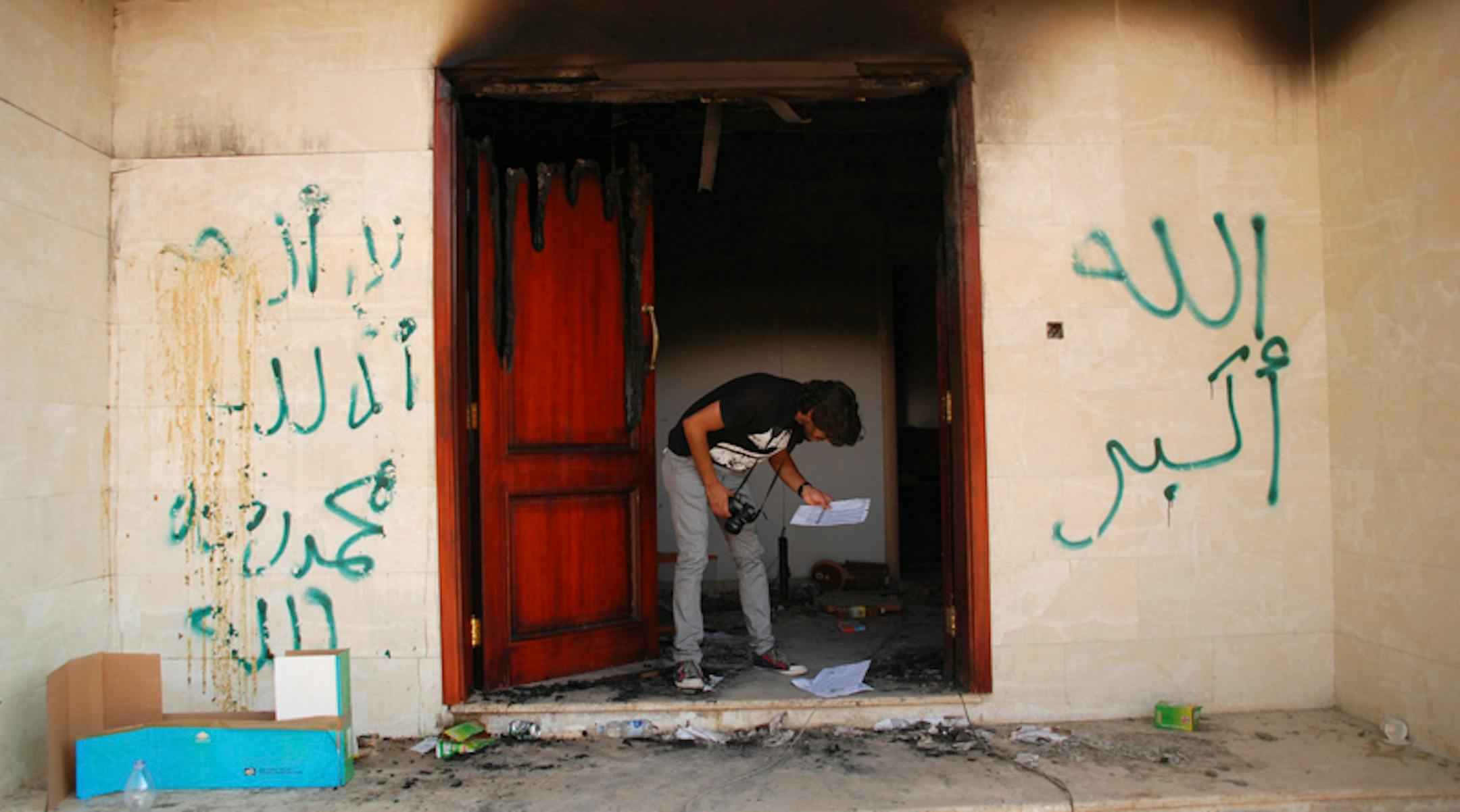
Foggy Bottom, the nickname for the State Department, could also describe the cloudy circumstances surrounding the public dispute between the department and CNN over the private journal of Chris Stevens, the slain U.S. ambassador to Libya. The spat hasn't just split the two internationally focused institutions; it has divided some media ethicists and editors as well.
First, the headline news version of the story: CNN reporter Arwa Damon, checking out the charred consulate, found Stevens' journal, which reportedly contained candid concerns about the security situation in Libya. CNN claims it alerted Stevens' family "within less than 24 hours" and arranged for the journal to be returned.
A phone conversation between a senior editorial director at CNN and Stevens' brother seemed to clarify usage rules. Or so both sides thought. Philippe Reines, a State Department spokesman, claimed that CNN agreed not to use any of the information without the family's permission.
A news organization has "two choices," Reines told me. "You explain your journalistic responsibility and obligation to report. Or say 'do we have your permission?' Don't go down the second road, and then five days later invoke journalistic responsibility and obligation."
CNN sees it differently. In a statement, it said, "CNN did not initially report on the existence of a journal out of respect for the family, but we felt there were issues raised in the journal which required full reporting, which we did. We think the public had a right to know what CNN had learned from multiple sources about the fears and warnings of a terror threat before the Benghazi attack which are now raising questions about why the State Department didn't do more to protect Ambassador Stevens and other U.S. personnel. Perhaps the real question here is why is the State Department now attacking the messenger. As we said, we had multiple sources on [Anderson Cooper's show Wednesday night]. The reason CNN ultimately reported Friday on the existence of the journal was because leaks to media organizations incorrectly suggested CNN had not quickly returned the journal, which we did. ... Out of respect to the family, we have not quoted or shown the journal."
Questions to journalistic observers drew decidedly different responses. For instance, what should Damon have done with the journal?
"The consulate was not secured; they didn't steal it," said Jane Kirtley, director of the Silha Center for the Study of Media Ethics and Law at the University of Minnesota. It's "a grey area of ethics," Kirtley continued. "Some say you never remove anything from a scene. But the role of a journalist is not to be an investigator for the government."
Bill Keller, former executive editor (and currently a columnist) for the New York Times agreed: "Count me in the 'fair game' camp. This isn't 'CSI,'" Keller said in an e-mail exchange.


