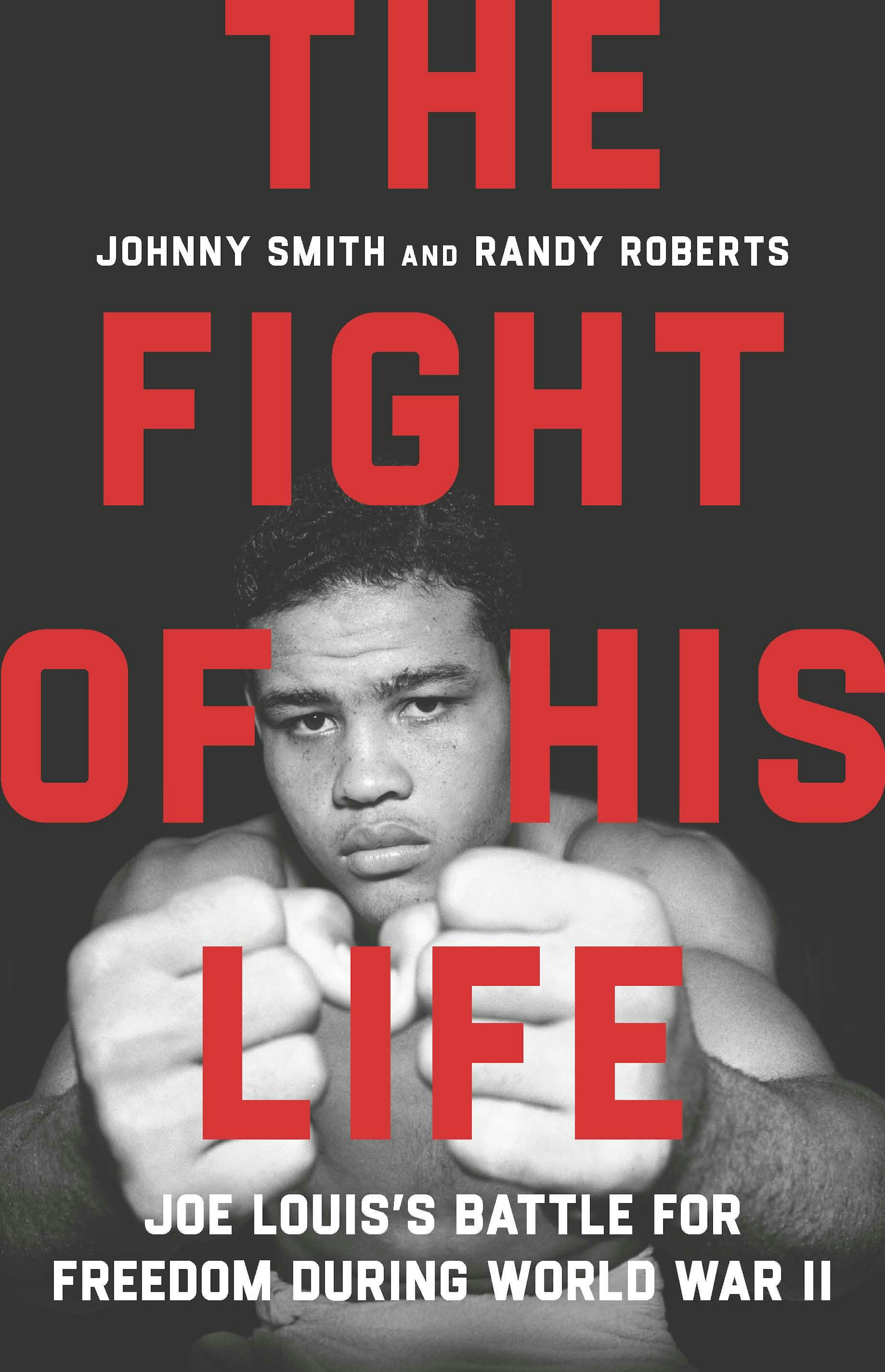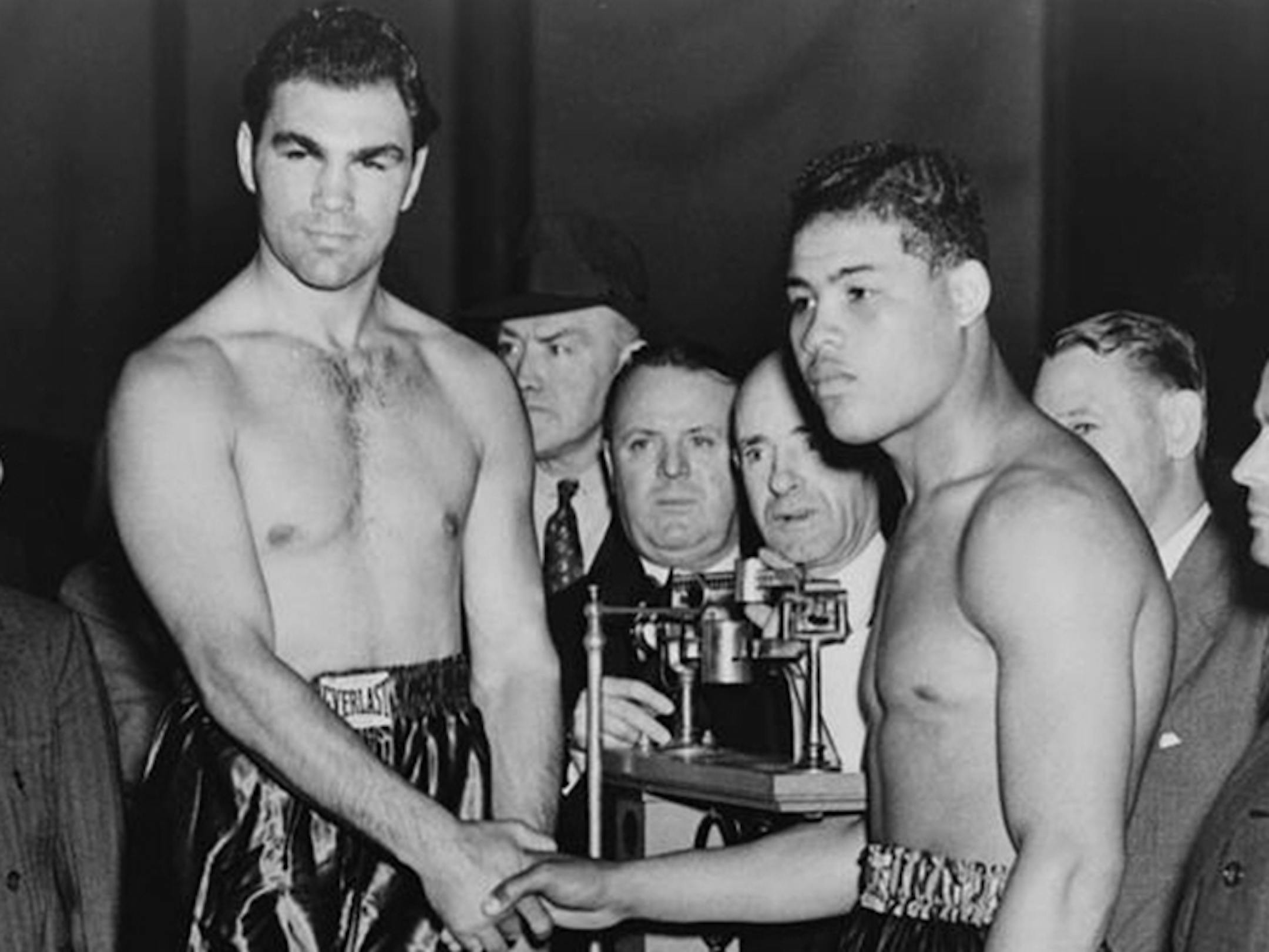
On Jan. 9, 1942, heavyweight champion Joe Louis won his 20th straight title defense, knocking out Buddy Baer in the first round. The next day, he enlisted in the Army.
For good measure, Louis donated his $47,000 boxing paycheck to the military. He was “a loyal American,” Johnny Smith and Randy Roberts write in their terrific new biography, “The Fight of His Life,” and in time he would be “the first prominent Black athlete turned activist.”
Like previous biographies of the boxer, the book, subtitled “Joe Louis’s Battle for Freedom During World War II,” underscores his patriotism. But Smith and Roberts take the story further, discrediting the myth that Louis never spoke out against racism — a misperception that moved Muhammad Ali and others to chide him. In reality, “the war would test his beliefs.” And as the global conflict entered its final act, “his experience in a segregated army sparked his political awakening.”
To help us understand why this matters — and how Louis’ largely forgotten public comments about bigotry influenced President Harry S. Truman’s executive order ending segregation in the military — the authors vividly describe the central role he played in American life after winning the heavyweight title in 1937.
Though it’s maybe a reach to describe him as “incontrovertibly” the era’s best-known athlete — Babe Ruth and 1936 Olympic hero Jesse Owens were right there with him — Louis ruled what was then one of the nation’s favorite sports. When he fought, one reporter wrote, “streets emptied, and commerce stopped and America huddled by its radios.”
To Black Americans, he was a defining figure, a muse for writers Maya Angelou, Langston Hughes and Richard Wright, the last of whom regarded Louis’ ring dominance as a rousing answer to “four centuries of repression.”
Concentrating on 1942-45, Smith and Roberts recount Louis’ recruitment for what amounted to a propaganda mission for President Franklin D. Roosevelt. The U.S. armed forces were segregated, right down to different blood banks for white and Black soldiers. But sergeants Louis and “Sugar” Ray Robinson — the future welterweight champ was also in the Army — toured widely on the government’s behalf, putting on boxing exhibitions and bucking up troop morale. Louis didn’t see combat, because he was “more valuable to the War Department on a stage than in a foxhole.”
Along the way, the authors write, Louis learned of racist attacks by white soldiers on their Black peers and saw numerous other instances of discrimination. After Black soldiers were barred from ringside seats at a match, he refused to box for troops if it happened again.