

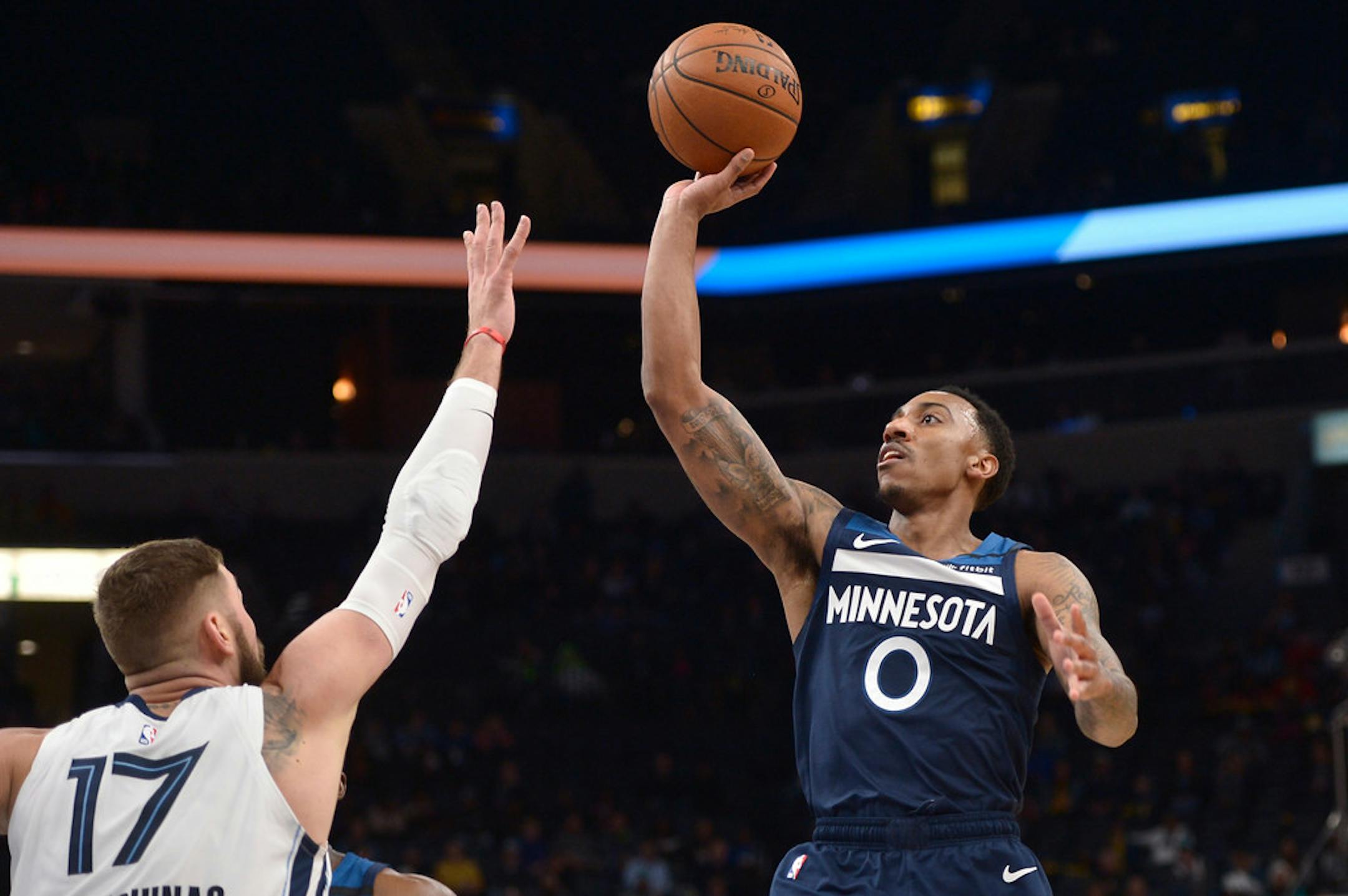

Jimmy Butler was traded to the Timberwolves on draft night in 2017, which seems like forever ago but really was just 2 1/2 years in the past.
The next day, Jeff Teague said back then, he told his agent he wanted to sign with the Timberwolves to team up with Butler.
Not long after that, he was introduced as the Wolves' new point guard — owner of a three-year, $57 million deal bestowed upon him by basketball boss and coach Tom Thibodeau.
At his news conference, one far more subdued than the Mall of America theatrics from Butler, Teague said this: "I've had an opportunity to play against Thibs and see how hard he coaches his guys and how well-coached his teams were. It was a perfect fit for me and at this stage of my career, I wanted to win and I wanted to do it in a special way."
What's strange is that as I pondered Thursday's trade that sent Teague to Atlanta, I had already written the headline above — about Teague's tenure being all about the wrong fit — before I unearthed that ironic quote.
His first year here was his best, but it was filled with nonstop comparisons to Ricky Rubio — the beloved yet flawed point guard Thibodeau had not long before dispatched to Utah for a first-round pick (that became Josh Okogie).
In an odd way, the Rubio/Teague comparisons reminded me of two decades ago, when Stephon Marbury forced his way out and Terrell Brandon was ushered in. Marbury was ferocious with his drives to the basket, which often ended with contorting layups or last-second dishes for dunks. Every possession was an event.
Brandon was almost guaranteed to use those same high screens to shoot a 17-footer. (Seriously: 47% of Brandon's field goal attempts in 2000-01 came from between 16 feet and the three-point line, a fact that would probably give Ryan Saunders night terrors if he coached through it).


