

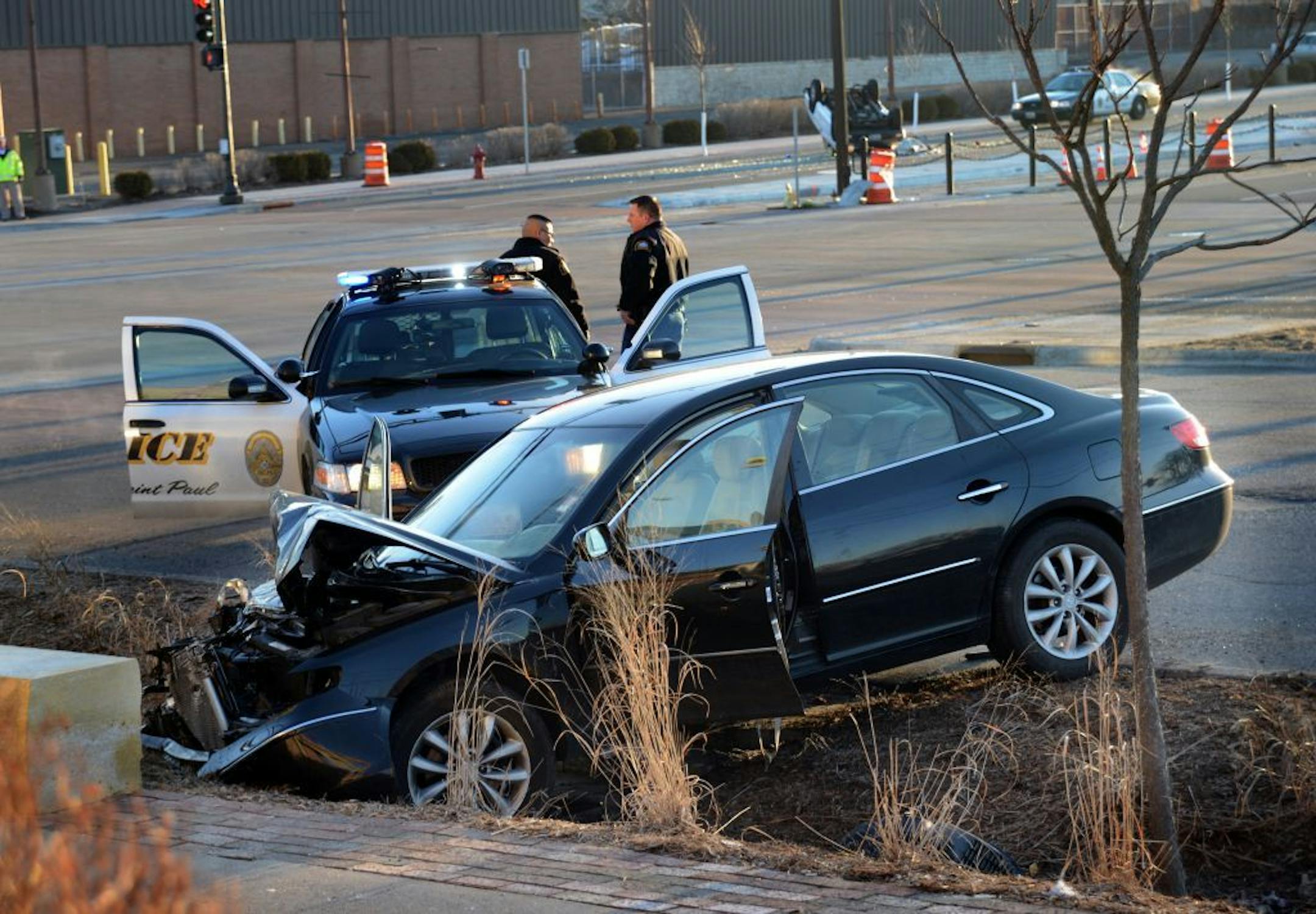
High-speed police chases have been in the news lately. Those that are concluded without significant injury or deaths seldom grab headlines. We might refer to them as "safe pursuits," but a safe pursuit is a little like "safe bullets." At minimum, every pursuit places the fleeing motorist and the officer(s) at significant risk.
It's been 23 years since I left law enforcement. But chases have remained a thought- and emotion-provoking conundrum for me. I recall one pursuit for excessive speed that found me emerging from the east end of the Lowry Hill tunnel, from dry payment onto a snow-slippery surface, causing my squad to pitch nearly sideways at 80 miles per hour. I don't regret my decision to end that pursuit seconds later, my stomach in my throat. I don't know what became of the driver I was pursuing, though I doubt he was fleeing from a serious crime. That one got away, but I never regretted going safely home to my wife and kids.
Another time I attempted to stop a car after a registration check confirmed it was stolen. It was a harrowing chase, the driver exhibiting no regard for his well-being or that of other motorists. At one point, after losing control of his car and clipping street signs like a combine going through corn, he blew a stop sign on a busy intersection, avoiding a broadside collision with a garbage packer by milliseconds. He fled as if his life depended on it, or in disregard of it, into opposing traffic, over medians and through yards. The chase ended only after he lost control again, went airborne and crashed broadside into a utility pole. He was just slightly injured, but left thousands in property damage in his wake.
Was he also fleeing a murder or robbery? No. Overwhelmingly, fleeing motorists are wanted for little more than misdemeanors or low-level felonies like car theft.
I write not to condemn high-speed pursuits or to advocate for the "no-chase" policies some departments across the country have adopted. I remember mocking those agencies, predicting that "gas pedal amnesty" would result in a huge uptick in the numbers of fleeing motorists. In fact, statistics for departments I'm familiar with never did bear out this prediction. The vast majority of drivers stop, aware or unaware of local pursuit policies.
In most cases, the decision to flee is probably a split-second, fear-induced, opportunistic urge. Fleeing at a high speed from law enforcement is a highly irrational action. The decision to give chase is a much more complex one.
There are psychological, physiological and even sociological factors that impinge on an officer's decisionmaking at the moment he or she decides how to respond. At the core is a feeling of contempt for someone who would flee. Another baseline motivation to chase is that "it's my job."
Interestingly, I've never heard of a police officer formally disciplined for "failing to give chase" as long as reasons can be articulated. And given the inherent risks to life and property, these are fairly abundant.


