

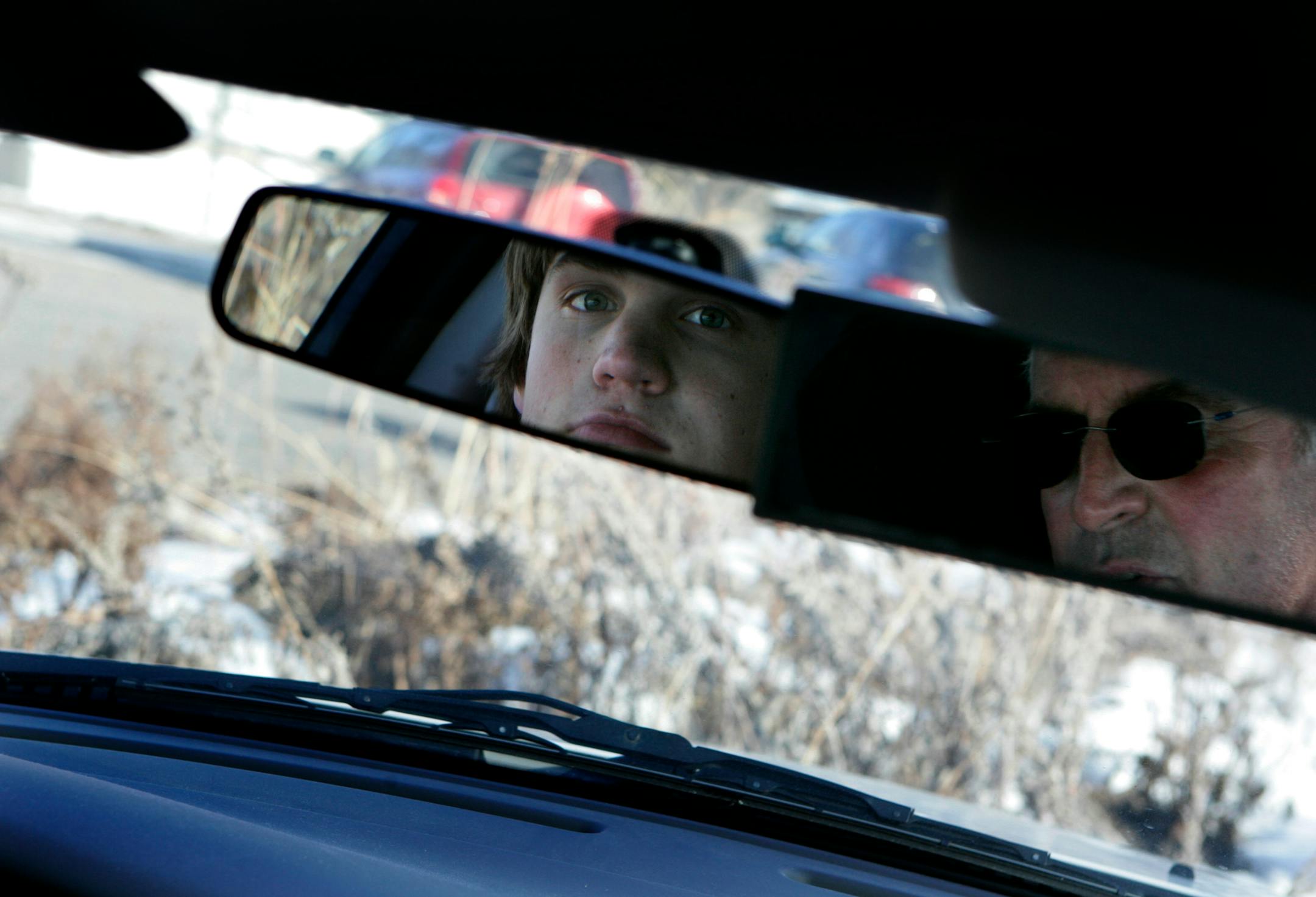
Motor vehicle crashes are the leading cause of death for teens between 16 and 19 in the United States, but surprisingly a good number of teen drivers feel they are helpless to prevent them.
Results of a study conducted by State Farm and the research firm Harris Interactive were released last week and found that just about half of teen drivers feel that they have no control over whether they are involved in a crash — fatal or otherwise — while behind the wheel. And just as many are unaware of the dangers of their inexperience.
That is troubling to Gordy Pehrson, a traffic safety coordinator with the Minnesota Department of Public Safety's Office of Traffic Safety. The findings come as we are in the throes of the "100 Deadliest Days of Driving," the period from Memorial Day to Labor Day when the number of crashes involving teens tends to rise.
"It is alarming that they don't feel they have control over that, because they do," Pehrson said.
Of course, eliminating distractions such as texting, drinking and teen passengers is a start. But perhaps a more rigorous driver's education program and tougher testing are needed. Last year, 40 people younger than 19 died on Minnesota roads and another 3,844 were injured, according to Minnesota Office of Traffic Safety.
To get a driver's license in Minnesota, those younger than 18 must complete 30 hours of classroom instruction in a program approved by the Department of Public Safety (DPS). They also must take at least 6 hours of behind-the-wheel training and complete 30 hours of driving supervised by a parent or guardian. The final steps are to take and pass a knowledge test and a road test. Those 18 and older are exempt from driver education programs and need only pass the knowledge and road test, Pehrson said.
The knowledge and road tests only cover "minimum driving standards" such as parallel parking and signaling. Tests don't evaluate significant skills and abilities such as making a lane change at highway speeds, reaction to other vehicles that pull into one's path, or driving in snowy or foggy conditions.
The typical driver's test for teens or novice drivers takes about 15 to 20 minutes, and it does not take candidates onto the highway. For that to occur, tests would take much longer, meaning the DPS would need to hire more staff.


