

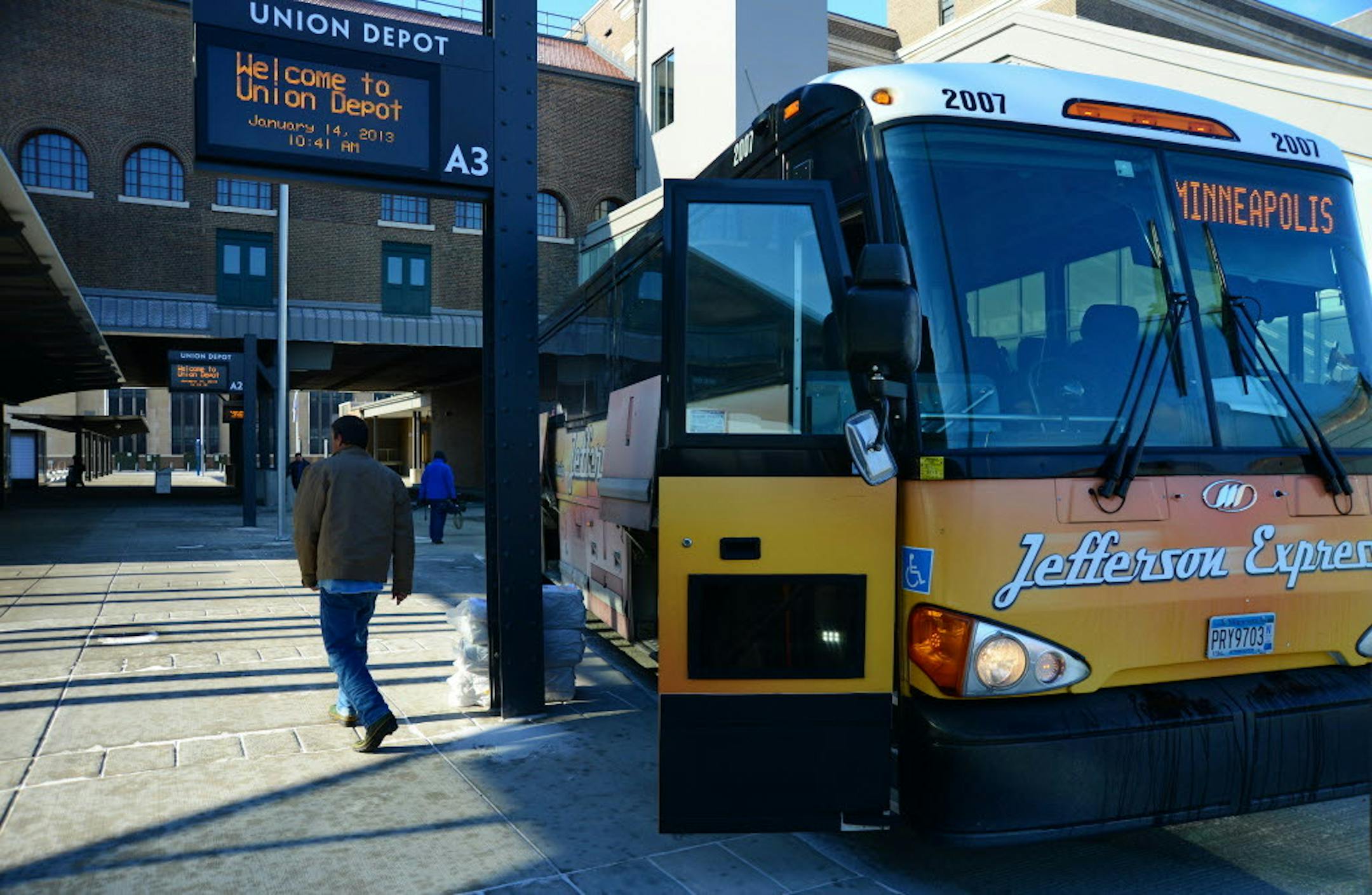
For the past 95 years, Jefferson Lines has quietly gone about its business of providing intercity bus transportation for residents in 67 cities and towns in Minnesota and several cities beyond state lines.
But it's only now that the Minneapolis-based company founded by the grandfather of state Transportation Commissioner Charlie Zelle is ready to raise its profile. And why not? After all, taking the bus is back in vogue.
A recent report from DePaul University shows that buses are the fastest growing mode of city-to-city transportation in the United States. Based on available-seat miles, it surpassed the growth of Amtrak (0.6 percent) and airlines (1 percent). Jefferson experienced an 8 percent growth. The report attributed much of the growth to expanded offerings by companies such as Megabus.com, which has lucrative fares and growing product awareness, something Jefferson plans to do.
"We have been low profile, but I have no problem being more bold," said Kevin Pursey, Jefferson's director of marketing. "We want to build brand awareness."
A spring marketing effort is still taking shape, Pursey said, but the campaign will contain several components, including meeting with mayors, connecting with senior centers, developing partnerships with rural transit providers, improving signage at pickup locations and increasing its presence on social media sites. The company will also participate in state tourism promotions, and it plans to get schedules on Google Transit and other online bus schedule aggregators.
This year, Jefferson expanded into Montana and launched new service from Grand Rapids to Duluth with stops in Hibbing and Virginia. Its College Connection express service to the Twin Cities is now offered at 25 schools.
Jefferson buses are more plush these days with leather seats that recline, more leg room and Wi-Fi. Its biggest selling points, however, are fares that substantially undercut the cost of flying or driving.
DePaul's 2013 "Motoring Into the Mainstream" review of intercity bus services found bus fares were 52 percent lower than rail fares and 79 percent cheaper than advance-purchased airfares. The report found it was 38 percent less expensive to ride the bus than drive. The study found that the average cost of a one-way trip by bus was $30.53, compared with $64.19 by rail and $145.23 by plane.


