

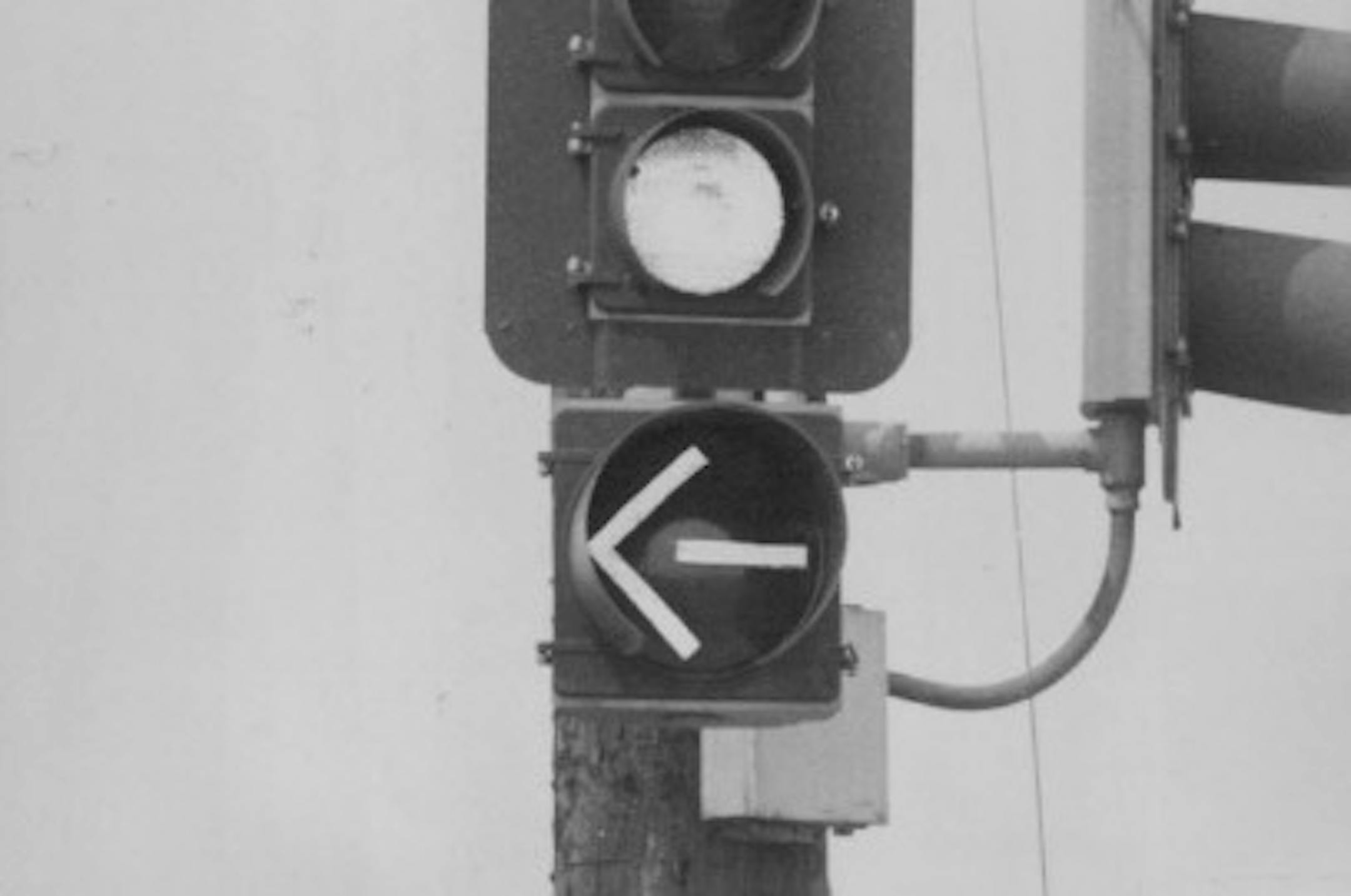
Drive reader Jim wanted to know why green left-turn arrows sometimes come on at the beginning of a cycle while others appear at the end.
Motorists turning left from eastbound Broadway Avenue onto the ramp to northbound I-35 in Forest Lake get a green turn arrow at the beginning of the cycle while westbound drivers wait.
Once the left-turn arrow goes back to red, vehicles queue up in the turn lane. When the left-turn arrow and light for through traffic are both red, Jim notes that few eastbound cars are added to the queue in the left-turn lane. He wondered if things might be more effective and reduce the waiting time for left-turning drivers if the arrow were at the end of the cycle.
The Drive posed the question to Nik Costello, the man responsible for signal timing on Washington County roads.
In Minnesota, the standard for traffic signals that operate independent of other adjacent traffic signals is usually to bring up the green left-turn arrows before the opposing through traffic gets a green light, he said. This is what is called a "leading" left turn.
In other parts of the country, the opposite can be true. For example, in Tucson, Ariz., it is common for the green left-turn arrow to come up after the opposing traffic gets a green light, which traffic engineers refer to as a "lagging" left turn. In situations where a traffic signal is coordinated with adjacent signalized intersections, traffic engineers often vary the left-turn operation between leading and lagging depending on the location, direction and time of day to improve vehicle movement throughout the roadway network, Costello said.
Keeping traffic moving along
Costello said Washington County uses coordinated signal timing along the Broadway Avenue corridor in the area of the I-35 interchange, and that the green left-turn arrow to turn from eastbound Broadway Avenue onto northbound I-35 comes on first because there is less opposing westbound through traffic during that portion of the signal's cycle.
"If we were to instead switch the order and bring up the eastbound green left-turn arrow after the westbound through movement, we'd end up interrupting a platoon of westbound traffic on its way from the 12th Street intersection [the next traffic signal to the east]," Costello said. "We'd perhaps be reducing wait times for eastbound left-turning vehicles waiting to head north on I-35, but we'd be stopping a larger platoon of westbound vehicles to do so. We seek to minimize overall delay on the entire roadway network, even though some individual movements might wind up waiting longer in order to achieve that goal."


