

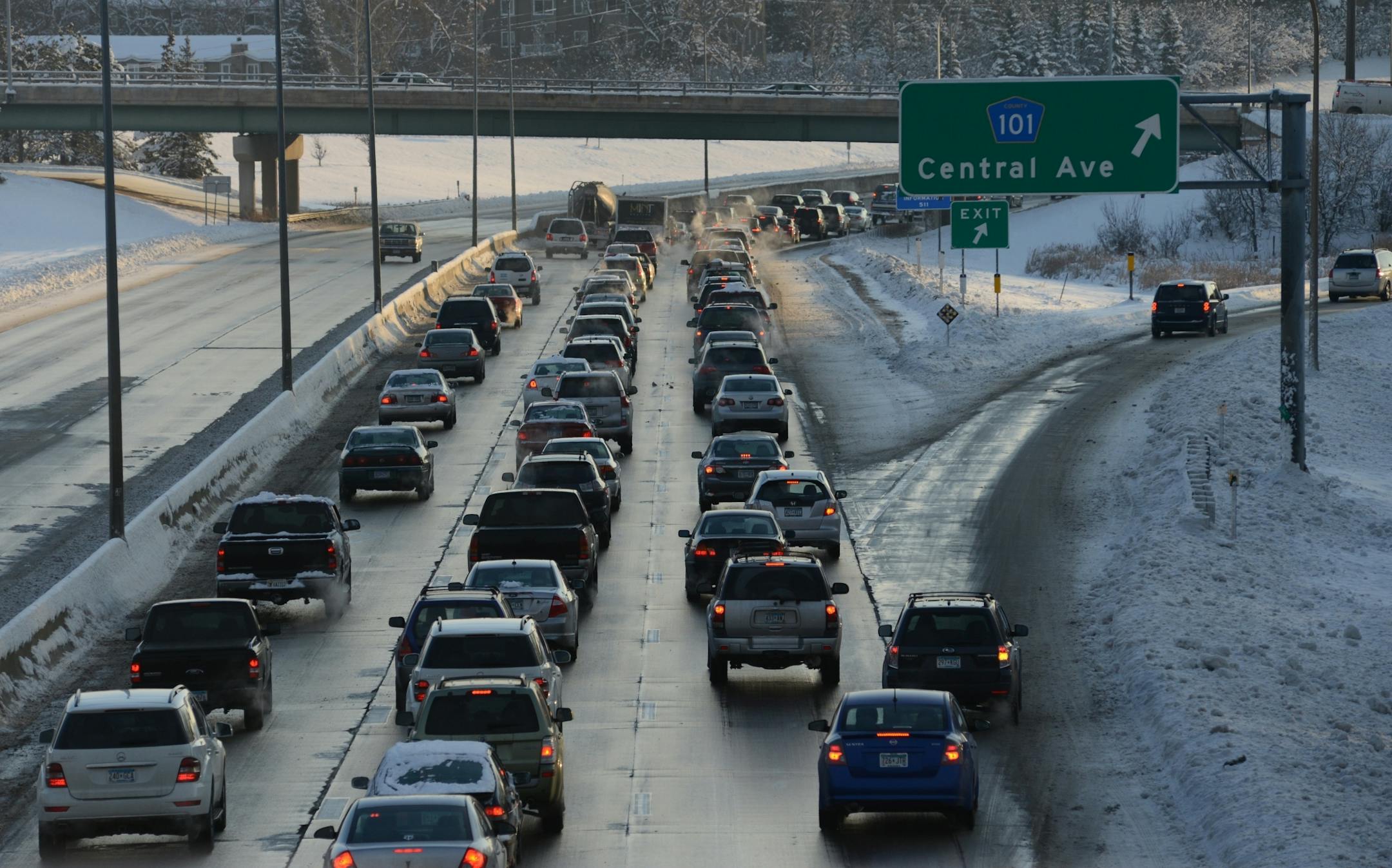
I always appreciate motorists who use turn signals to indicate their intent to move into my lane, but am I obligated to let them in?
On a recent afternoon commute, I was on Emerson Avenue, a one-way street with two northbound lanes. When I approached West Broadway in the left lane, I noticed a motorist in the right lane stopped at the intersection with its left turn signal on. I thought she had forgotten to turn it off from a previous turn, but no. She really did want to make a left turn across two lanes of traffic. But by the time I realized her intent I was next to her, and I prevented her from doing so.
As I proceeded through the intersection and continued my northbound journey, I glanced over, and boy, did I catch it: She flashed an obscene gesture and she was mouthing something. I am sure it wasn't praise for my being a safe and courteous driver.
That incident left me wondering if I was guilty of improper road etiquette. Should I have let her turn?
"Absolutely not," said John Elder, a spokesman for the Minneapolis Police Department. "When you turn on a signal, what you are doing is asking for the right of way, saying, 'I want to change lanes here.' You have the right to slow down and let her in if you want to do that. There is nothing that says you are mandated to do that."
Elder said I was lawfully sound on what I did, but the offending motorist broke a few laws. Here is a basic primer about using turn signals and changing lanes:
Minnesota law says that a signal indicating a motorist's intention to make a left or right turn must be given a minimum of 100 feet before a turn and must be displayed continuously until the turn is made. (Drivers exiting a roundabout are exempt.)
Signals may be made using a hand or arm or a light approved by the Commissioner of Public Safety. If a vehicle is constructed or loaded in a way that hand signals are not visible in normal sunlight or at night, then the signals must be given by a light.


