With all the sour news these days, you might have missed some potential fun news: the return of drive-in movies.
The motion picture business is in the doldrums. Summer is the big movie season, but this year was a season to forget. With receipts just a smidgen over $4 billion, summer 2014 was down 15 percent from last year, and the worst since 2006. The only megahit has been "Guardians of the Galaxy."
The industry is counting on the imminent release of "Mockingjay, Part 1" — the third installment in "The Hunger Games" saga — to counter the downturn. Meanwhile, National Amusements, the nation's eighth-largest theater chain, faces a possible downgrade of its debt, and industry leader Regal Entertainment Group, hoping to give its business a bump, recently began serving alcohol in a handful of its theaters.
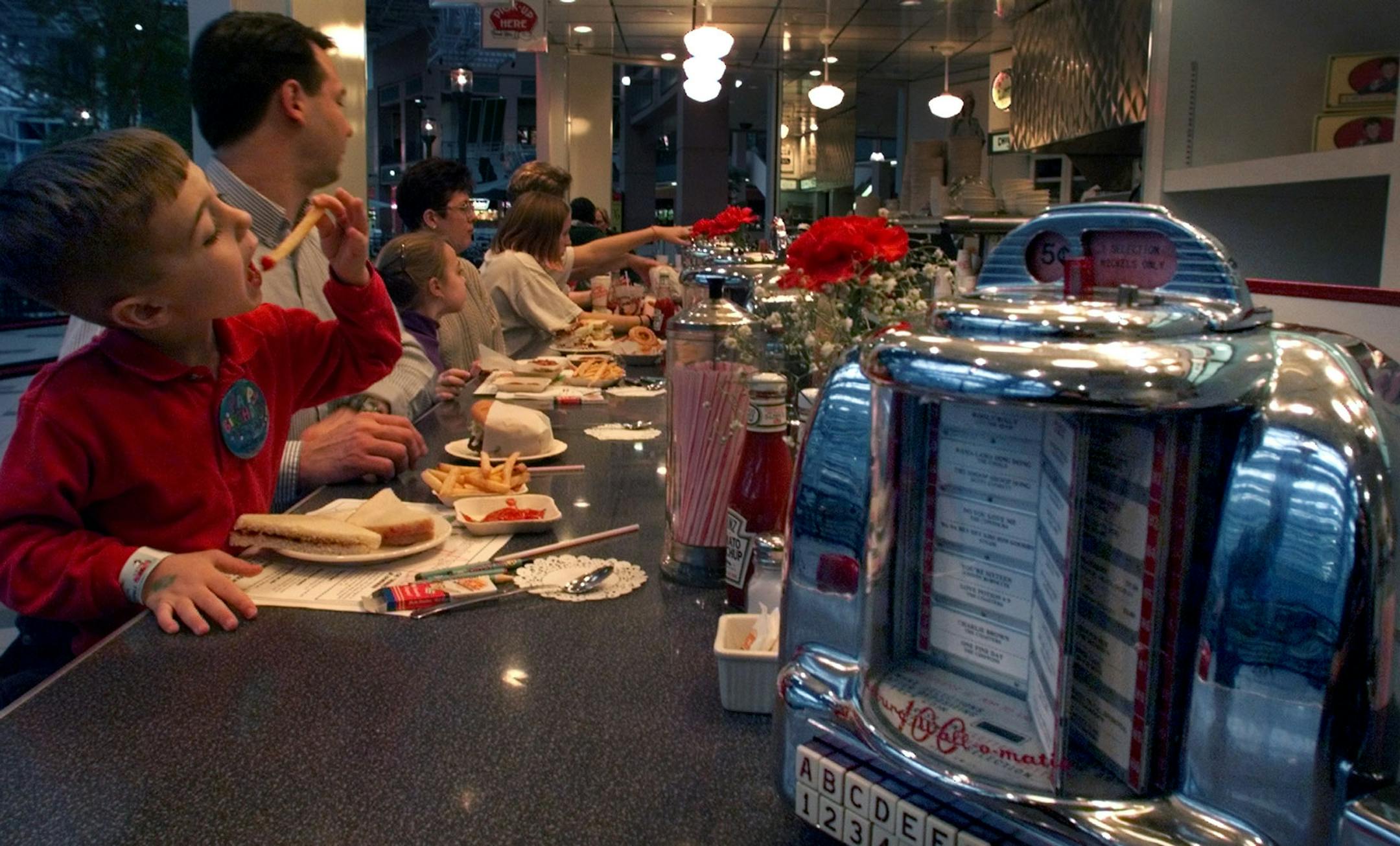
Into the midst of this malaise swaggers Johnny Rockets, promising to revitalize the business by way of the past. The restaurant chain, which has yet to find a 1950s rock-idol poster it doesn't like, is teaming up with USA Drive-Ins to put its retro-themed restaurants in some of the 200 new drive-in theaters the Indiana cinema chain is planning to build.
It's likely that few young people today have attended a drive-in movie. Half a century ago, the gigantic outdoor screens were everywhere — in the 1950s there were more than 4,000 drive-ins in the U.S. — but the current figure is well under 10 percent of that peak.
Yet one has to admire what back in the '50s would have been called the moxie of this plan. Johnny Rockets seems to be betting that, with all the world's troubles, what will draw moviegoers back isn't more of the 3-D Imax experience. It's the old-time family-and-date-night, sit-in-the-car experience. Other investors, too, seem to think that the time has come to give the drive-in another shot.
Maybe they're on to something.
Richard M. Hollingshead Jr., in his 1931 patent application for the drive-in theater, explained that "the transportation facilities to and from the theater are made to constitute an element of the seating facilities." Like so many great patents, the idea seems obvious once somebody thinks of it.