

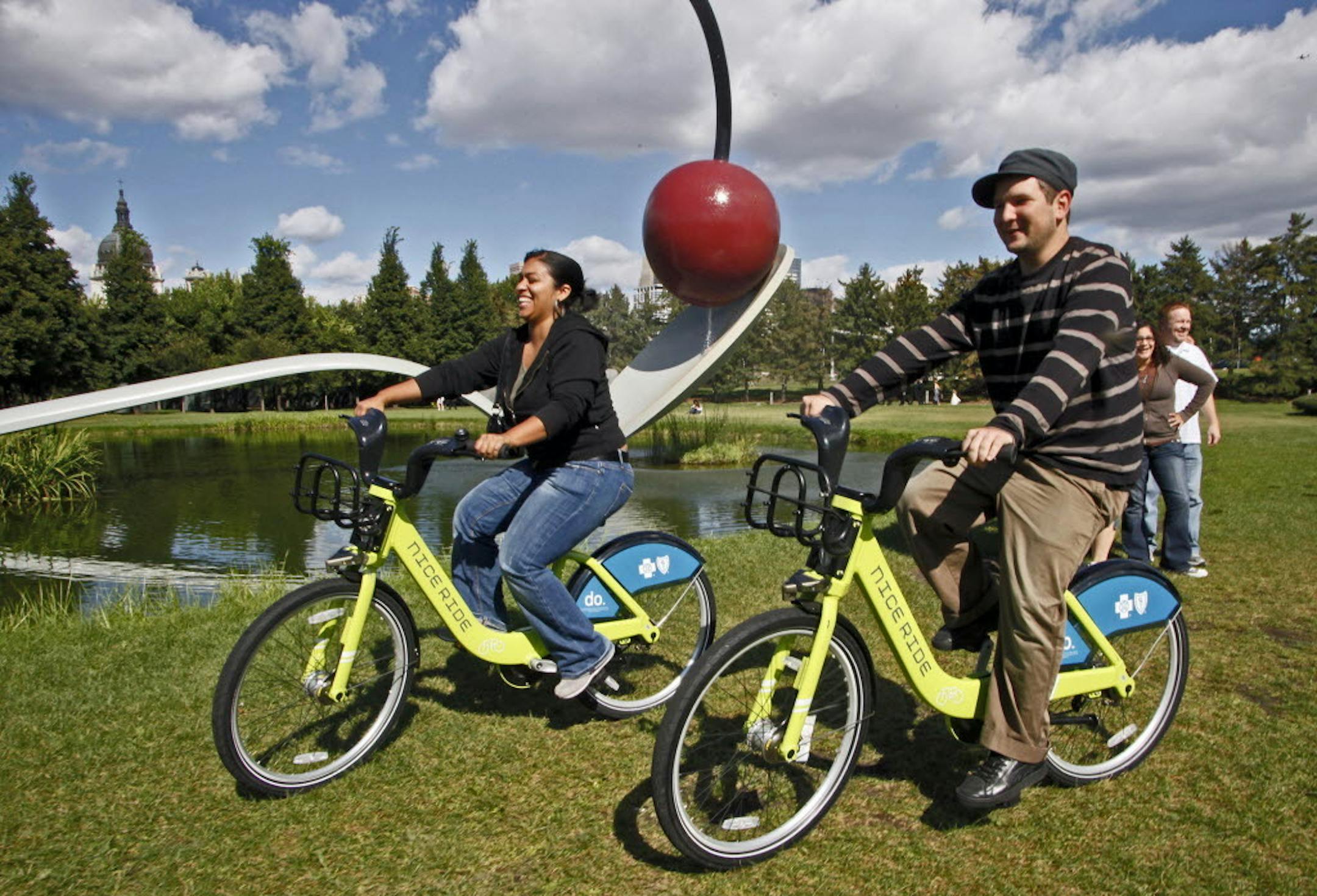
A recent Washington State University study implies bike-sharing programs are leading to a rise in head injuries. Well, not exactly.
The study, "Public Bicycle Share Programs and Head Injuries" published in June in the American Journal of Public Health, reported that the risk of suffering a head injury among bicyclists rose 14 percent in the five test cities that have programs such as Nice Ride Minnesota. It also said that the proportion of head injuries associated with biking in those cities rose from 42.8 percent to 50 percent, according to trauma records for bicycle-related head injuries in the Twin Cities, Boston, Miami Beach, Washington, D.C., and Montreal. The proportion dropped in five control-study cities.
Bike-share programs typically don't offer helmets, and its riders travel without helmets at a higher rate compared with users of personal bicycles, says the National Center for Biotechnology Information. The natural conclusion was that users of bike-sharing programs suffer more head injuries.
In reality, the number of bike injuries has dropped by 28 percent and head injuries declined 14 percent. Head injuries just constitute a greater proportion of the reported injuries, said Janessa Graves, the lead author of the study.
The data, for example, did not show how many head injuries involved participants using a bike-share program. Other factors such as age, riding experience and the type of riding — say commuting vs. mountain biking — were unaccounted for. Though limited in its findings, the study did raise a good question: Should bike-share programs offer helmets?
"This will spur the discussion about the potential risk of riding without a helmet," Graves said. "I don't want to [dissuade] people from riding, but for users of bike sharing, it's important to have an option to rent a helmet."
Protective gear encouraged
According to the Centers for Disease Control, head injuries account for 62 percent of bicycle-related deaths and one-third of bicycle-related emergency room visits. That is enough to get support for helmet rental from the Minnesota Brain Injury Alliance.
"We advocate it for all ages," said executive director David King. "We do know that riders who have a bike accident are less likely to sustain a brain injury if they are wearing a helmet."


