

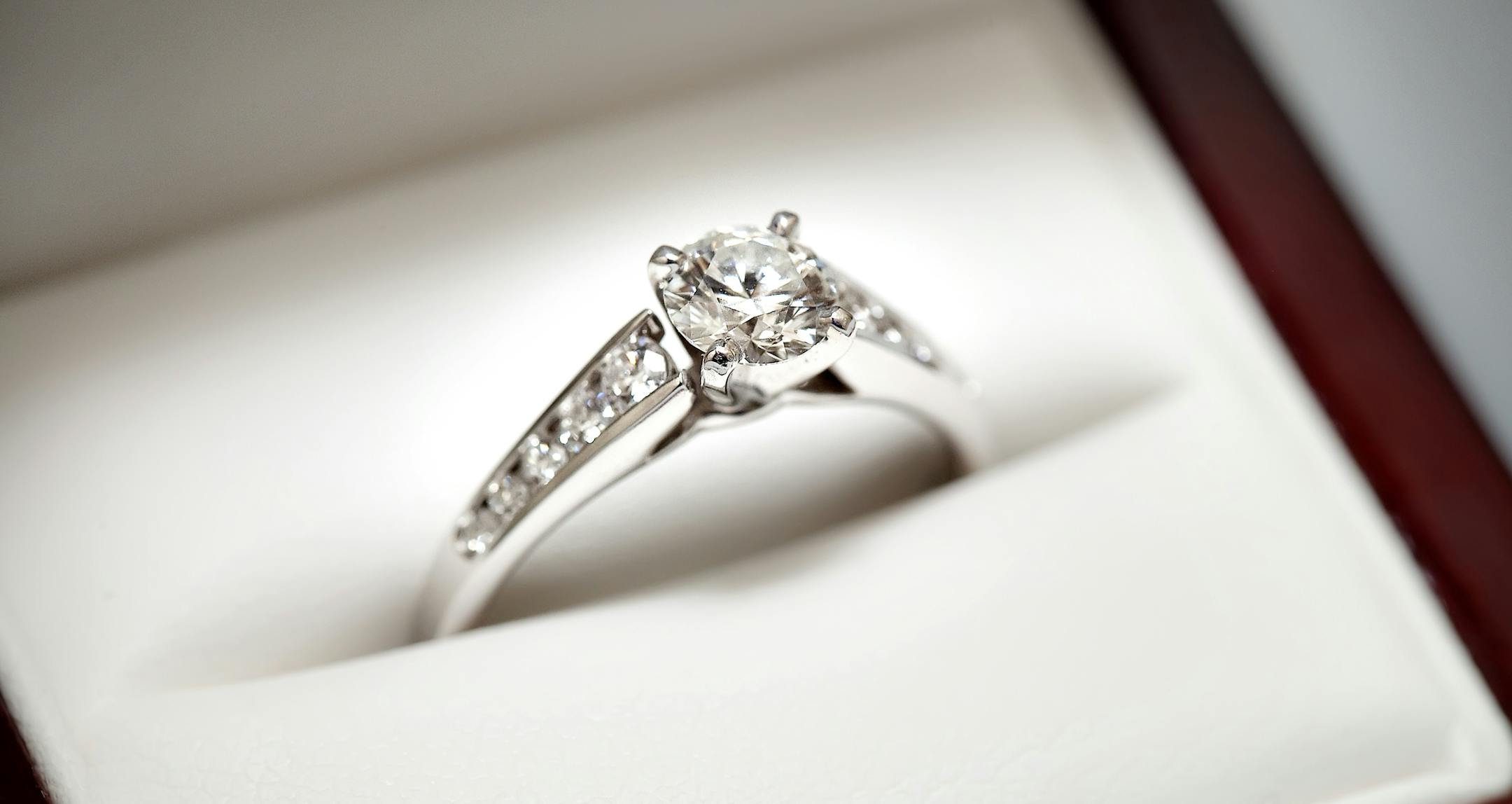
When Megan Shoemaker's boyfriend proposed to her, he knew better than to purchase a classic engagement ring dominated by a glittering white diamond.
"I'm not a very traditional person," Shoemaker said. "I just never saw myself with the round, brilliant-cut white diamond, even though they're absolutely gorgeous. It's just not me."
In a continuing trend of bucking tradition, a growing number of young couples are opting for "alternative" engagement rings — replacing the standard Tiffany's fare with colored gems, locally designed bands or ethically sourced stones. For some, it's a way to save money. Others want to tailor their rings to their personalities. In all instances, it's shaking up the jewelry industry.
The rise of Pinterest, Instagram and Etsy has papered the internet with glam shots of rings with black diamonds, knife-edge bands, oval sunstone rings, even coffin-shaped stones, rebooting the idea of what a ring can look like. Besides standard white, diamonds come in varying shades of gray, brown, blue and more — tinged by the presence of elements like nitrogen and boron. Galaxy diamonds, flecked with black and white imperfections, have a salt and pepper appearance.
Forget diamonds altogether and the selection expands: Sapphires and rubies are a good pick for durability. Opals, pearls and morganite (a pink-colored stone that's a variety of beryl) have a refined look.
Customers are getting more comfortable in thinking outside the traditional box, said Lauren Priori, who works at Philadelphia's L. Priori Jewelry.
"People are getting married a little bit older, so they have more confidence in their own sense of style," she said. "They have a broader understanding of what's possible. It can be exactly how you want it to be."
When she consults with clients, Priori asks questions to suss out what kind of ring they want: What does their lifestyle look like? Do they see themselves wearing the ring every day? Do they see themselves wearing an engagement ring at all a couple of decades from now? Do they plan to replace the engagement ring with a band on their wedding day?


