

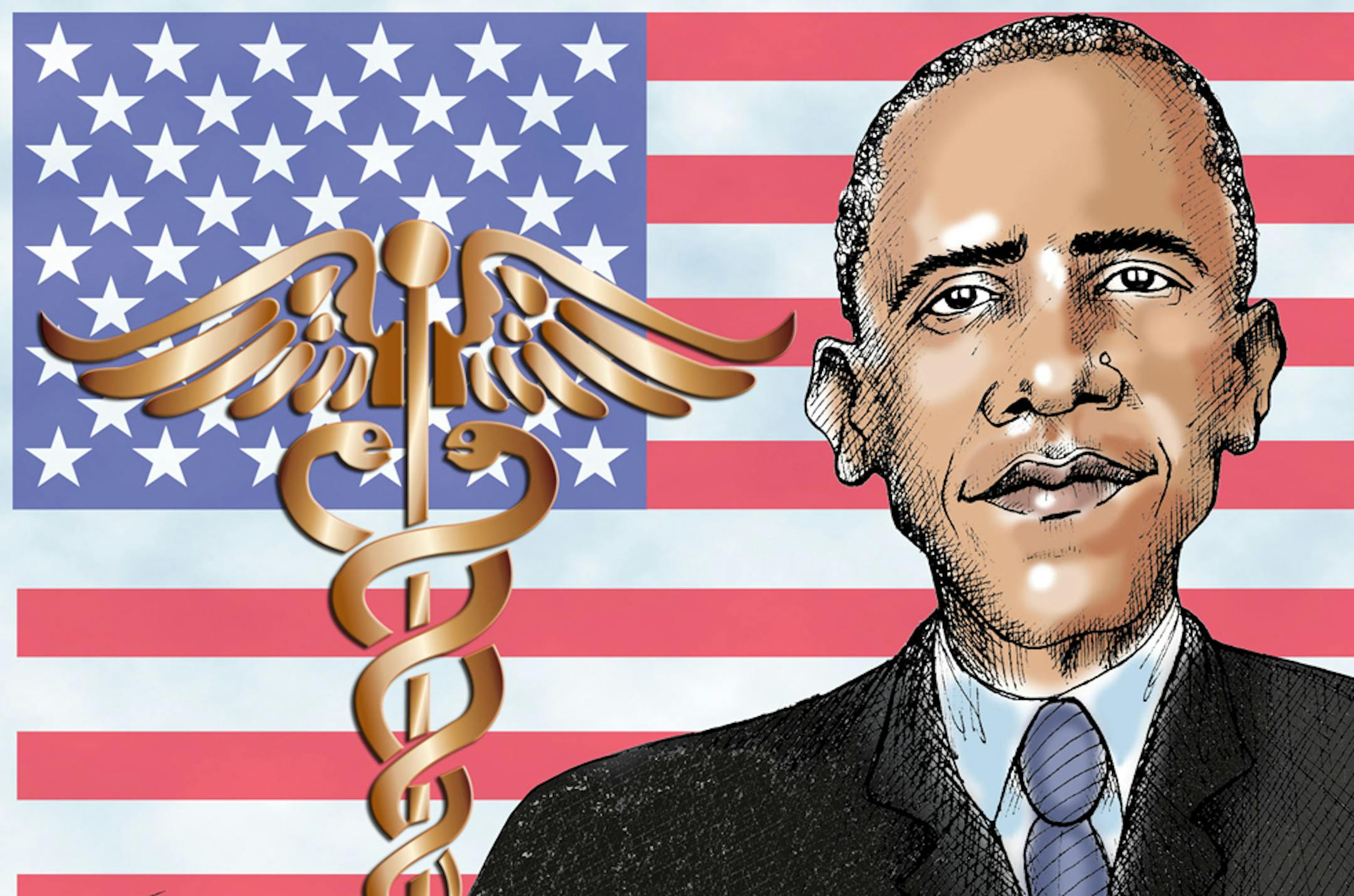
Who says there's no bipartisan consensus in the United States? Based on their campaign promises so far, if any of the leading contenders for the Republican and Democratic presidential nominations actually wins in November 2016, Obamacare as we know it is doomed.
The Republicans, of course, pledge to repeal the whole thing. The Democrats, by contrast, merely want to hollow it out, by removing a crucial systemic reform, the absence of which will make the Affordable Care Act less able to meet its twin goals of curbing costs and expanding coverage.
Specifically, Democratic front-runner Hillary Clinton has just joined her main rivals, Sen. Bernie Sanders, I-Vt., and former Maryland governor Martin O'Malley, in calling for the repeal of Obamacare's excise tax of 40 percent of the value of employer-paid health insurance plans that exceeds $10,200 for individuals and $27,500 for families; the tax takes effect in 2018.
Health-care economists universally praised this feature of Obamacare because it attacked the wasteful and regressive tax exclusion for employer-paid health plans, a $250 billion-plus annual item, 35 percent of which accrues to the top 20 percent of the income distribution scale.
Reducing the value of that tax break would help slow health-care cost growth, because it encourages many employers to pay employees not higher wages but generous "Cadillac benefits," prompting the recipients, in turn, to overutilize medical care.
As it happens, the mere anticipation of the tax has already caused employers to right-size their benefits packages, just as Obamacare's authors intended. This is one reason, among many, that health-care cost growth has remained moderate even as health reform has brought millions of new consumers onto the insurance rolls.
Indeed, the latest numbers on coverage are encouraging, with the uninsured having fallen from 13.3 percent of the population in 2013 to 10.4 percent last year, according to the Census Bureau. And paying for this expanded coverage over the long run, without increasing the deficit (another Obamacare tenet), depends in no small part on revenue from the tax, projected to be $87 billion between 2018 and 2025, according to the Congressional Budget Office.
So if the ACA is achieving its goals, cost containment and broader coverage, thanks to a key provision that President Obama and his advisers fought hard to include in the law - why would Clinton and other supposed "progressives" join with Republicans in condemning that provision?


