

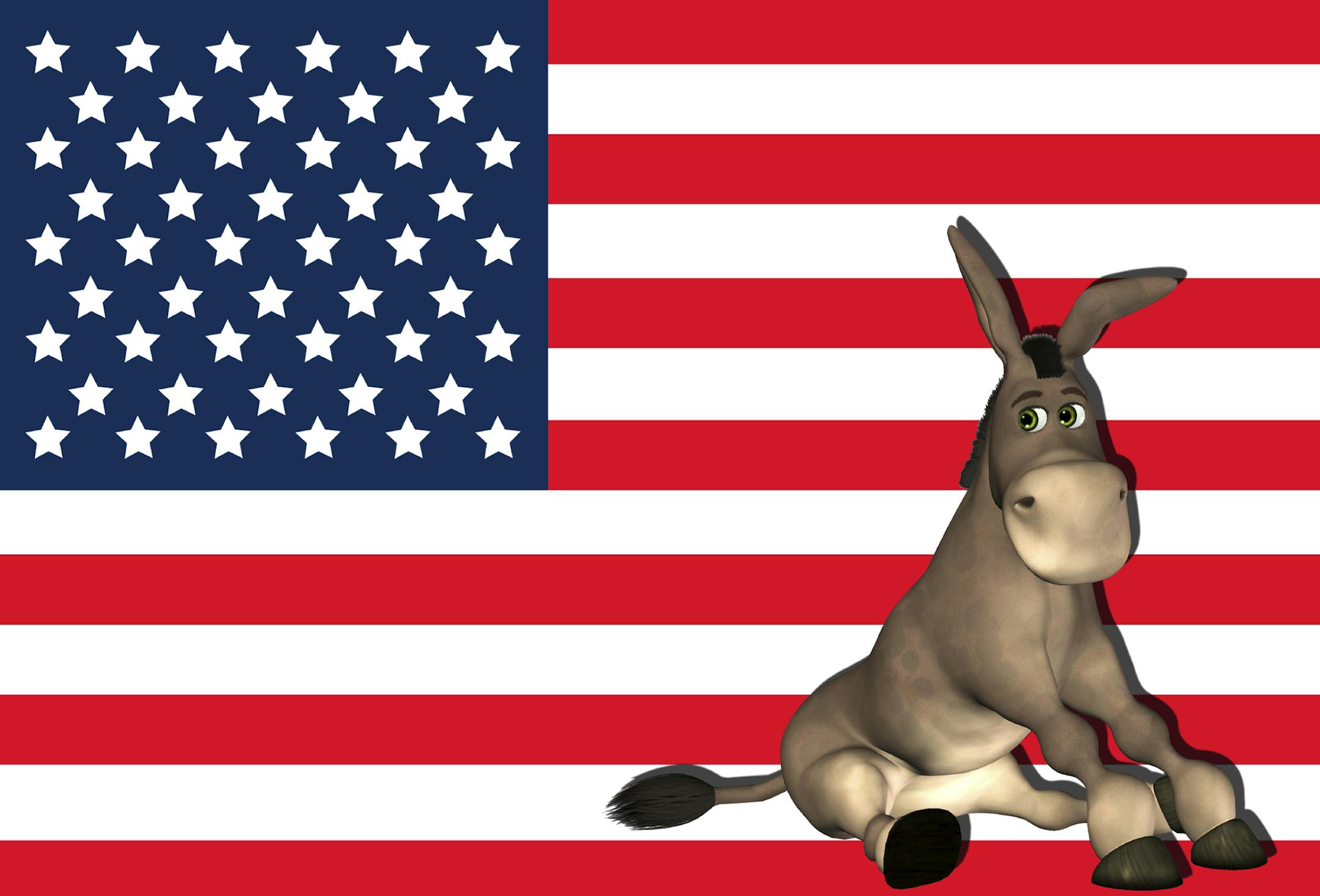
Though leading the Republican Party can be a trying task, many politicians want to have a go at trying. Ambition swirls so thickly in the halls of the 114th Congress, sworn in on Jan. 6, that it can almost be touched.
Republican leaders, whips and committee chairmen, even the bosses of rebellious factions: All yearn to use their party's newly won control of the Senate and House of Representatives to make President Obama's life miserable and promote voter-pleasing conservative policies.
As for the 2016 presidential nomination, around a dozen Republican bigwigs are circling the starting line of that contest, eyes agleam. The party is fractious, but it is filled with energy and those who would lead.
The contrast with the Democratic Party is striking. The party remains a potent force in national politics, even after 2014's midterm elections cost it control of the Senate and left it with fewer House members than at any time since 1946. But as Democrats head into the final two years of the Obama era, they resemble an army without a commander-in-chief, or even generals whom footsoldiers might follow into battle.
In Congress, the Democratic leaders of the Senate and House are both in their 70s, as are many of their lieutenants. Both are crafty tacticians more than inspiring thinkers. Neither represents the future.
Out in the country, Republicans can point to any number of governors who look like conservative champions, busy turning their states into laboratories for tax-cutting, government-shrinking experiments. Only a handful of Democratic governors similarly dominate their states' politics — the most prominent, Jerry Brown of California, is 76 years old.
Hillary Clinton will dominate her party's presidential primary if and when she says she is running. At the moment, she is a spectral presence — freezing the 2016 contest without offering leadership. If she does not run, it is not obvious who could replace her. Some like to daydream about Sen. Elizabeth Warren, a Wall Street-bashing populist who is to the left of center in her home state, Massachusetts, which is in turn to the left of center of America as a whole. Warren says she is not running for president (she favors the present tense), which makes her more sensible than her supporters: As a matter of cold electoral math, she cannot win a nationwide contest.
Obama's relations with the Democratic Party are increasingly complicated. After a wretched 2014, during which he seemed buffeted by events, Republicans successfully made the midterm elections a referendum on his competence, prompting Democrats in some conservative states to try to disown him (in vain — most such Democrats lost anyway). Since then, Obama has defied predictions of his imminent irrelevance. He has used his executive powers to shield millions of migrants from deportation, and he started to dismantle the (remarkably ineffective) embargo against Cuba. He has sketched out future policies that may define his legacy, from new rules to protect the environment to global trade pacts. Republicans will try to thwart many of his plans. Global events continue to menace him. But as much as his office permits, Obama is setting the agenda.


