

Opinion editor's note: Star Tribune Opinion publishes a mix of national and local commentaries online and in print each day. To contribute, click here.
•••
Maybe the most surprising aspect of the debt-ceiling increase President Joe Biden signed into law last week is that, once all the kicking and screaming was done, it not only passed Congress but passed easily. And maybe the most intriguing question raised by this whole debate is whether we should be prepared for more surprises.
With the Fiscal Responsibility Act, leaders on both sides made sales pitches to their respective caucuses, but there was no last-minute scrambling for votes or intense arm-twisting. The margins were comfortable enough that the dozens of members who want reputations as purists were able to vote "no" with no hard feelings.
This was by no means a foregone conclusion even once the contours of an ultimate settlement became clear. From the point of view of Democrats, the law has essentially nothing to recommend it. It violates the principle that the way to reduce the deficit is to balance tax increases and spending cuts, and on the spending side it violates the rule of parity between defense and non-defense spending. For Republicans, the agreement abandons almost all the demands of the partisan debt-ceiling bill that the House passed in April. Republicans basically settled for a normal appropriations bill paired with some changes to the SNAP program that the Congressional Budget Office says will not reduce spending.
So it's easy to imagine a world in which members of both parties accused their leaders of selling out, leaving leadership scrounging for a bare majority to avoid default. Instead, there was an outbreak of good vibes.
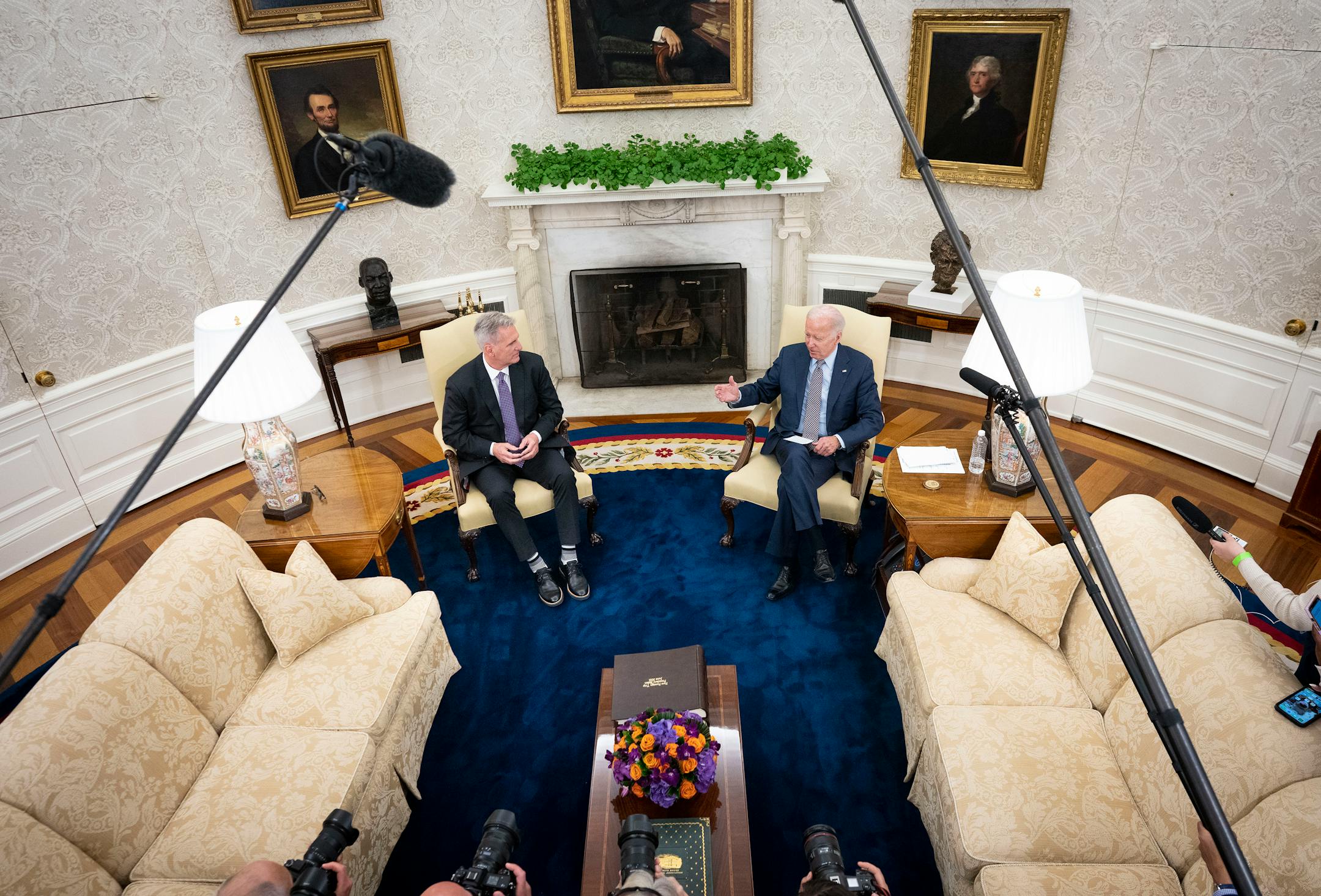
Part of the reason is that both Biden and House Speaker Kevin McCarthy are underrated politicians: They're not orators, ideologues or policy wonks, but true creatures of Congress, an institution that's broadly hated and poorly understood. Low expectations let them both emerge from the process with their personal reputations enhanced, avoiding the zero-sum dynamics that often plague American politics.
The other part is that policymaking genuinely isn't a zero-sum game.


