The dating game of the feathered world in spring

In the air and on the ground, the feathered world is looking for love

April 2, 2015 at 8:14PM
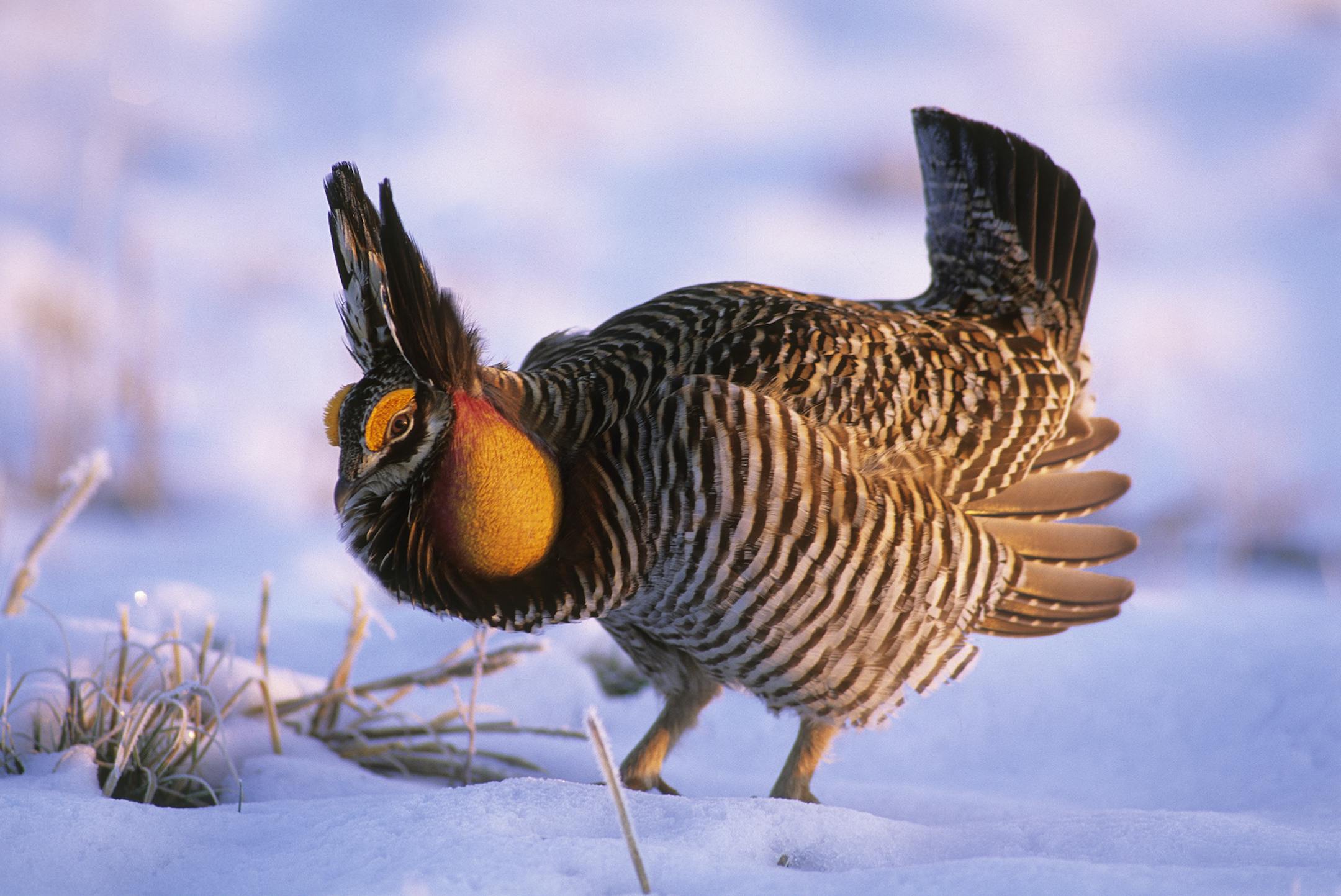
Male greater prairie chickens gather on ìleksî or ìbooming groundsî during spring to perform their courtship displays. The dancing ground is usually a high spot in a field or meadow where the grass is short. The amorous males erect their ear-like "pinnae" and inflate their colorful neck sacks as they vocalize. The loud cooing sound can carry a half mile on a calm day.
Male greater prairie chickens gather on “dancing” grounds during spring to perform their courtship displays. The area usually is a high spot in a field or meadow where the grass is short. The amorous males erect their ear-like “pinnae” and inflate their colorful neck sacks as they vocalize. The loud cooing sound can carry a half mile on a calm day. (The Minnesota Star Tribune)

Some bird species began the search for a mate months ago. Some birds mate for life. But springtime is reserved for those birds with more prominent courtship rituals.

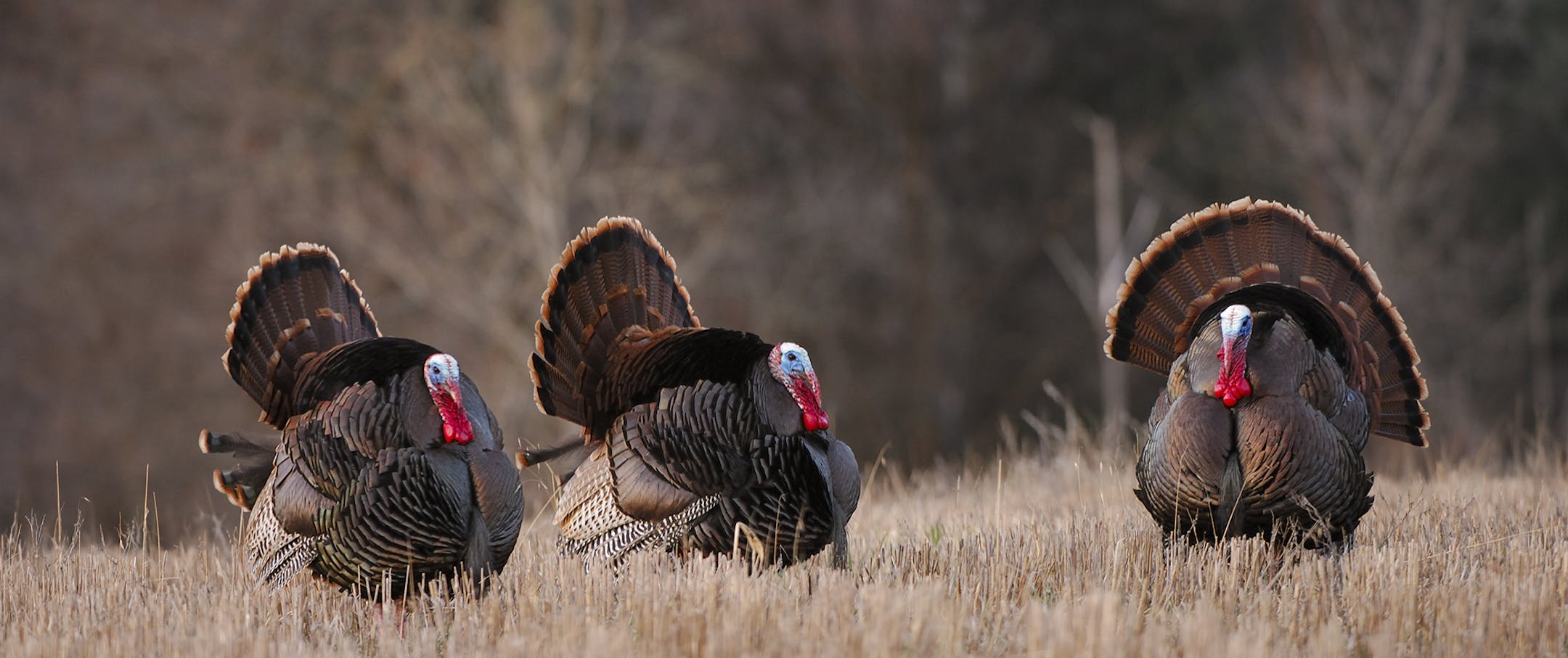
For example, what better signifies the arrival of spring than the gobble of a mature tom turkey as it struts among the oaks? The tom is an audio and visual delight — apparently to a hen turkey, too.

Or consider the dull "thump-thump-thump" of a drumming ruffed grouse vigorously beating its wings against the air from a log nestled among the aspen trees?

In farm country, a spring dawn is incomplete without the crowing of a rooster pheasant, his swollen red wattles ablaze with color and iridescent plumage glowing in the sun. On the prairie, male sharp-tailed grouse and prairie chickens gather for a good old-fashioned hoedown as they dance and yodel under the discerning eyes of females.

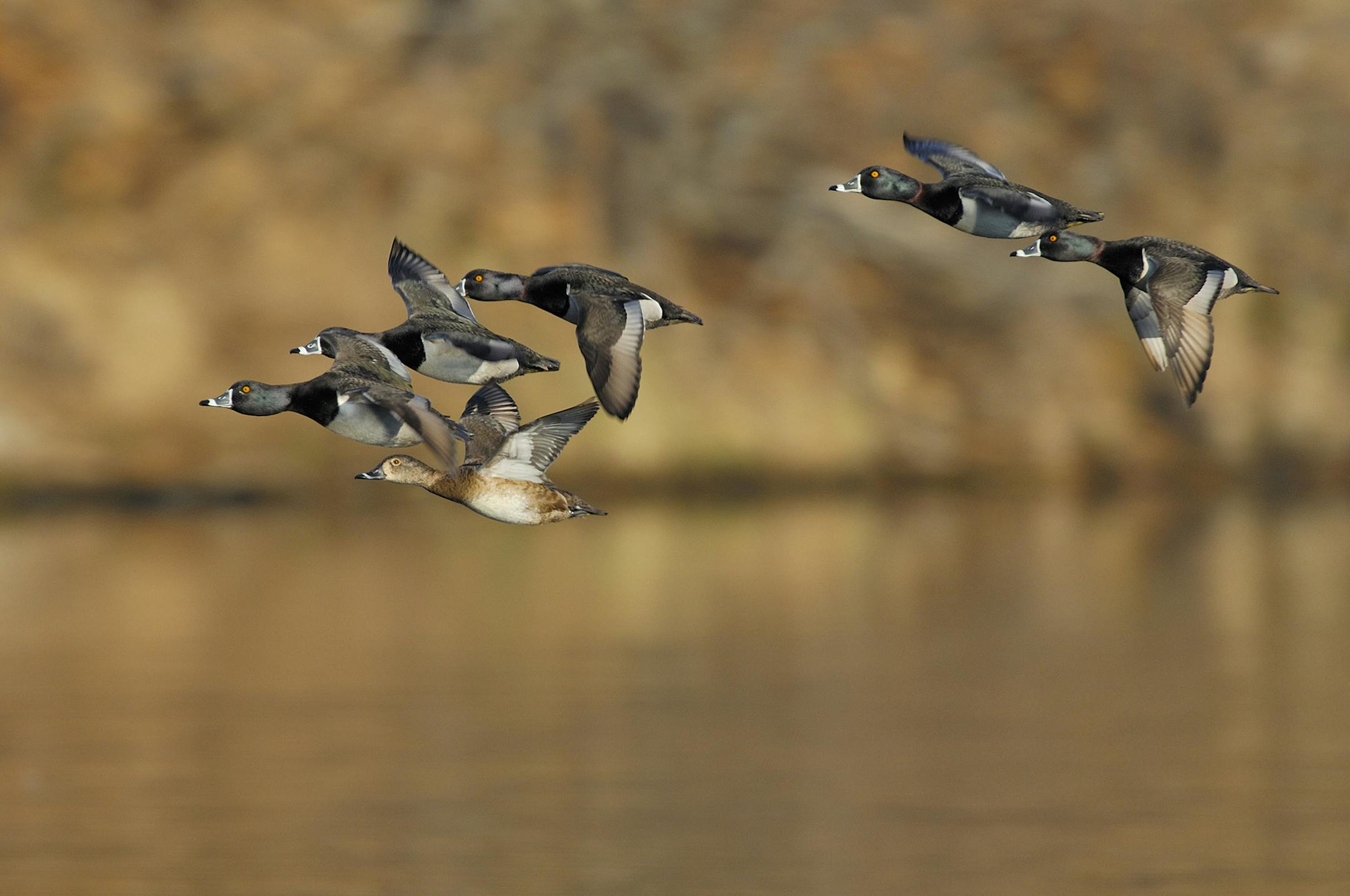
Observe a marsh or lake this time of year and you'll likely see flocks of ducks that contain only one hen surrounded by numerous drakes. Look for the drakes gathered tightly around the hen as she leads the flock aimlessly around the marsh. The group will often dive, dart and suddenly change directions. They'll sometimes nearly stop in flight, the drakes grunting, clucking and otherwise carrying on. These actions are uncharacteristic for waterfowl except during the breeding season.

These noisy midair chases are called courtship flights. Conventional wisdom says the drake that stays nearest the hen during these flights becomes her mate.

Other harbingers of spring are the songbirds. A male red-winged blackbird will perch on a puffy cattail and flash its bright, red shoulder patches as its sings. The song also is one of warning for other males to stay away. Mourning doves will coo from power lines, robins will warble from back yards, and song sparrows will chant from willow perches.

It's spring and, among birds, love is in the air.
Bill Marchel, an outdoors writer and photographer, lives near Brainerd.


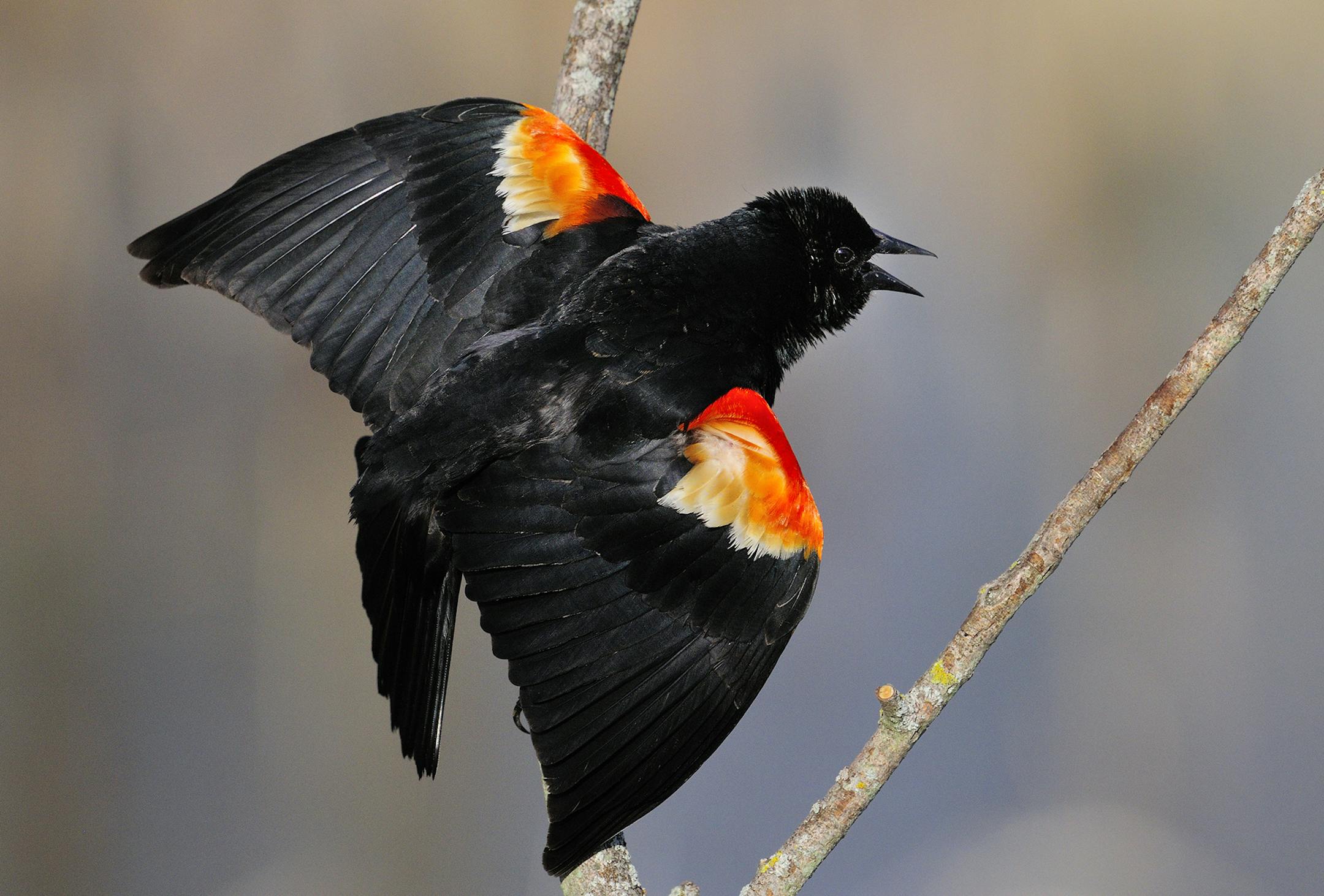
During spring songbirds, like this male red-winged blackbird, will stake out a territory where they vocalize to attract a mate, and to ward off competing males. At the same time, they flash their colorful red shoulder patches, or epaulets.
A male red-winged blackbird will stake out a territory to vocalize and attract a mate. The song also wards off competing males. At the same time, they flash their colorful red shoulder patches, or epaulets. (The Minnesota Star Tribune)
These ring-necked ducks are engaged in what is called a courtship flight. During these displays, male ducks numbering from a few, up to as many as 25, will chase a single hen while in flight. Each drake does its best to woo the unpaired hen. Some biologists believe the drake that stays nearest the hen will likely win her favors.
These ring-necked ducks are engaged in what is called a courtship flight. During these displays, male ducks numbering from a few, up to as many as 25, will chase a single hen while in flight. Each drake does its best to woo the unpaired hen. Some biologists believe the drake that stays nearest the hen will likely win her favors. (The Minnesota Star Tribune)
A strutting tom turkey is a sight to behold. His warty neck glows blood red, his face is sky blue, and the top of his head is snow white, The tomís iridescent feathers are ablaze with bronze, green, purple and copper. An old turkey hunter once said, ìwhen he gobbles, itíll raise the hair on your head so high your cap will fall off.î
A strutting tom turkey is a sight this season. Its neck glows blood red, its face is sky blue, and the top of its head is snow white. Also, the tom’s feathers are are ablaze with bronze, green, purple and copper. hear them The Minnesota DNR has an interactive bird page at http://tinyurl.com/oemtnoe. (The Minnesota Star Tribune)
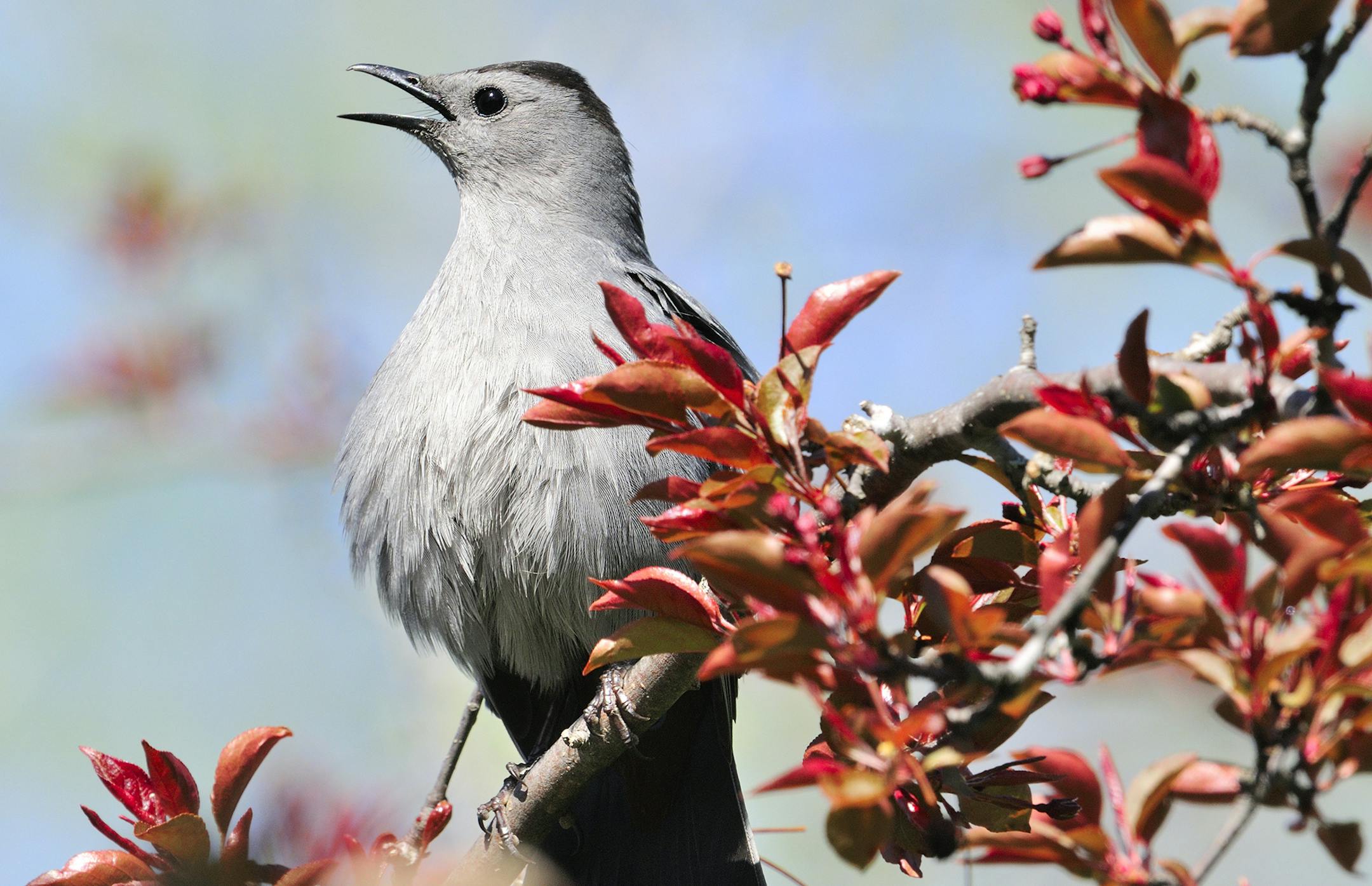
A male gray catbird chants loudly to lure a mate. Catbirds holler a variety of courtship calls, some mimicating other birds species.
A male gray catbird (left) loudly chanted to lure a mate. Catbirds holler a variety of courtship calls, some that mimic other bird species. (The Minnesota Star Tribune)
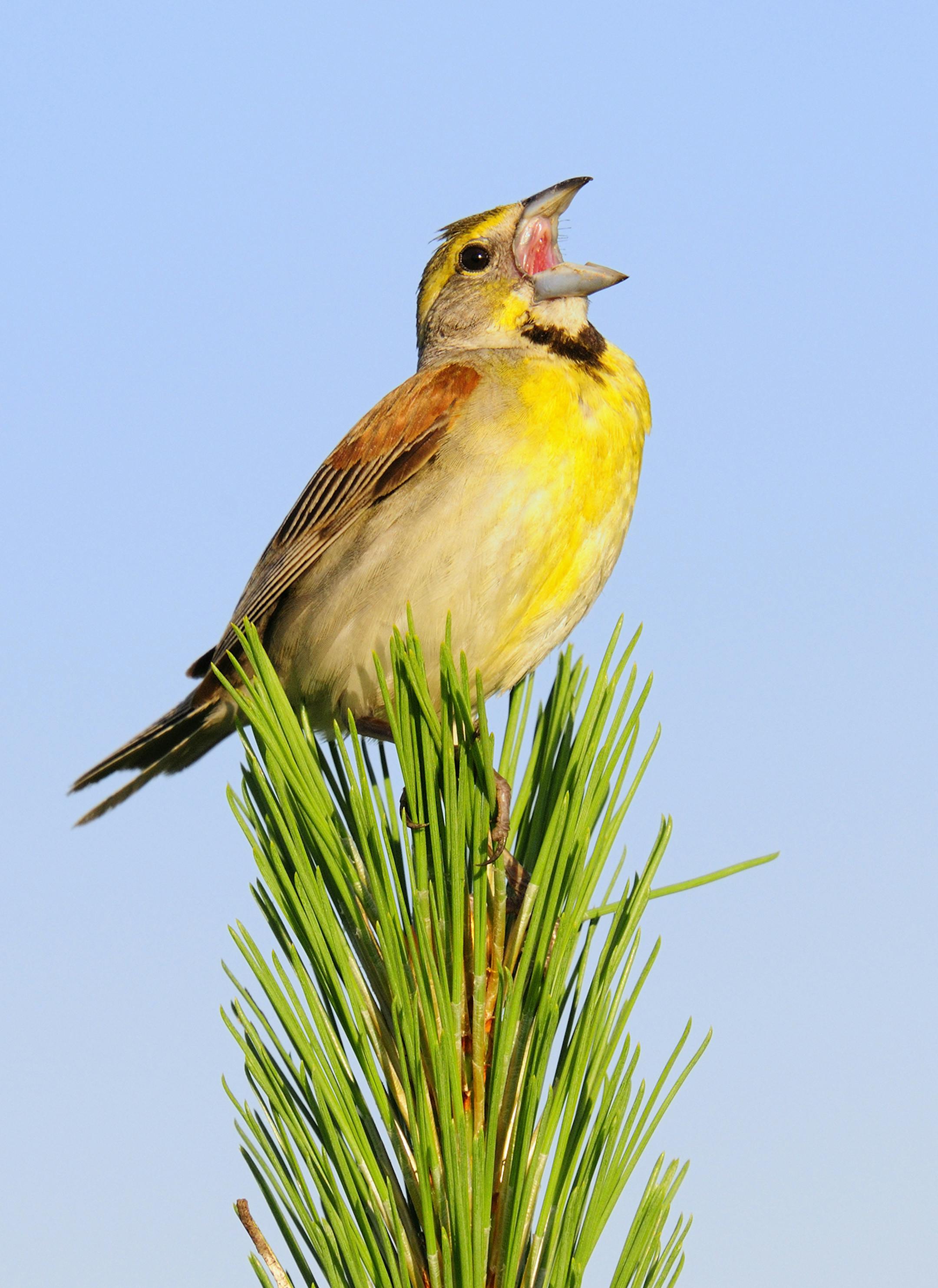
A male dickcissel bellows out a love song to any female willing to listen. Dickcissels are birds of the open spaces and their song is loud and clear on calm mornings.
A male dickcissel (far left) bellowed a love song. Dickcissels are birds of open spaces. Their song is loud and clear on calm mornings. (The Minnesota Star Tribune)
about the writer

about the writer

and photos by Bill Marchel Special to the Star Trib