

As a judicial referee in Hennepin County's family court, Mark Labine sifts through stories in hopes of determining which are most plausible and true.
Those skills have proved valuable in his off hours, too, as he researches one of St. Paul's oldest families: his own.
Labine's third and fourth great-grandfathers — Isaac Labissoniere and his father, Joseph — arrived in St. Paul in the 1830s when the riverboat landing was still known as Pig's Eye Marsh after the area's squinty-eyed liquor dealer, Pig's Eye Parrant.
The Labissonieres were among eight French Canadian settlers who built the area's first log chapel 175 years ago — the precursor of the grand stone Cathedral of St. Paul. The city's first Catholic church cost about $65 and took only a few days to construct in 1841 on the bluff overlooking the Mississippi River between what became Minnesota and Cedar streets.
The area "was thinly covered with groves of red and white oak," Isaac Labissoniere said in a 1907 interview, when he was in his 80s. "The logs for the chapel were cut on the spot … rough and undressed, prepared merely by the ax, were made secure by wooden pins. The roof was made of steeply slanting bark-covered slabs, donated by a mill owner in Stillwater."
A model of that simple wooden house of worship, along with a collection of historic images, highlight a 175th anniversary parish history exhibit, opening Sunday in the lower level of the cathedral. The exhibit is free and open to the public on the first and third Sundays of the month, following morning mass.
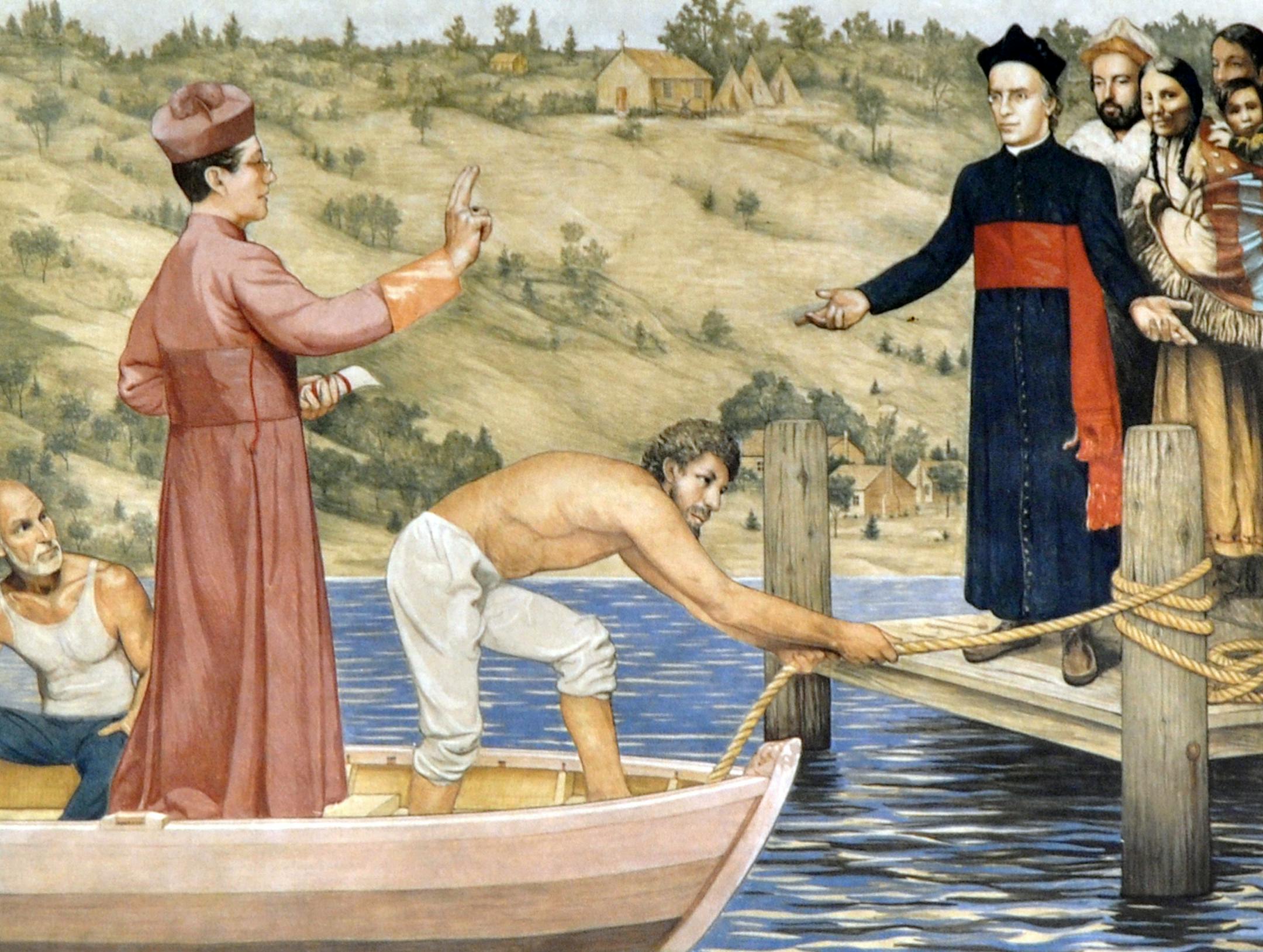
Finding "Pig's Eye" a rather crude name, young French-born priest Lucien Galtier first used the name "St. Paul" on a marriage certificate in January 1841 to describe the fledgling settlement downriver from Fort Snelling. White immigrants, including such French Canadian traders as the Labissonieres from the Red River Valley, began flocking to the region long populated by the Dakota and Ojibwe tribes as treaties were hammered out.
By Nov. 1, 1841, on the Feast of All Saints Day, the chapel was complete and Galtier dedicated it to the Apostle Paul. Galtier said: "Pig's Eye, converted thou shalt be, like Saul; Arise, and be, henceforth, Saint Paul!" in his dedicating remarks.


