The world is scary. How about escaping into these 5 fear-filled books?

Fiction: A kidnapping gone wrong, a house that’s haunted and a secret museum are a few ways novels up the fear factor.

For the Minnesota Star Tribune
October 13, 2025 at 4:00PM
photo of author Quan Barry looking out of (and reflected in) a window
Quan Barry (Jim Barnard/Grove)

Right now, I find reading horror cathartic. No matter how bad things get, at least my house isn’t haunted, an ancient entity hasn’t possessed my husband (as far as I know) and the penguins I’ve seen recently at the Minnesota Zoo didn’t peck out my eyes.

In his introduction to Ira Levin’s horror classic “Rosemary’s Baby,” Chuck Palahniuk wrote that until Levin’s novel, “the real horrors were not at home.” Home became dangerous because we refused to acknowledge what was growing inside us until it was too late.
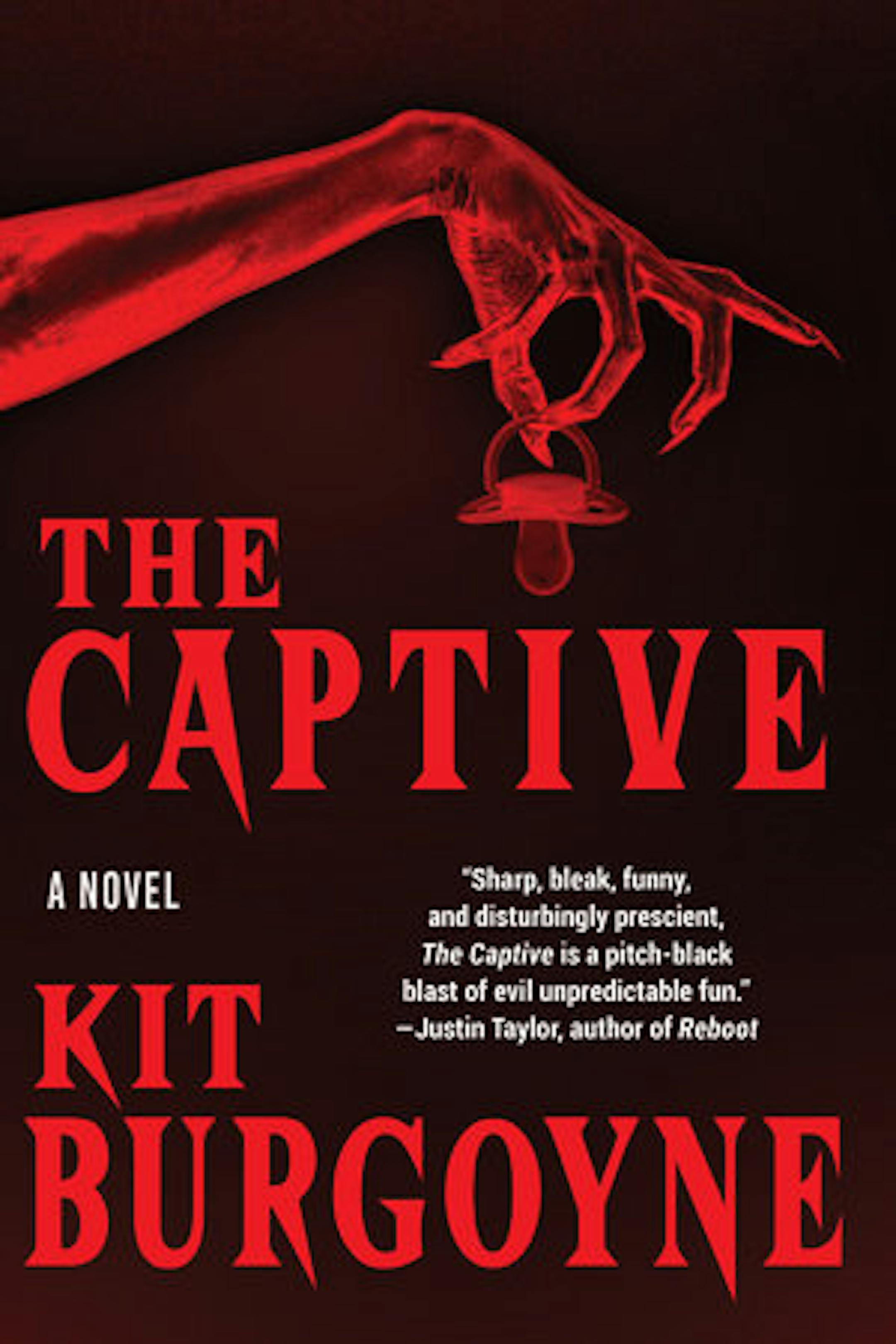
black cover of The Captive features an image of what appears to be a demon's hand, holding a pacifier
The Captive (Soho Press)

Kit Burgoyne’s ingenious “The Captive” (Soho Press, 376 pages) is set in the “too late.” An extraordinarily wealthy British family, the Woolsaws, control everything. Rosa, Cam, and Luke are anti-capitalist revolutionaries, but their organization is broken. They kidnap the Woolsaws’ daughter, Adeline, realizing too late that she has birthed the spawn of a dark entity. Unfortunately, Adeline refuses to be ransomed and the baby turns out to be “Chernobyl in nappies.”

“The Captive” is a thrilling, gory tale with comic details (“next to her daughter, everything else in the universe is just hair-clippings and pencil shavings”) and a cosmic worldview (“large concentrations of wealth are like deformations in space-time: they warp reality around them”).
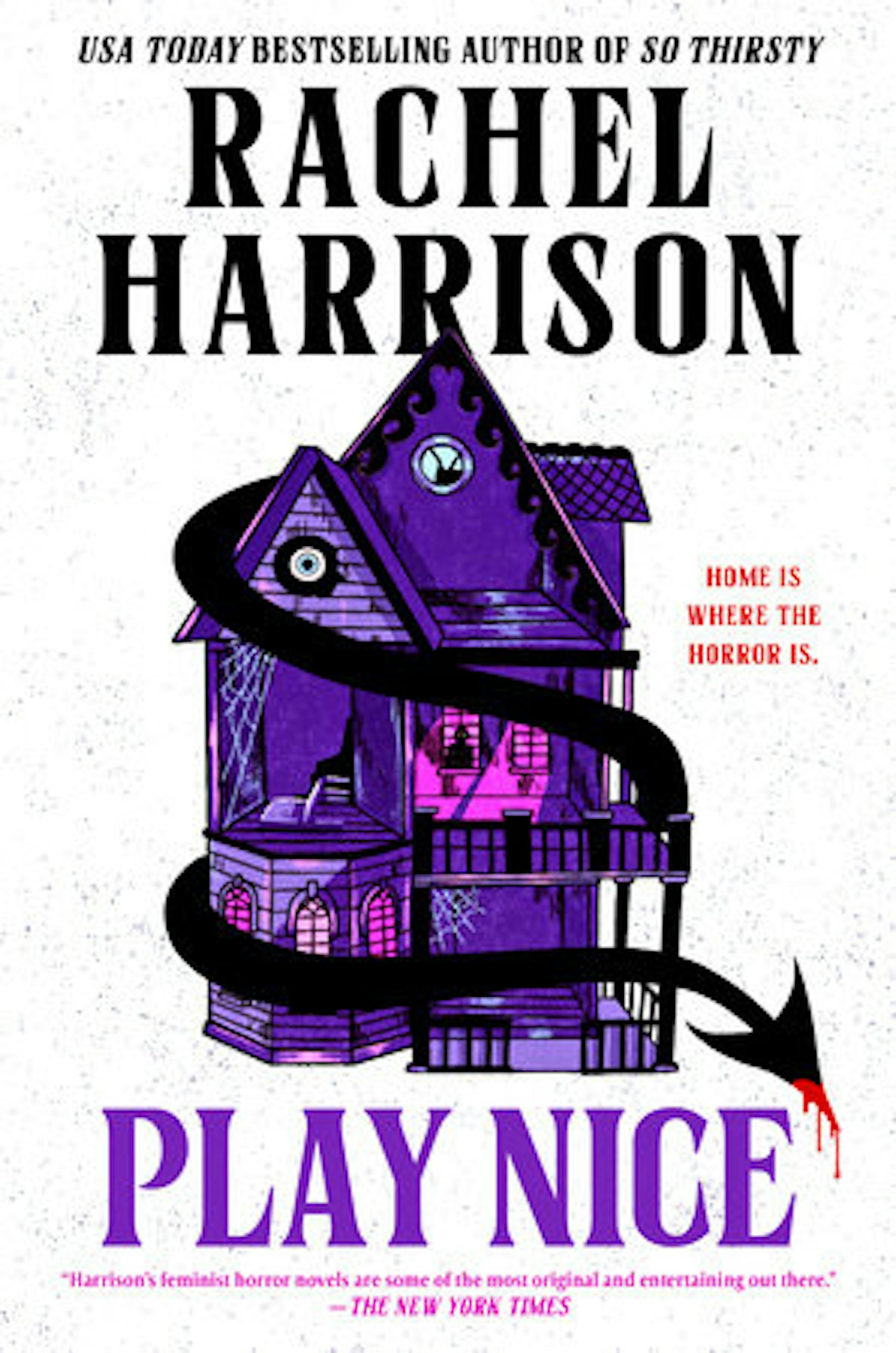
cover of Play Nice features a purple-colored drawing of an old house, with a large snake wrapped around it
Play Nice (Berkley)

Rachel Harrison’s terrific, psychological “Play Nice” (Berkley, 336 pages) is about the childhood trauma of three sisters, Leda, Daphne, and Clio, and how that trauma has festered in their adulthood. Clio, as her name in Greek mythology suggests, wants to unpack the truth about the family’s history.

The official story is their mom was an alcohol-addicted narcissist who believed a demon possessed their childhood house. After her death, the sisters vow never to return to the house. Clio defies them. Let me just say that what ensues is her gradual unraveling. Harrison’s characteristically clever plotting that centers the female experience, a snarky main character and don’t-look-over-your-shoulder horror are in cracking form here.
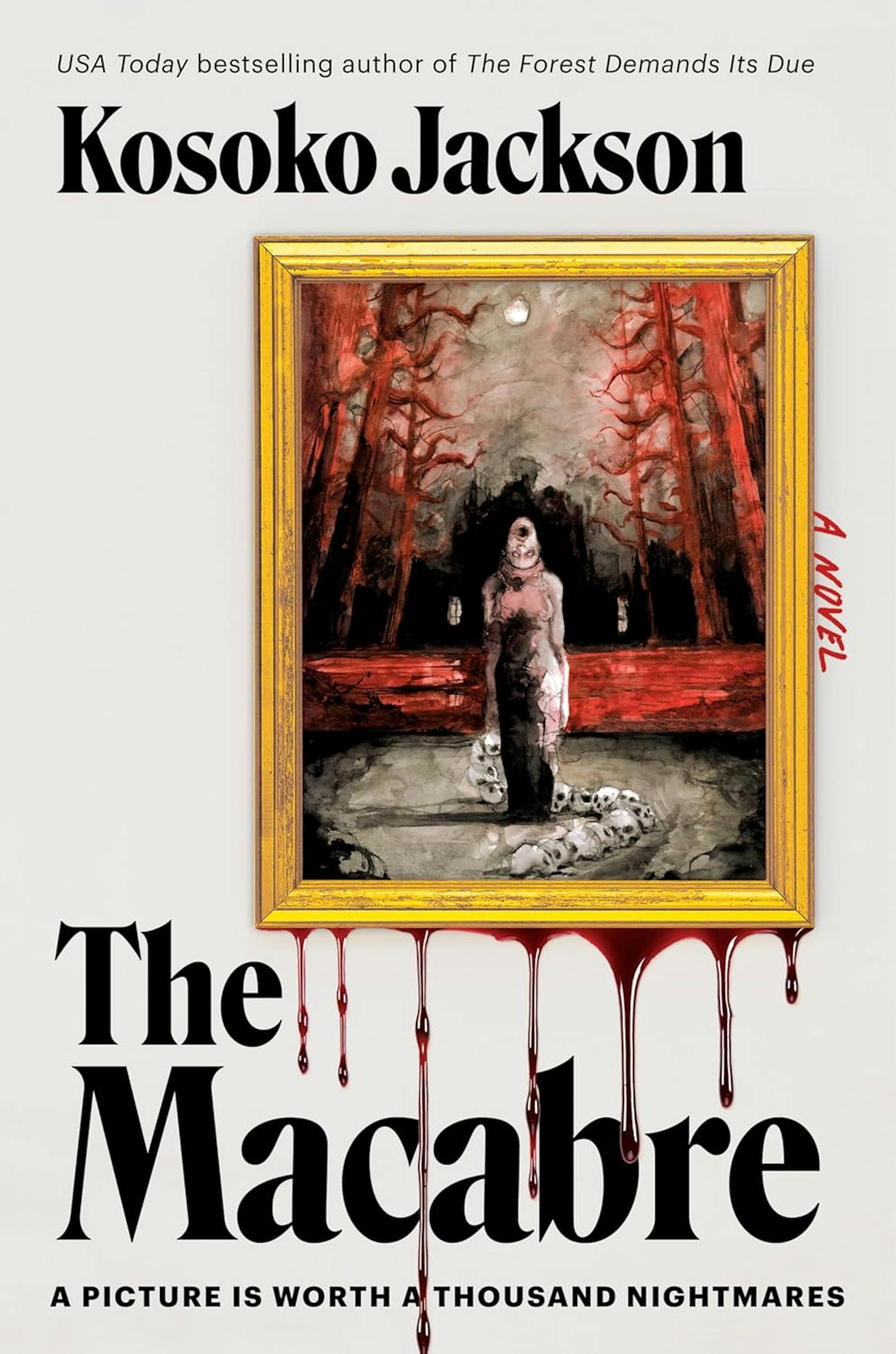
cover of The Macabre is an image of a frightening painting, dripping blood
The Macabre (Harper Voyager)

Kosoko Jackson’s “The Macabre” (Harper Voyager, 400 pages) is a dazzlingly bold cosmic horror/fantasy akin to Matt Ruff’s “Lovecraft Country” or N.K. Jemisin’s “The City We Became.”

Artist Lewis Dixon discovers something is wrong in the British Museum when he brings one of his paintings to contribute to an exhibit. In a secret museum room, he meets Evangeline, “a Black woman in a high-powered magical position” as the head of the Royal Arcane Intelligence Agency, a global organization tasked with limiting casualties caused by “cursed antiquities.”

Lewis also meets (and is quickly attracted to) Noah, an investigator for the agency. After transporting into an evil painting by his ancestor, Edgar Dumont, Lewis learns of his own powerful magical abilities. “Fear isn’t a reason not to understand something,” thinks Lewis, so he joins the agency’s mission to destroy the dark forces in a series of Dumont paintings called The Macabre.

against a blood-red backdrop, The Unveiling's cover features an image of a blue iceberg
The Unveiling (Grove)

In Quan Barry’s ominous, beautifully written psychological horror “The Unveiling” (Grove, 320 pages), Striker is a Black film scout heading to the Antarctic to photograph locations for a movie about Ernest Shackleton’s last expedition, which was doomed.

Before boarding her ship, an albatross flies into a passenger. A bad omen. When the passengers (mostly white) head out on kayaks to explore the Weddell Sea, “like floating inside a sapphire,” a massive iceberg breaks. A tsunami hits the kayakers, forcing them to an isolated island.

The narrative is from Striker’s point of view. She’s perceptive and sharp-witted, funny even, but she’s carrying baggage along with her Leica camera. In fact, Striker’s body and mind have a tenuous relationship (when she blacks out, the novel’s pages are blacked out). As the passengers battle demented seals, mad penguins and each other, Striker, like the iceberg, is fracturing. Is she in another dimension? Is she detoxing from clozapine? Or are the souls of past explorers haunting them? Maybe all of the above.

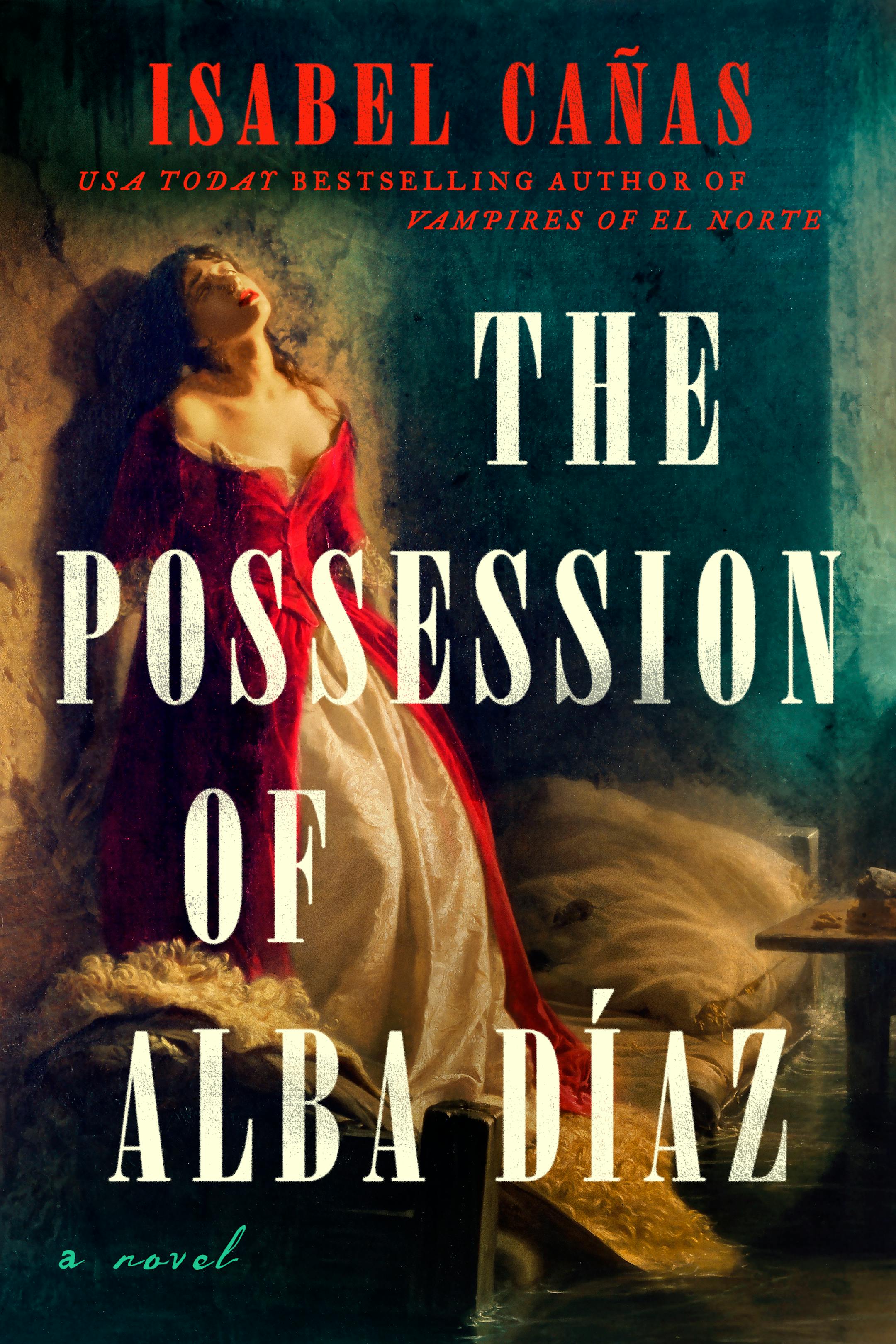
cover of The Possession of Alba Diaz features a painting of a woman, swooning in a red dress
The Possession of Alba Diaz (Berkley)

“The Possession of Alba Díaz” (Berkley, 369 pages), by Isabel Cañas, is a messy tale about an ancient terror, according to the narrator. It’s also a gothic novel, blending melodrama and malevolence in a seductively measured manner until the narrative crescendos to full-on body horror. I was mesmerized.

The novel is set in Zacatecas, Mexico, in 1765, when plague swept the country and Spanish colonialists poisoned the land. Alba is “the only daughter of a wildly successful merchant,” a young woman longing for independence, caught in the snare of machismo and marianismo (machismo’s female equivalent).

All Alba wants is to “command her own life. To command her own body.” Instead, she becomes a woman “unmoored.” While quarantining from the plague in a village near her fiancé’s silver mine, a grotesque demon possesses Alba. Desperate, she turns for help to Elias, the mine’s alchemist and a man who sees “past the pearls and starched façade.”

Carole E. Barrowman reads and writes in Waconia.

about the writer

about the writer

Carole E. Barrowman

See Moreicon

More from Books

See More
The Abbey Church is a landmark on the St. John's University campus located in Collegeville.
The Minnesota Star Tribune

Local nonfiction: “Greater Minnesota” travelogue details a home-grown returnee’s conversion.

photo of author Tilar Mazzeo
card image