

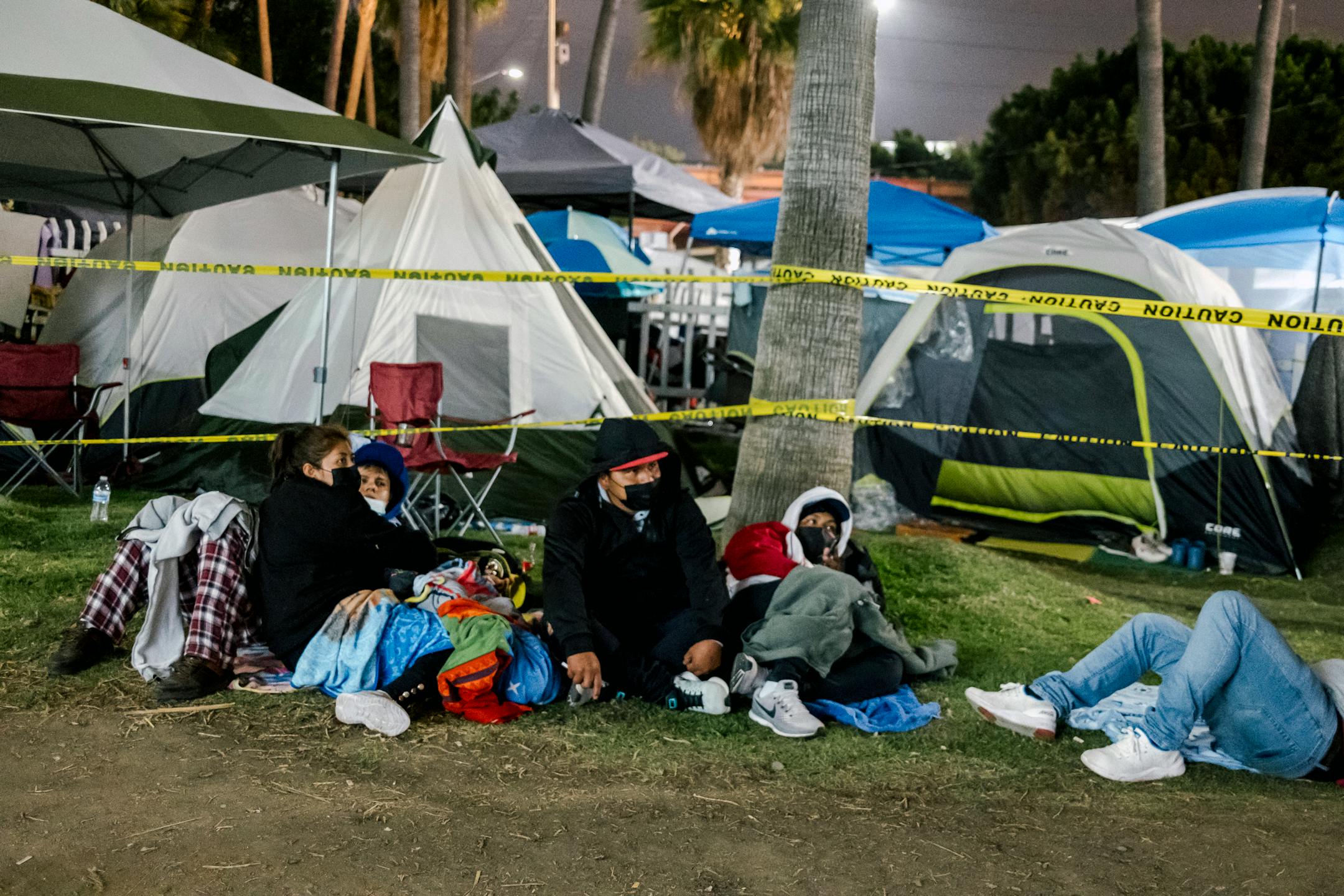
About 15 years ago I was shadowing a local journalist on Peru's northern coast who was reporting on a group of 20 Chinese nationals local police found lost in the nearby desert. They'd arrived on a container ship that sailed from China to Lima and had paid traffickers to get them to Ecuador. From there they planned to fly to Panama and make their way to the U.S.-Mexico border. The fact that people were willing to cross an ocean in a shipping container and traverse parts of two continents on foot and by bus blew my mind. It doesn't anymore.
I've spent the last four years running a humanitarian news project called El Migrante, which provides information about resources to migrants in Mexico. As part of the nonprofit Internews organization, we spend our days talking to people about what made them leave their homes, what their goals are, and what they need to know to help them stay safe and find stability. We share answers to their questions via WhatsApp, a printed newspaper and a radio show.
We've written about how to get medical care after losing an arm and a leg to the Beast, the freight train that runs from southern Mexico to the U.S. border and is known for mutilating those who slip; how to deal with local employers who discriminate against migrants; and about specific U.S. immigration policies.
We try to counter misinformation and disinformation that migrants often confront, connect them to verified information sources on such migration issues as legal rights, housing and public health. We reach about 40,000 migrants and Mexicans a month.
One lesson I've learned doing this work: The United States' southern border isn't just shared with Mexico — it's shared with the world.
If there's trouble anywhere on the globe, residents from that region will soon be arriving at the U.S.-Mexico border. People fleeing human rights abuses, poverty and war say they see the U.S. as a place they can get work and be relatively safe. It's also a place they can get to. For instance, many fly to a South American country such as Brazil that offers visas on arrival, and then make their way north to the Mexico border.
In the four months leading up to Russia's invasion of Ukraine, about 6,400 Russians and more than 1,000 Ukrainians were apprehended by U.S. Customs and Border Protection. According to one Reuters report, Ukrainians and Russians who have gained entry to the U.S. are sharing tips on YouTube and the Telegram messaging app that include how to fly to Mexico and buy a used car — and attempt to cross the border by driving.
Recently, a small encampment of around 30 Russian citizens began living on the street next to a border crossing in Tijuana. One of them, who gave the name Mark, spoke fairly good English, telling my colleague, "Even here, sleeping on the sidewalk, I feel safer than I would back in Russia."


