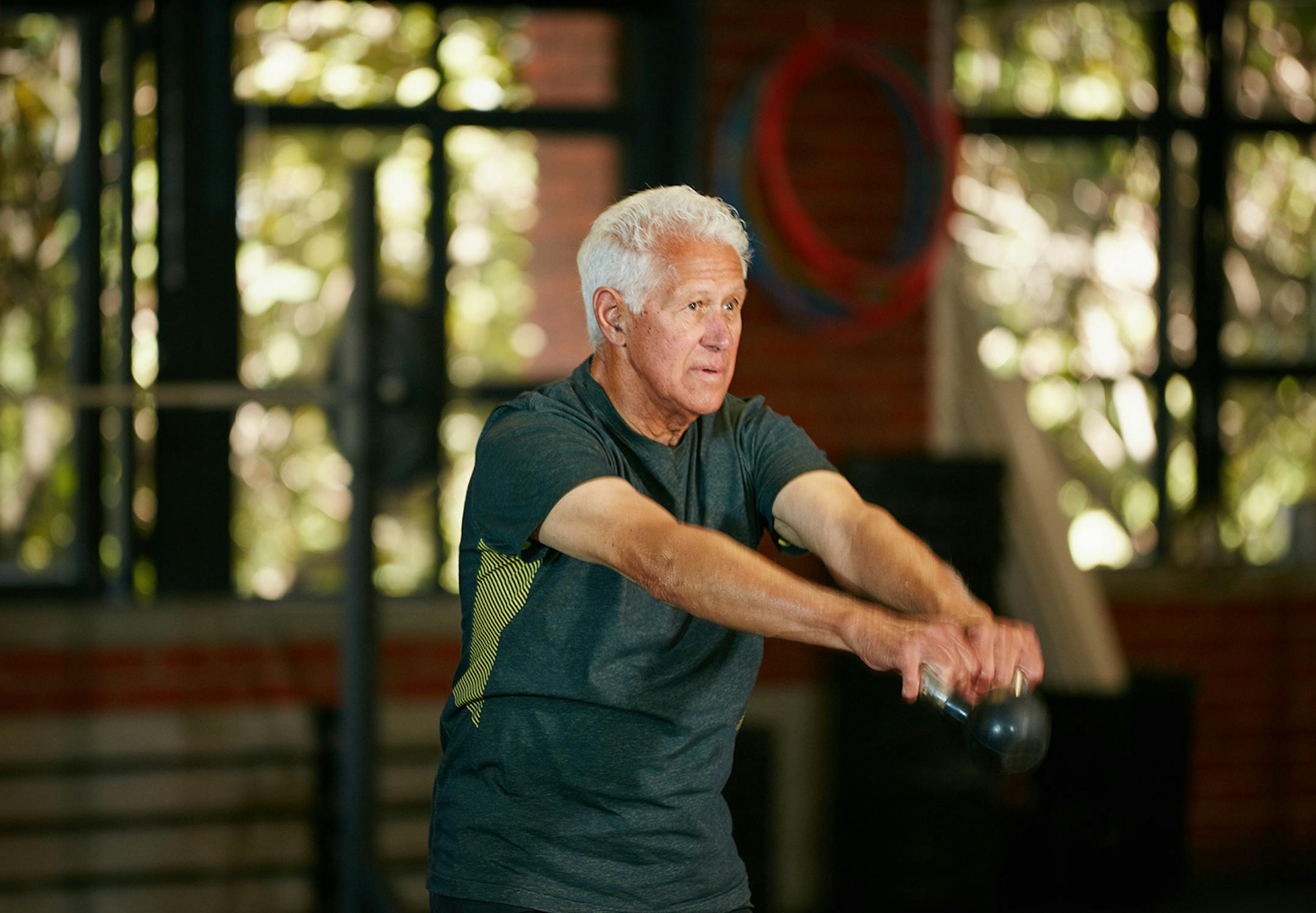
The key to a longer life may be as simple as lifting weights, according to a new analysis of older adults which showed twice-weekly strength training resulted in lower odds of dying over an extended period of time. In fact, the odds of death for any reason were 46 percent lower in those who trained with resistance compared to those who did not.
The weightlifters also benefited from a 41 percent lower risk of cardiac death and a 19 percent reduced risk of dying from cancer. The bad news? Only about 9 percent of older adults reported strength training at least twice a week.
Resistance training may not only prolong your life, but it also boosts your metabolism, which helps stave off age-related weight gain.
"As we age, inactive men and women lose a significant amount of muscle mass, about 3 to 8 percent per decade," says Dean Maddalone, a certified strength and conditioning specialist. "Studies show resistance training increases bone mineral density by 1 to 3 percent and also helps develop muscle mass."
Building muscle (in both men and women) by using weights or other resistance increases metabolism, since muscle burns more calories at rest than fat. "It also helps support joints and ligaments to help prevent injuries," adds Maddalone.
How to get started
If you've never worked out with resistance training or it's been a long while, first check with your doctor, says Maddalone.
"It's also advisable to consult with a certified exercise specialist who can conduct a proper assessment," he says. This should take into account your past medical history, injuries and any previous resistance training. Baseline testing may also be performed and include checks for flexibility, strength, coordination, balance and also consider any goals you may have — weight loss or osteoporosis prevention, for example.
How much, how often, how long?
Specific recommendations vary based on past resistance training experience, says Maddalone. "It is always better to ease into a resistance training program, just to see how your muscles and joints react to the training."