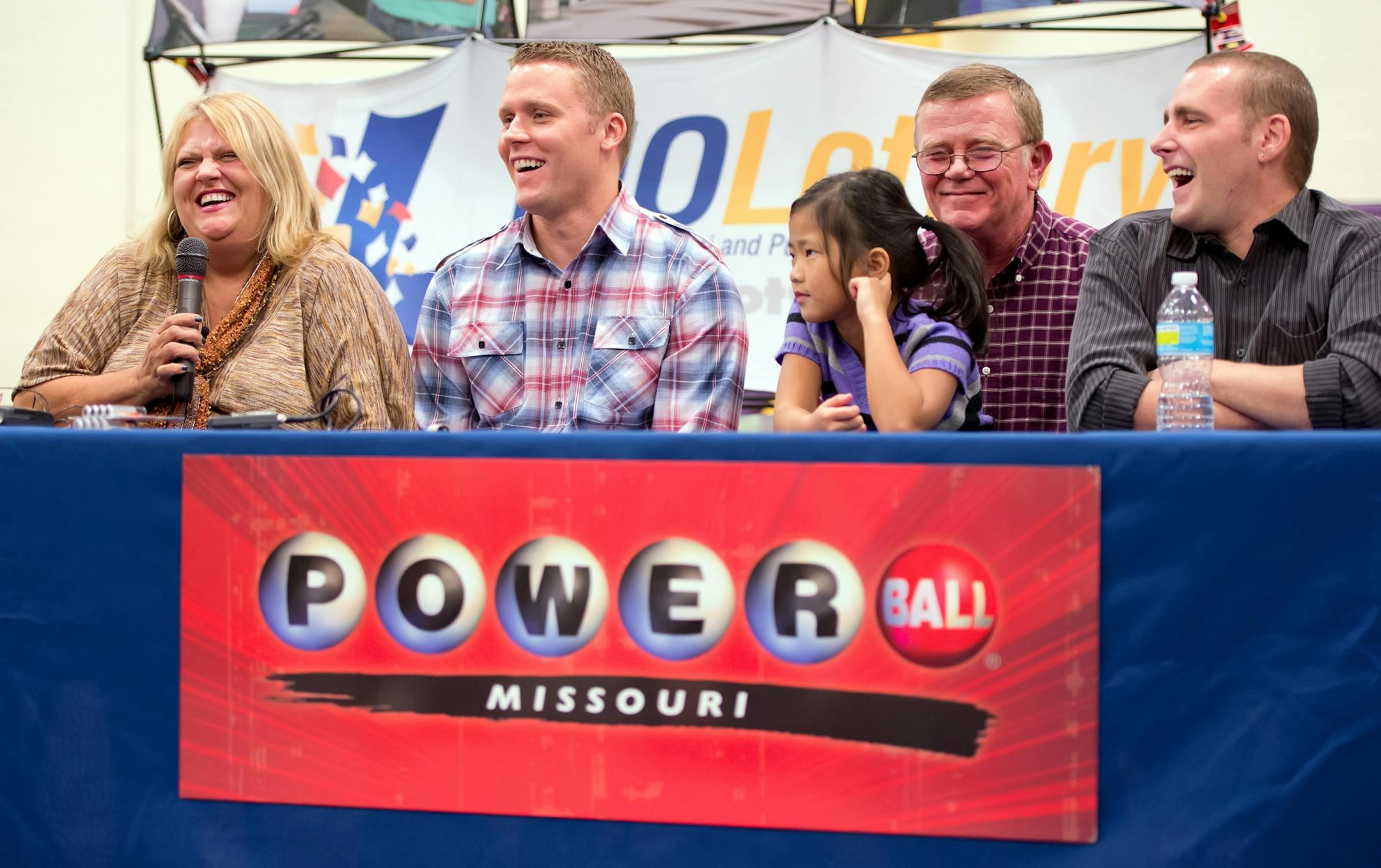
"We're normal human beings," said Cindy Hill on Friday, moments after she and her husband, Mark, posed with an oversized check for $293,750,000. "We're common," she added. "We just have more money."
The check, of course, represented their half of the $588 million Powerball jackpot, which the Hills had just won, along with another, as yet unidentified, winner. From one point of view -- the point of view of lottery officials -- you couldn't ask for more ideal winners than the Hills.
Mark works for a meatpacking plant. Cindy is a clerical worker who was laid off in June 2010. When they were introduced to the news media Friday, their adopted daughter in tow, they talked about how the money might allow them to adopt another child. They said they were going to help various relatives pay for college. They insisted that the money wouldn't change them. The only extravagance they mentioned was a red Camaro that Mark wanted.
They made winning the lottery seem downright heartwarming. But it's not. On the contrary, lotteries may well be the single most insidious way that state governments raise money.
Many of the people who buy lottery tickets are poor; they are essentially a form of regressive taxation. The odds against winning a big jackpot are astronomical -- far worse than the odds at an Atlantic City slot machine. The get-rich-quick marketing -- by government, let's not forget -- is offensive. One New York Powerball ad shows a private jet emblazoned with the words, "Kevin's Airline." The tag line read: "Yeah, that kind of rich."
Oh, and let's not forget the fate of the people who win. They may be "that kind of rich" on the day they hit the jackpot, but, more often than not, they don't stay that way. People who suddenly fall into extreme wealth -- whether because of an insurance settlement, a professional sports contract, or a lottery win -- rarely know how to handle their new circumstances.
There is, to take one of the most prominent examples, the story of Jack Whittaker, a West Virginia businessman who won a $315 million Powerball jackpot in 2002. A decade later, his daughter and granddaughter had died of drug overdoses, his wife had divorced him, and he had been sued numerous times. Once, when he was at a strip club, someone drugged his drink and took $545,000 in cash that had been sitting in his car. He later sobbed to reporters, "I wish I'd torn that ticket up."
I read about Whittaker, and a host of other sad stories about lottery winners, in a recent e-book written by Don McNay entitled, "Life Lessons From the Lottery." McNay is a financial adviser and newspaper columnist, based in Kentucky, whom I've gotten to know over the years. He specializes in helping people who have come into sudden money. He is convinced that the majority of people who win big-money lotteries, like the recent Powerball prize, wind up broke within five years. "The money just overwhelms them," he told me the other day. "It just causes them to lose their sense of values."