

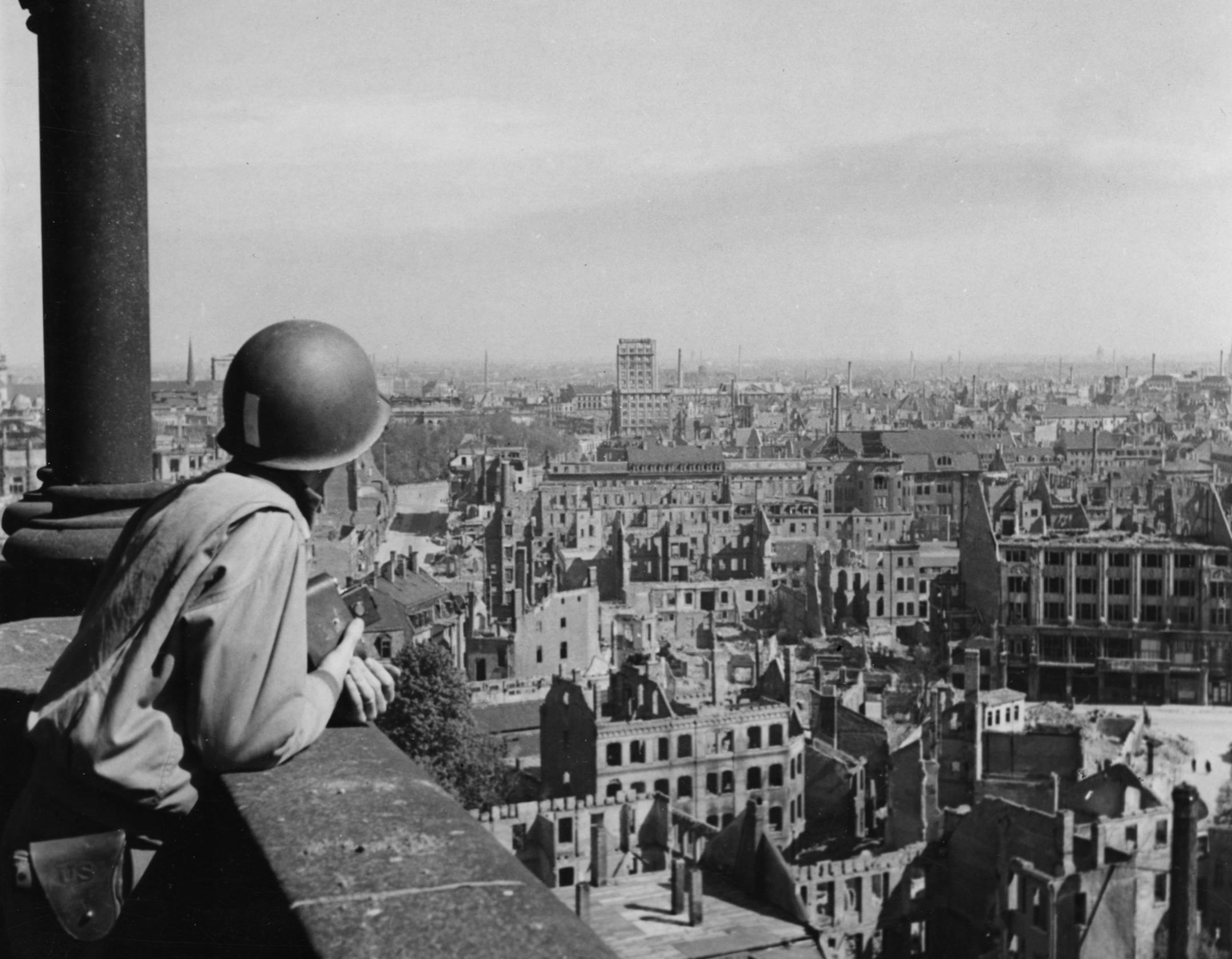
I was born during the Second World War and lived with my mother in an apartment building only a few hundred feet away from an ammunition factory in Karlsruhe, Germany.
One night, together with our neighbors and accompanied by the shrill sounds of alarm sirens, we were herded into a dark basement lit only by a candle. Soon afterward came the booming sound of falling bombs, followed by the shaking of the house. Above all was the sound of the sobbing adults and the crying of scared children.
"The Americans bomb the factory," was whispered. My mother held me tight in her arms with each explosion. This went on for many weeks. Every night when the sirens sounded, we grabbed our blankets and mother's little backpack. We went down into the dark and waited and cried and hoped.
Finally, the bombing stopped. The factory was destroyed but the apartment blocks were unscathed. Now the conversations in the hallways went something like this: "The Americans did spare us — they just hit the factory."
This was my second time I heard about "the Americans." Soon there would be a third time. The women's conversations centered around the question of who would be the occupying army in our town, and around their horror at the danger of having to face abuse and rape at their hands.
"Let us pray that it will be the Americans," my mother said. "They don't rape."
Although I did not understand this thing the women feared, nor who "the Americans" were, I folded my hands and prayed for their arrival with my mother and her friends.
A few days later they all jumped up to the windows and peaked between the curtains and cried out: "The Americans are coming!" We hugged each other. My mother held me up to the window so I could see the green trucks with a star rolling slowly into our street. The war was over, and the Americans had come.


