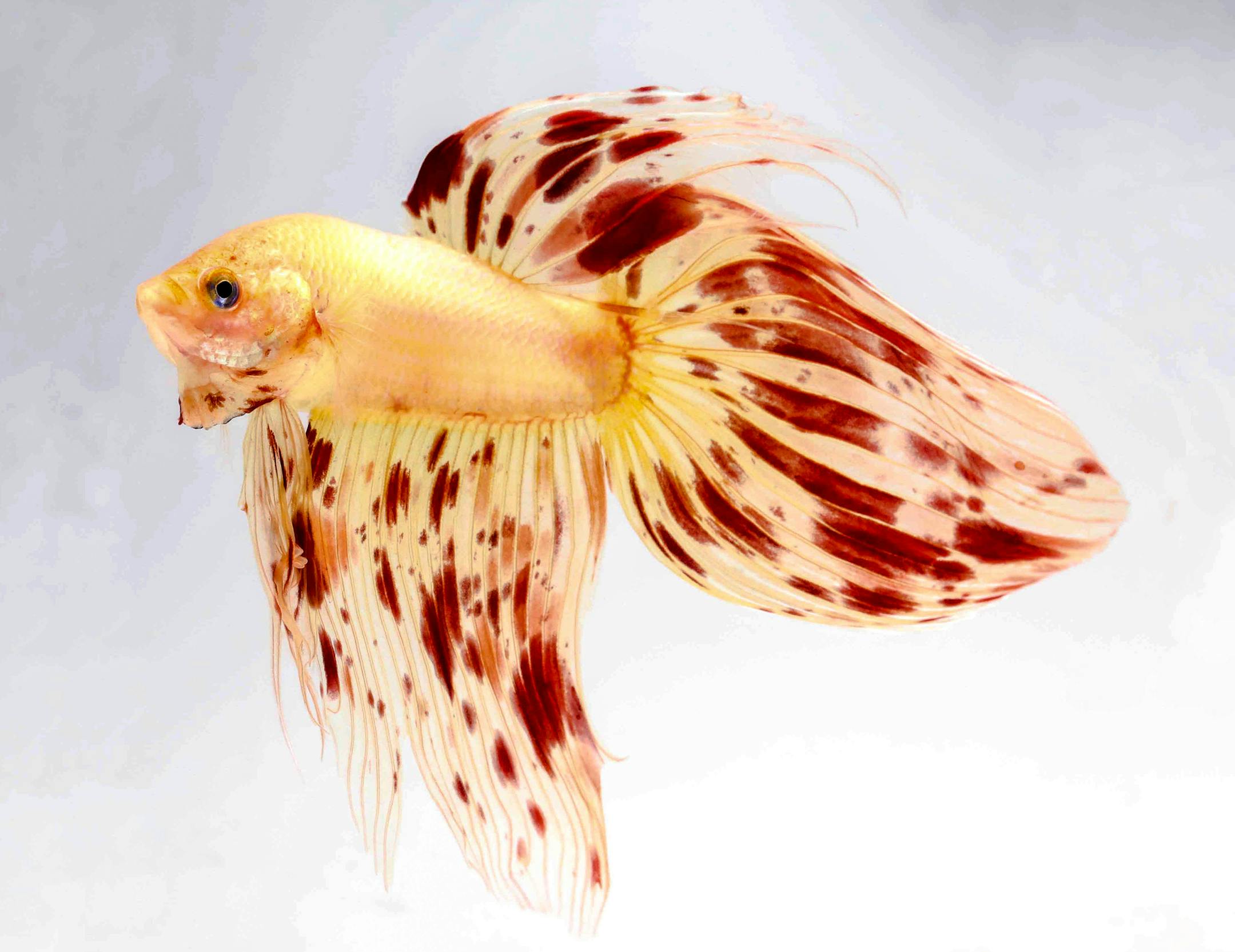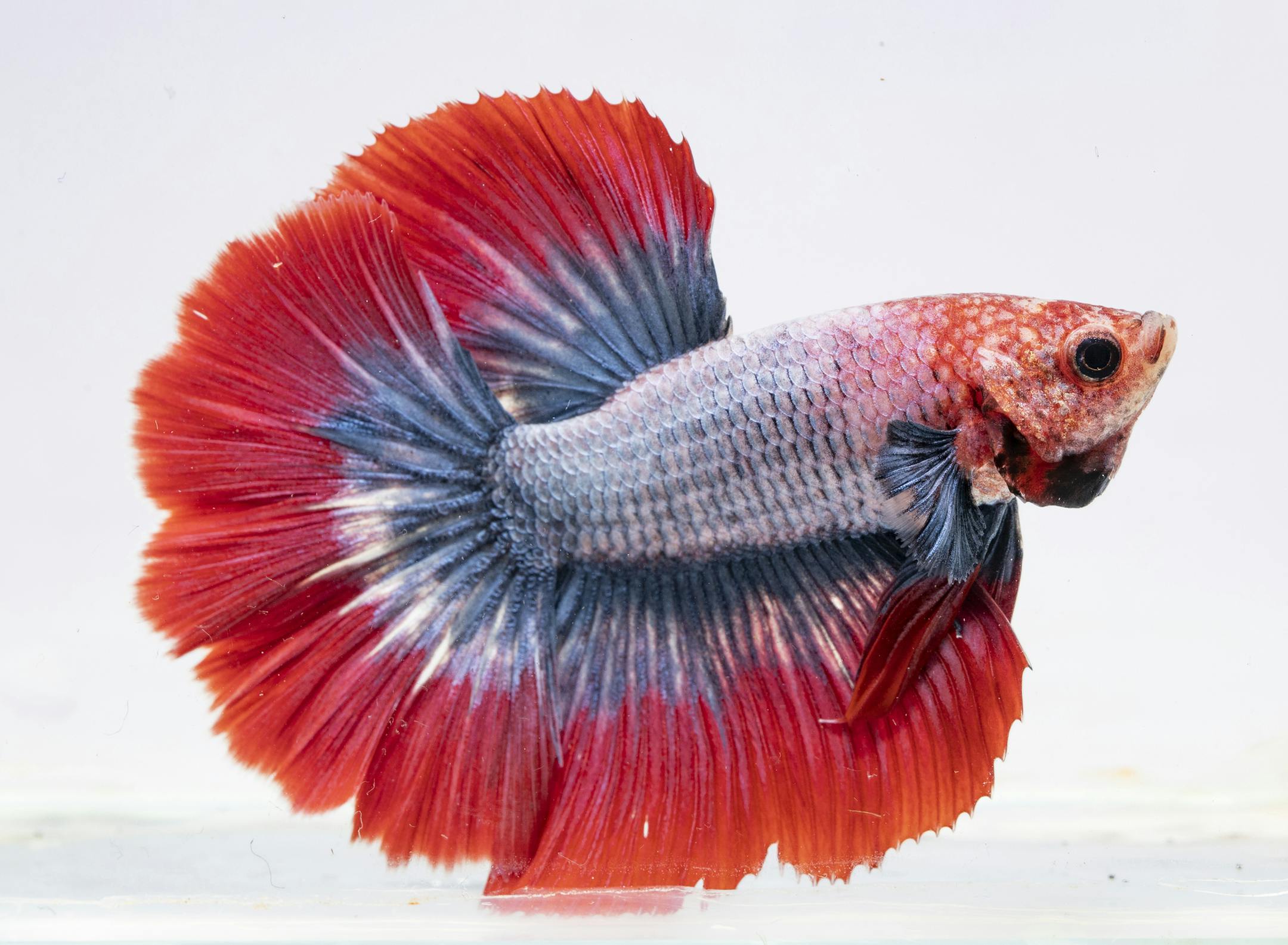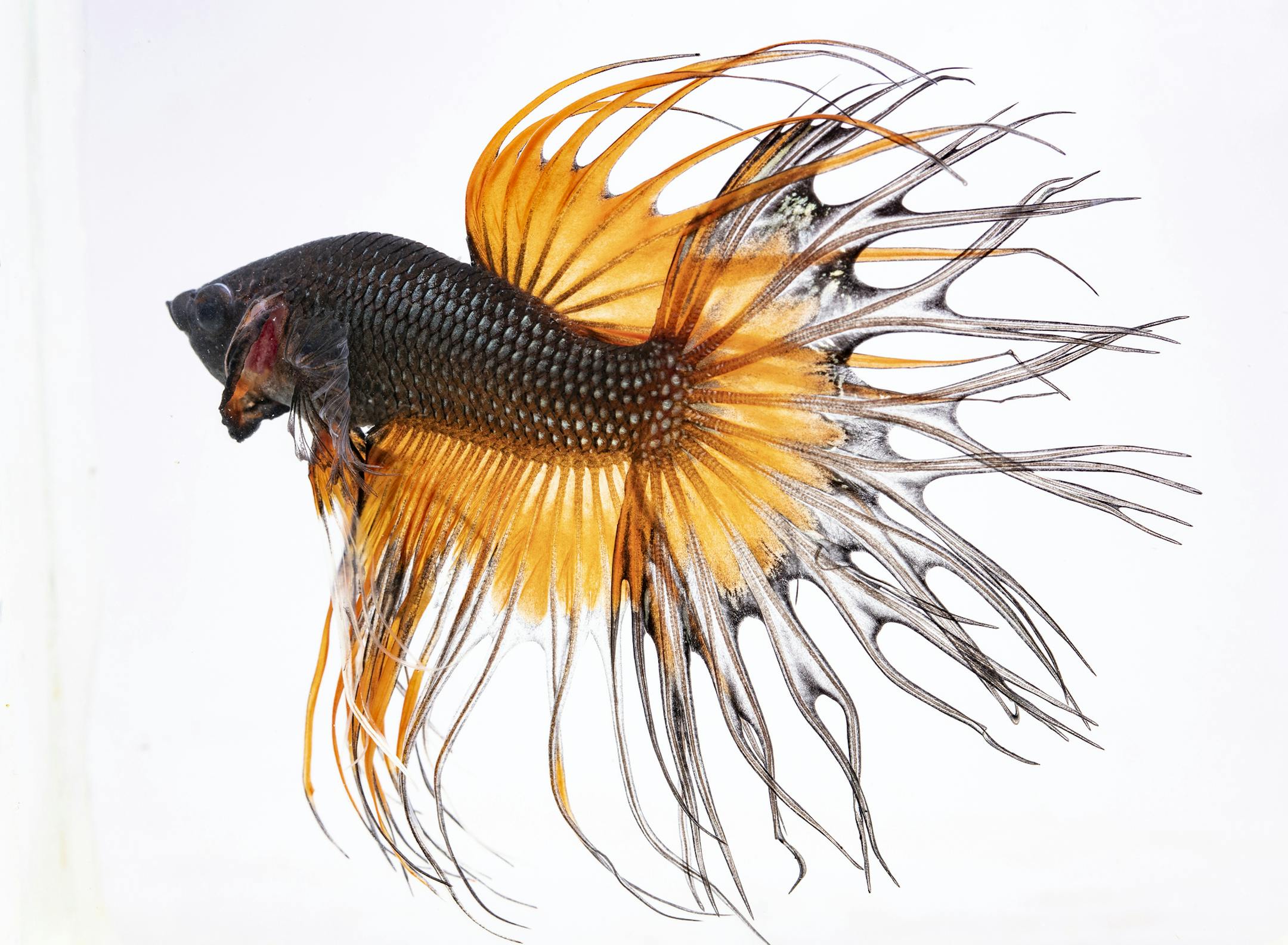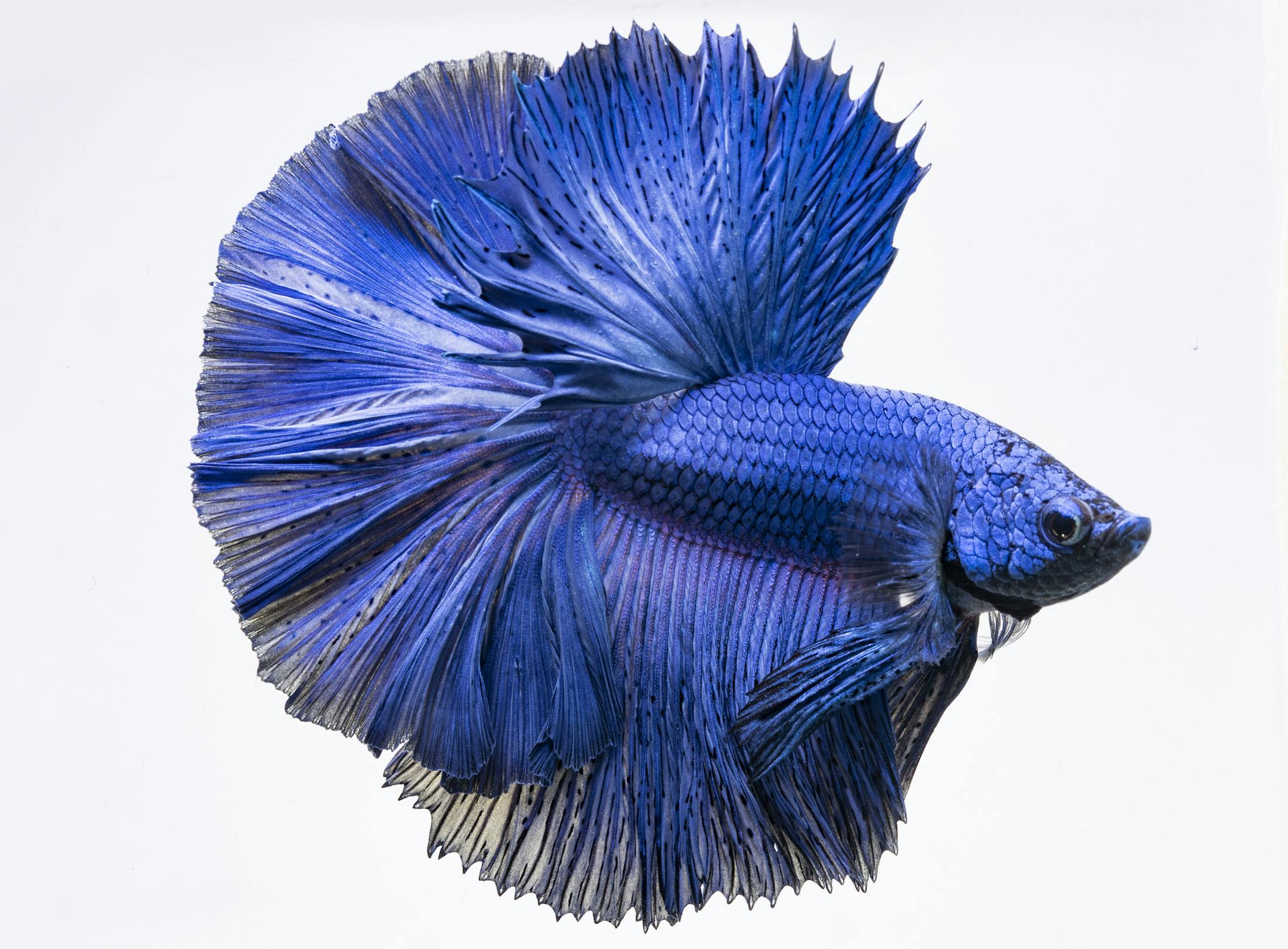
For centuries, humans have been captivated by the beauty of the betta. Their slender bodies and oversized fins, which hang like bolts of silk, come in a variety of vibrant colors seldom seen in nature.
However, bettas, also known as the Siamese fighting fish, did not become living works of art on their own. The betta's elaborate colors and long, flowing fins are the product of a millennium of careful selective breeding. Or as Yi-Kai Tea, a doctoral candidate at the University of Sydney who studies the evolution and speciation of fishes, put it, "quite literally the fish equivalent of dog domestication."
A new study, uploaded in April to the preprint service BioRxiv, shows through genome sequencing that humans began domesticating bettas at least 1,000 years ago. The years of breeding gave rise to the stunning diversity of domestic betta fishes alive today, but also caused both wild and domestic betta fish to undergo vast genetic changes. By studying the genes of these fish, the study's authors argue, scientists can learn a great deal about how domestication alters the genes of wild animals.
Tea, who was not involved in the analysis, praised the research for being "the first major study to tease apart the genetic basis for this remarkable phenomenon" in fish.
All 73 species of bettas originated in Southeast Asia. But the ubiquitous species sold in pet shops and at flea markets is Betta splendens. Domesticated bettas of this species are far more colorful than most wild species.
"Wild bettas can look very different from ornamental bettas," said Young Mi Kwon, a researcher at Columbia University and lead author of the study. "They have short fins, duller coloration and lack the striking fin-nage that you can find in ornamental varieties."
Domestic bettas are also "very aggressive," she said. "You can't put two betta males in the same tank, they will attack each other and will fight to the death."
Wild bettas are far less aggressive. This is likely because the ornamental species "were initially domesticated for fighting, similar to cockfights," Kwon said.