

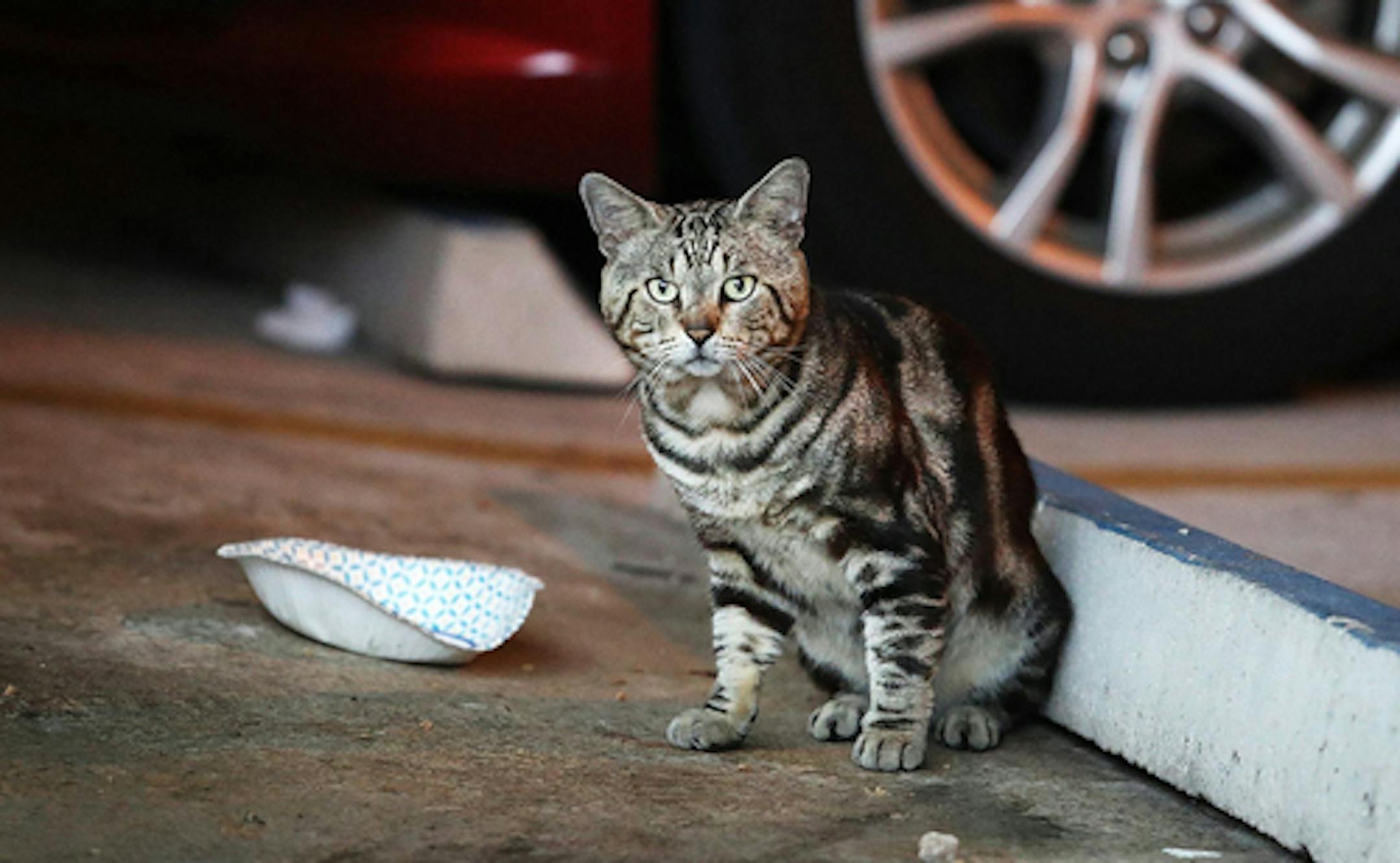
Sparkling sapphires, emeralds and topazes glow up from their furry setting. They aren't gemstones or precious metals, though, but the eyes of our cats.
Blue, green, gold and amber, orange, yellow and hazel — those are just a few of the colors reflected in a cat's eyes. These gorgeous orbs have some unique features that contribute to the feline aura of mystery as well as to their mastery of darkness and the hunt.
In structure, a cat's eye is similar to a human eye. They each have a cornea, the clear front part of the eye; a retina, the light-sensitive membrane containing photoreceptor cells; and a pupil, the opening at the center of the eye, which is surrounded by the iris, the colored or pigmented part of the eye. But the cat's pupil and iris work a little differently than in humans.
"What is unique about the domestic cat is the pupil," says veterinary ophthalmologist Dr. Cindy Mar. "The cat pupil has a vertically oriented slit. This pupil shape is due to the orientation of the iris muscles, which create a scissorlike action during closure."
This allows cats to control the amount of light reaching their eyes and make precise adjustments to accommodate different lighting, whether they are in bright sunlight or a darkened room. It's one of the factors that make them superb hunters. (Fascinating fact: Big cats such as lions and tigers have round pupils.)
Two other features that cats have but humans don't is a third eyelid on the inner corner of the eye, which offers extra protection, and a shiny reflective layer, called the tapetum lucidum, in the back of the eyes.
"The tapetum increases the amount of light in the eye, allowing the cat to have better night vision," Mar says. Interestingly, not every cat has a tapetum. Blue-eyed cats and some cats with dilute colors lack a tapetum. How do you know if your cat has good eyesight? In fact, how does a veterinary ophthalmologist know? It's not as if they can show a cat an eye chart and ask if they can read the letters M-O-U-S-E.
It's a challenge, Mar says. And evaluating cat vision is even more challenging than evaluating dog vision. Dogs offer more clues because they are more likely to walk around the exam room and make their way around objects. Cats may simply want to hide unless they have been given time first to adjust to being in the exam room.


