

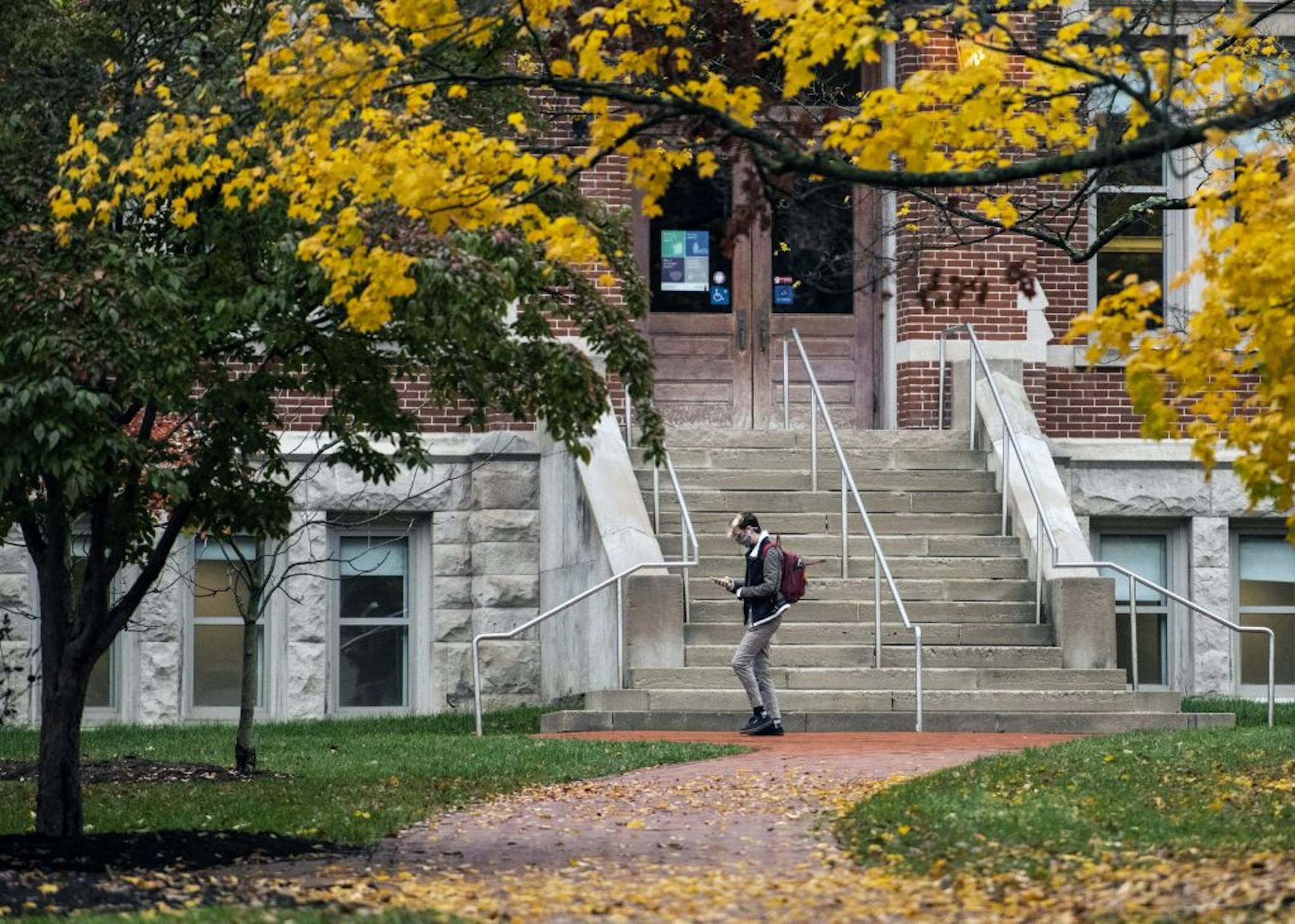
As Thanksgiving approaches, millions of Americans are weighing the risk of pandemic travel against the yearning to visit friends and family. But one group seems all but certain to be heading home in large numbers just in time for turkey and holiday gatherings: college students.
Since the start of the fall semester, most universities have planned to end in-person classes before Thanksgiving and require students to finish the term remotely, partly to avoid an expected wave of cold-weather infections. That means that in a couple of weeks, hundreds of thousands of students will be streaming back to hometowns until the spring semester begins.
So what are colleges and universities doing to reduce the chances that those students might carry the coronavirus with them?
As has been true with so much of the nation's pandemic response, the answer is a patchwork of policies, with a minority of schools mandating that students test negative for the coronavirus before they can leave campus — and many more offering little more than optional testing and advice.
Indiana University in Bloomington — where dozens of fraternity and sorority houses had to quarantine in September — will open its weekly surveillance testing to all of the 42,000 students living on or near campus. But the testing will be voluntary for most.
Pennsylvania State University — where off-campus parties around the football opener Oct. 24 drew a rebuke from President Eric J. Barron — will offer free exit tests and strongly encourage students to get them but will not make them mandatory for the more than 13,500 students in university housing or the tens of thousands living off-campus.
"We have found that students are responding well to our voluntary, convenient and free walk-up testing sites," the university said in a statement.
The University of Michigan — where infections recently spiked so severely that local health officials issued a stay-in-place order — will make exit tests mandatory for some 5,000 undergraduates in university housing but voluntary for thousands more living off-campus.


