

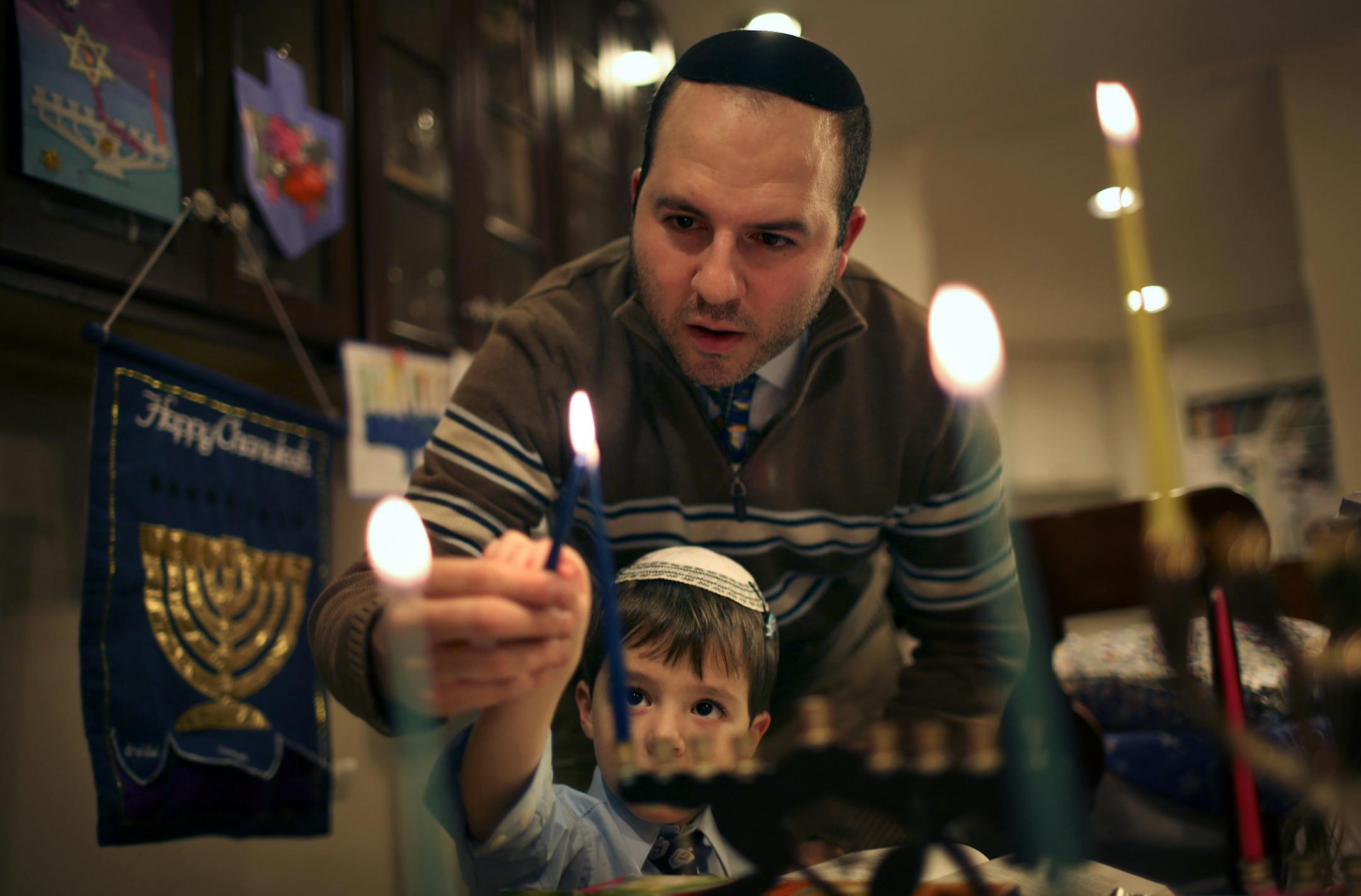
After the turkey is carved, the cranberries consumed and the stomachs stuffed, the 18 Thanksgiving Day guests at Stefan Plambeck's St. Paul home will gather around a turkey-shaped menorah to celebrate another holiday of the day: Hanukkah.
Many U.S. Jews are calling it Thanksgivukkah and finding special ways to mark the rare confluence of holidays, knowing that by some estimates it won't happen again for another 79,000 years.
Cooks will top sweet potato latkes with cranberry sauce. Children in Jewish religion classes have made hand-traced paper turkeys with candles for plumes. Among e-cards available for the dual holiday: "Happy Thanksgivukkah" and "Gobble Tov!"
"Mostly people are just having fun with the convergence, but the truth is that there are a lot of real connections between the two," said Rabbi Adam Spilker, of Mount Zion Temple in St. Paul, the oldest synagogue in Minnesota.
"The gratitude for our freedom is certainly central to both holidays," he said. "Thanksgiving obviously was instituted by the pilgrims to give thanks for the harvest and for religious freedom of being in America, and the Maccabees in the story of Hanukkah as well were celebrating their religious freedom from Syrian-Greek tyranny."
At the Talmud Torah of Minneapolis, a Jewish supplemental school, teachers have been embracing the convergence of holidays with students, said Susie Chalom, executive director. Much of their curriculum "has to do with gratitude to God and to the country we live in for the blessings of freedom," she said.
Falling on the Thanksgiving holiday will mean more families will be together for Hanukkah, she said. "It's wonderful, you know, because parents expect their kids home [from college] anyway for Thanksgiving."
At Beth El Synagogue in St. Louis Park, Rabbi Avi Olitzky said the two holidays have a "similar bedrock" rooted in Sukkot, a biblically mandated Jewish festival giving thanks for the fall harvest.


