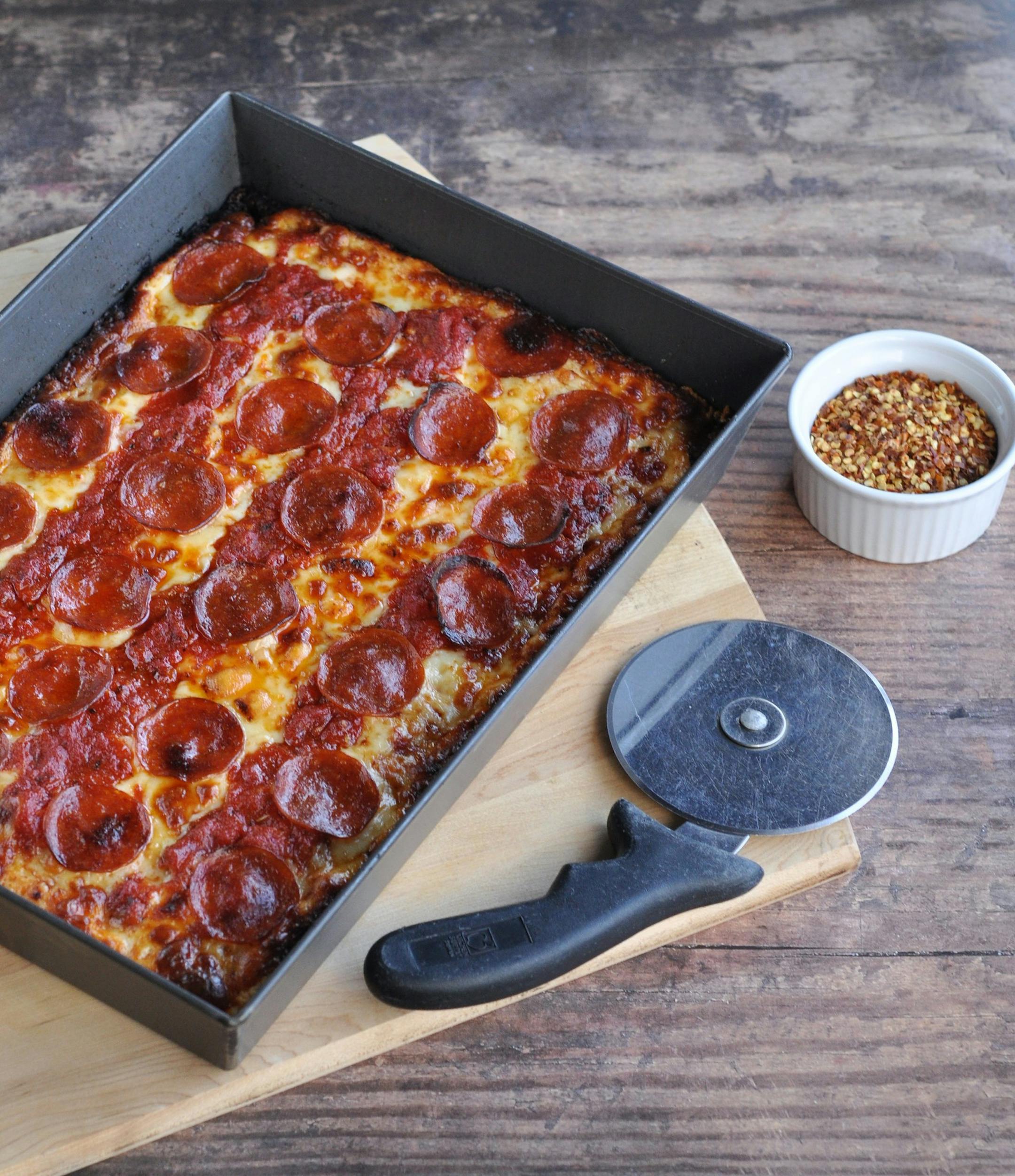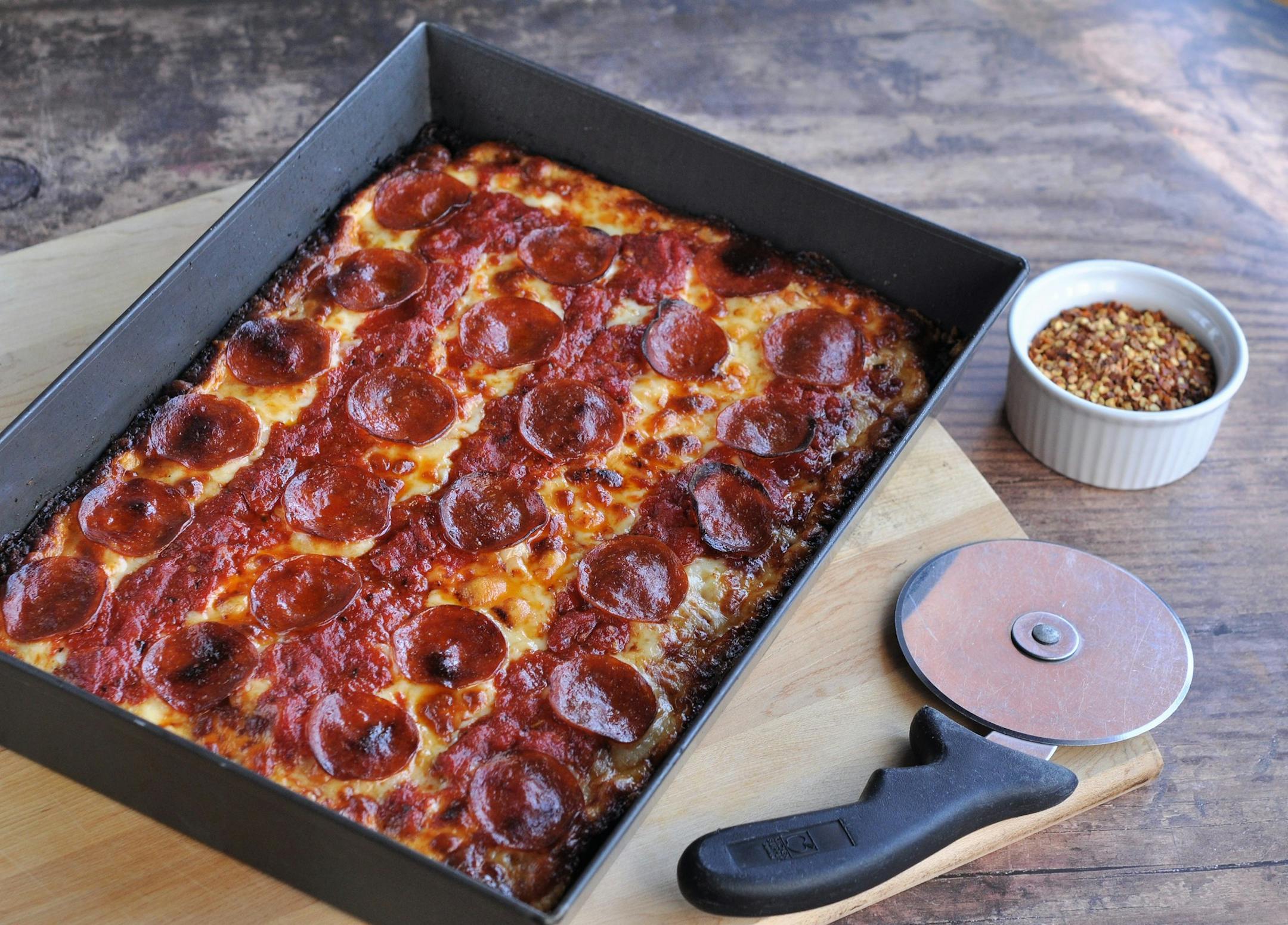
Detroit pizza seems to be everywhere these days. Recipes are all over the internet and thick, cheesy slices have been finding their way onto restaurant menus that are nowhere near Michigan. Even the frozen pizza section of your local grocery store is likely to have one or two options on the shelves.
If you've never heard of this Motor City classic, take note. It all started at a place call Buddy's. A waitress from Italy missed her homeland's focaccia, persuaded the owner to take a shot at making one, and the result was Detroit pizza.
While its sudden emergence onto the culinary scene is hard to explain — they have been serving it in Detroit for more than 70 years — its appeal is undeniable.
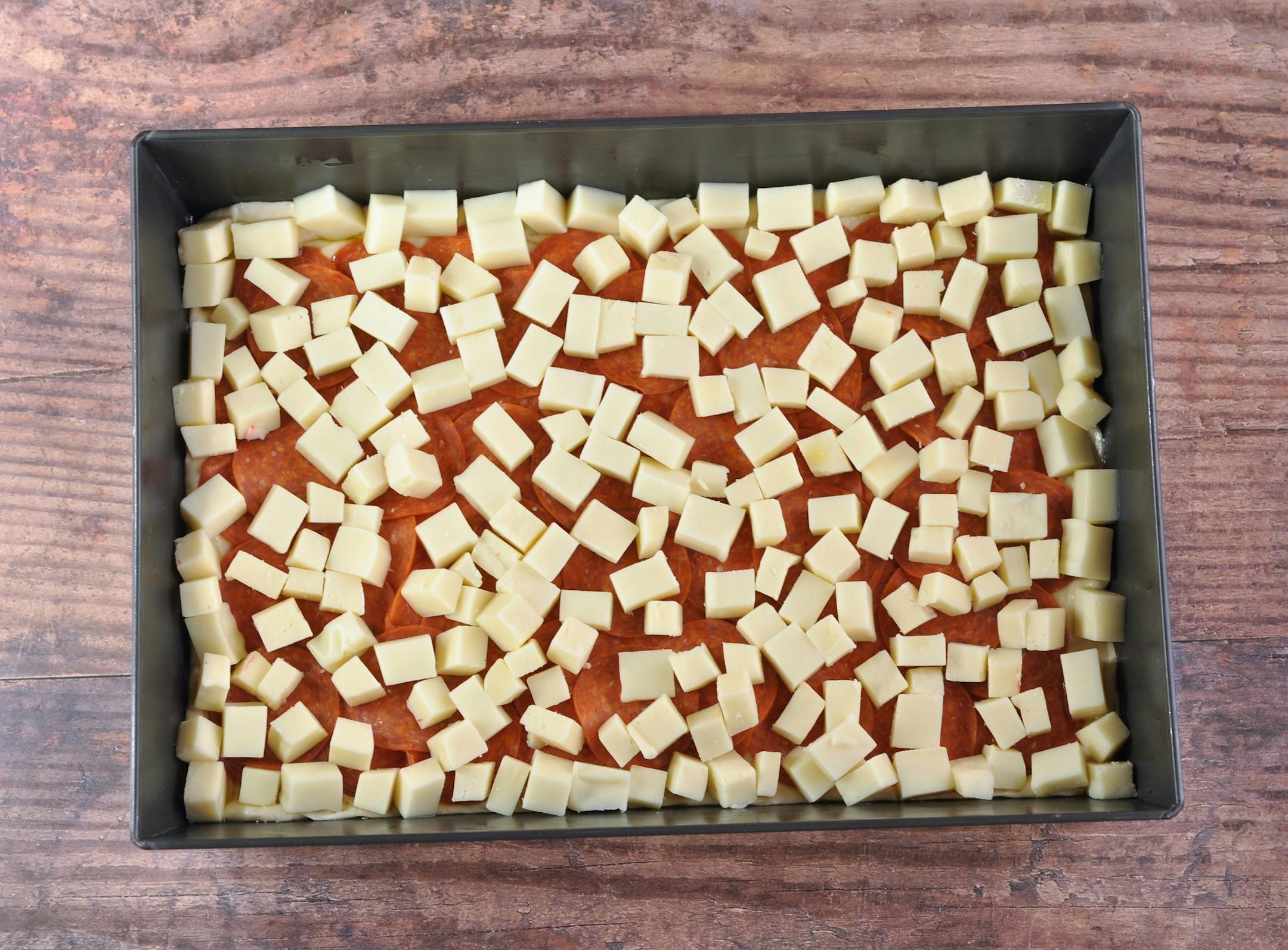
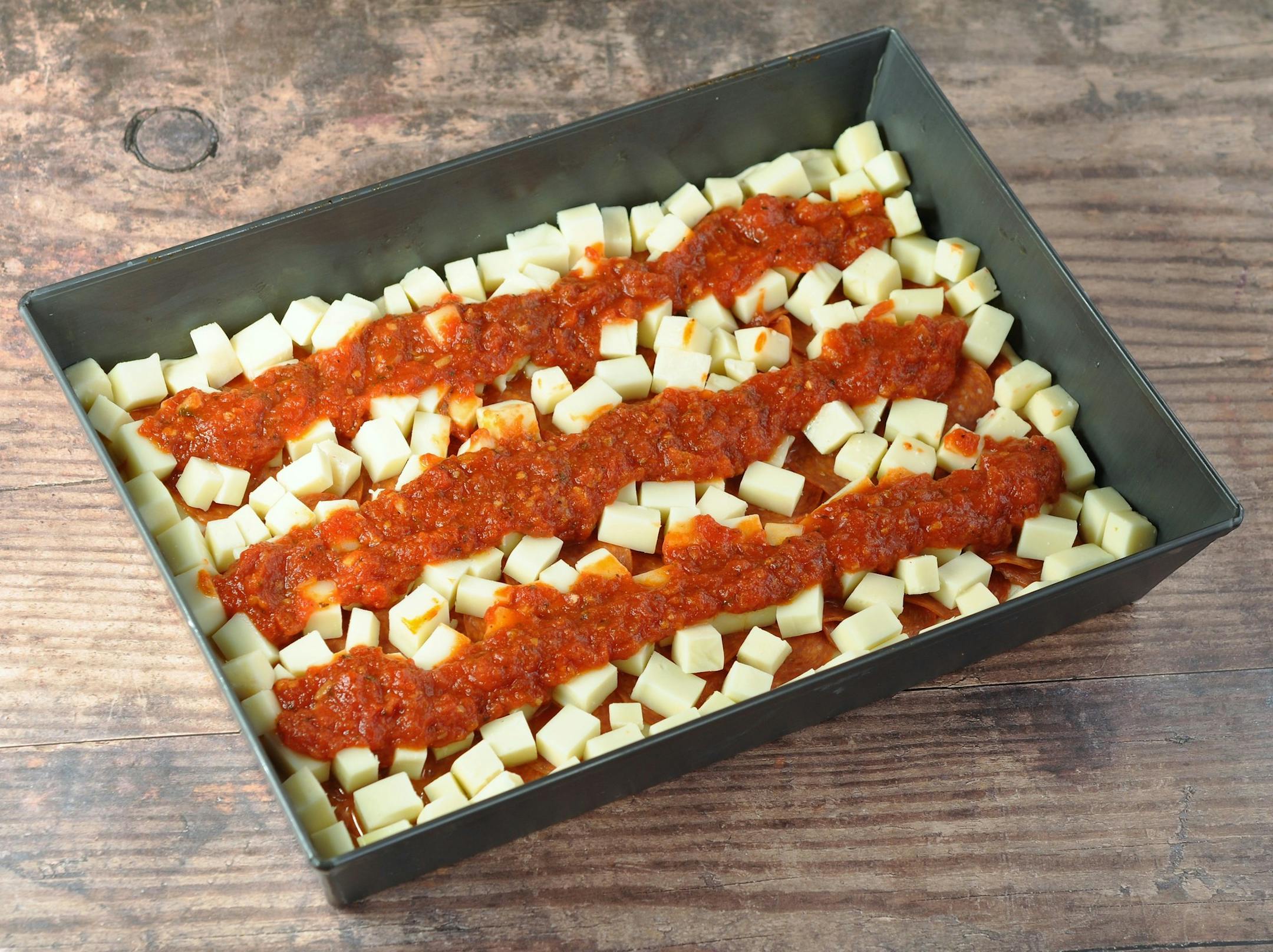
What sets this Michigan version of an Italian-American staple apart from its more traditional counterparts is a combination of a thick, chewy crust, a mind-blowingly generous amount of Wisconsin cheese that forms a lacy, crispy, darkly brown edge on the perimeter, and a garlicky, herby, slightly sweet sauce that pulls the pizza together beautifully.
It's not the pizza you might expect, but it's the pizza you're going to crave from here on out.
A specific pan
Before we can discuss what goes into the pizza, we have explain the pan. Yes, Detroit-style pizza has its own pan. Legend has it that Buddy's originally used pans to bake their pizzas that originally had held spare parts, gleaned from a local automaker.
Today, you can buy a Detroit-style pizza pan, a deep, 10- by 14-inch rectangle of black metal with sides that flare gently away from the bottom. While the original pans were made from blue steel, most modern pans are made from anodized aluminum and come with a nonstick coating.
If you plan on making this pizza often, this specific pan does provide the best results, as the conductivity of the dark metal results in a crispy crust and nicely browned, cheesy edges. That said, I have had good results from a standard 9- by 13-inch baking pan.