

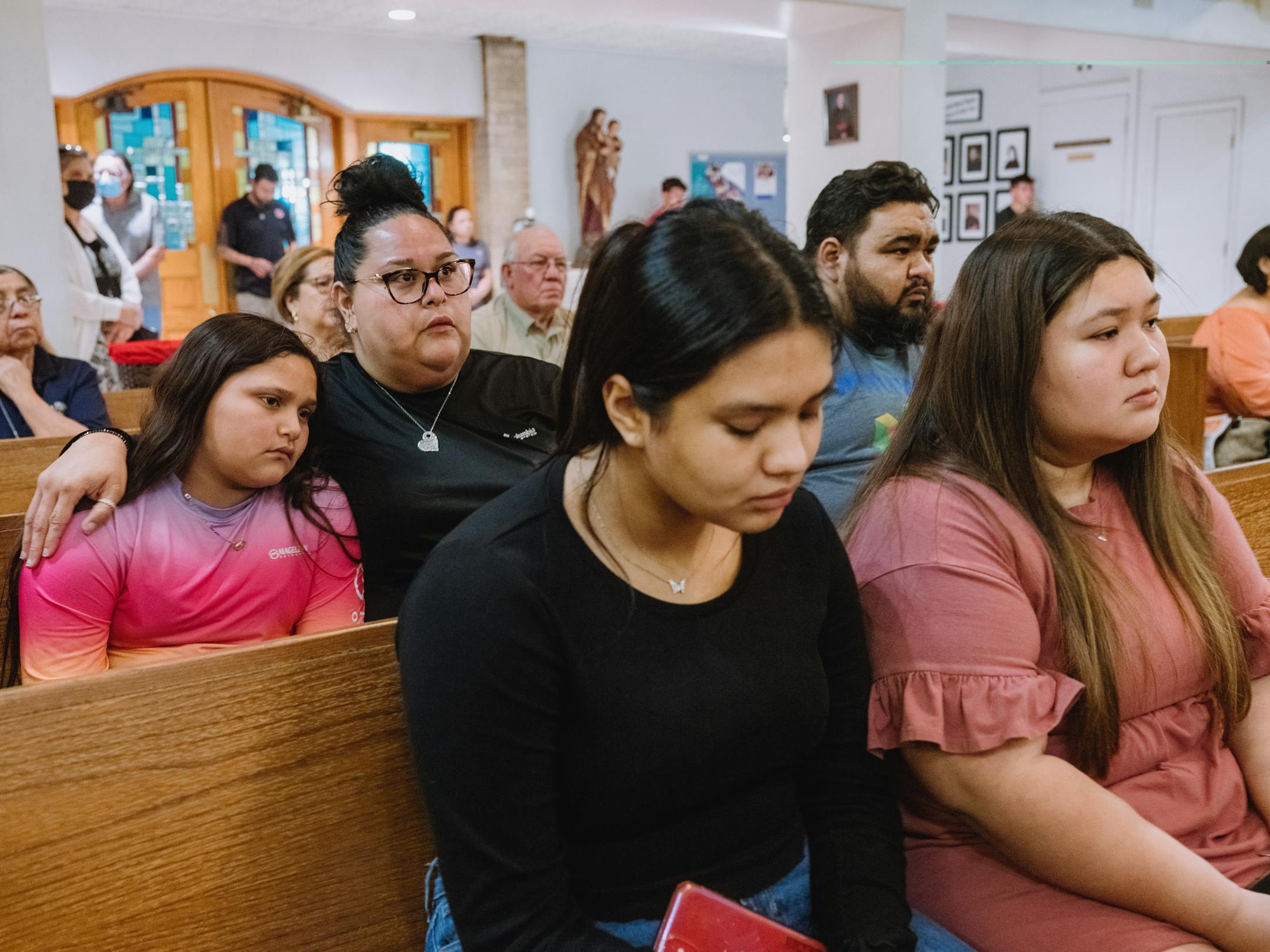
The shooting that left 19 children and two adults dead at a school in Texas is forcing parents and schools to once again confront how to talk to kids about violence.
Experts have told the Los Angeles Times these are complex and sensitive conversations, but also vital.
Kids are "anxious and worried, and they're dealing with the unknown," one specialist told the Times after the 2015 San Bernardino terrorist attack. "Parents have to be role models in terms of establishing a sense of safety, security, predictability."
Here are some tips experts have suggested from previous Times coverage:
Check in with your child and talk to them about their concerns
The first thing adults should do is make sure their child or adolescent knows they are willing and available to talk with them, Stephen Brock, a professor of school psychology at Cal State Sacramento, told the Times in 2019.
Younger kids may not be as worried. But teenagers are likely to know more and have concerns, so it's better to address the subject directly with them rather than avoid it, said Carol Vidal, a child and adolescent psychiatrist at Johns Hopkins University, that same year.
Give kids reassuring facts about their safety
Parents should immediately reassure children that they are safe — a practice that extends to all trauma survivors.
With younger children, adults can explain all that adults do to keep them safe, such as locking doors and conducting emergency drills.


