

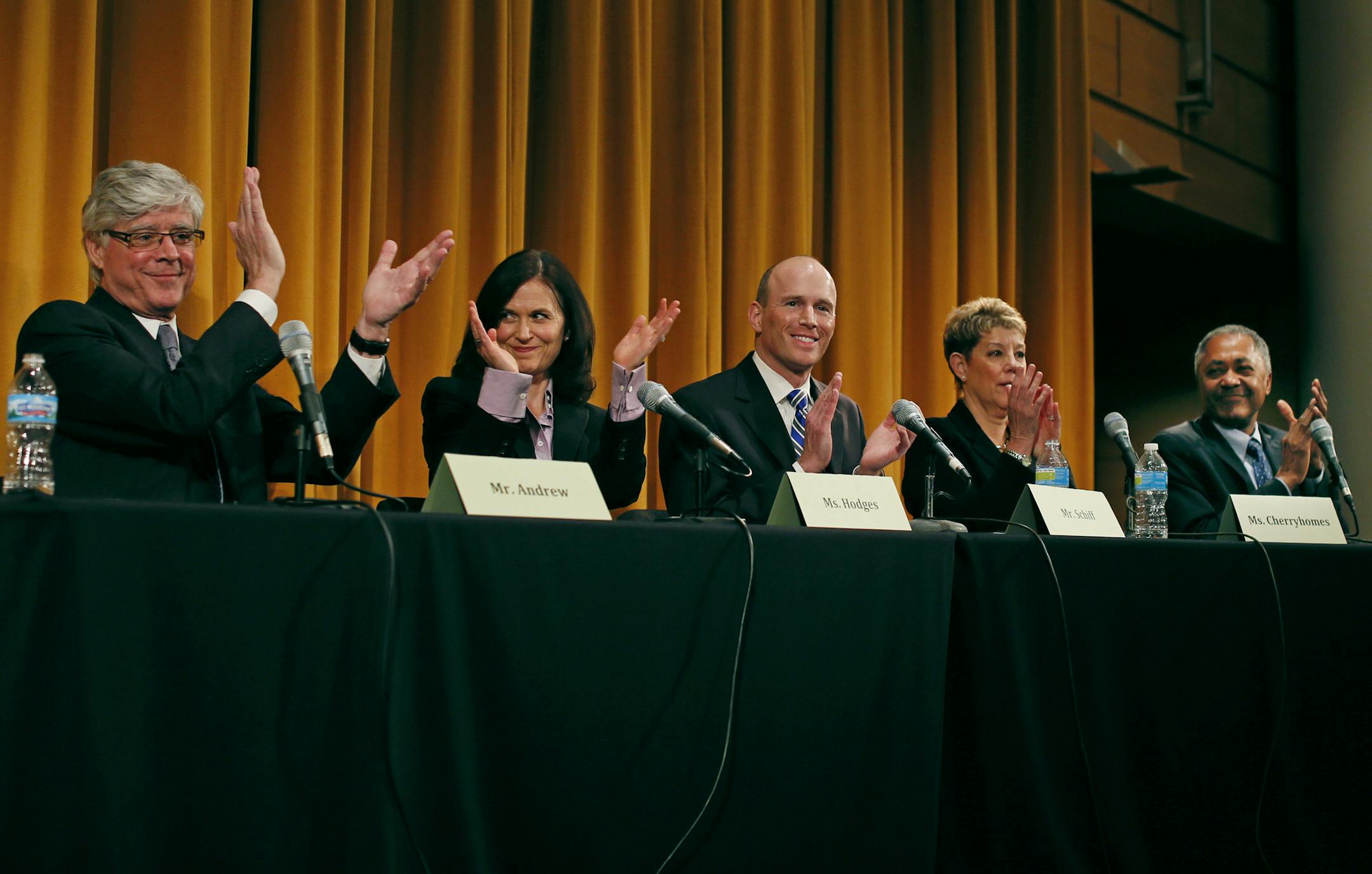
On a cold spring night the Volvos and Subarus created somewhat of a traffic jam in south Minneapolis as residents scrambled inside a quaint church to listen to the seven people vying to run the city.
Hundreds of the civic-minded jammed into Solomon's Porch and plopped onto shabby chic furniture. Excuse me. Pardon. Is this seat taken?
Grandmothers moved through the crowd, passing out oatmeal cookies and sage advice. OK, I made that last part up. But you couldn't have concocted a more Minnesotan mise-en-scène if you tried.
It was made only more so by the new ranked-choice voting system, which eliminated the mayoral primary but allows voters to choose up to five candidates, in order of preference. It's unlikely any of the candidates will get 50 percent of the vote in the first ballot counting, so getting voters' second or third choice will be crucial.
A candidate no longer has to be first, but being above average will pay.
Ranked choice, and the torpid format of the debates, has created a unique and somewhat soulless process that discourages rancor and negative campaigning, lest the candidate come off too mouthy or brash to make the top three.
In many ways, that's a good thing. I've long been a critic of the hostile campaigns that distort records and confuse voters.
At times, however, the debate seemed like a regional episode of the game show "Family Feud"; the only thing missing was Louie Anderson as host:


