

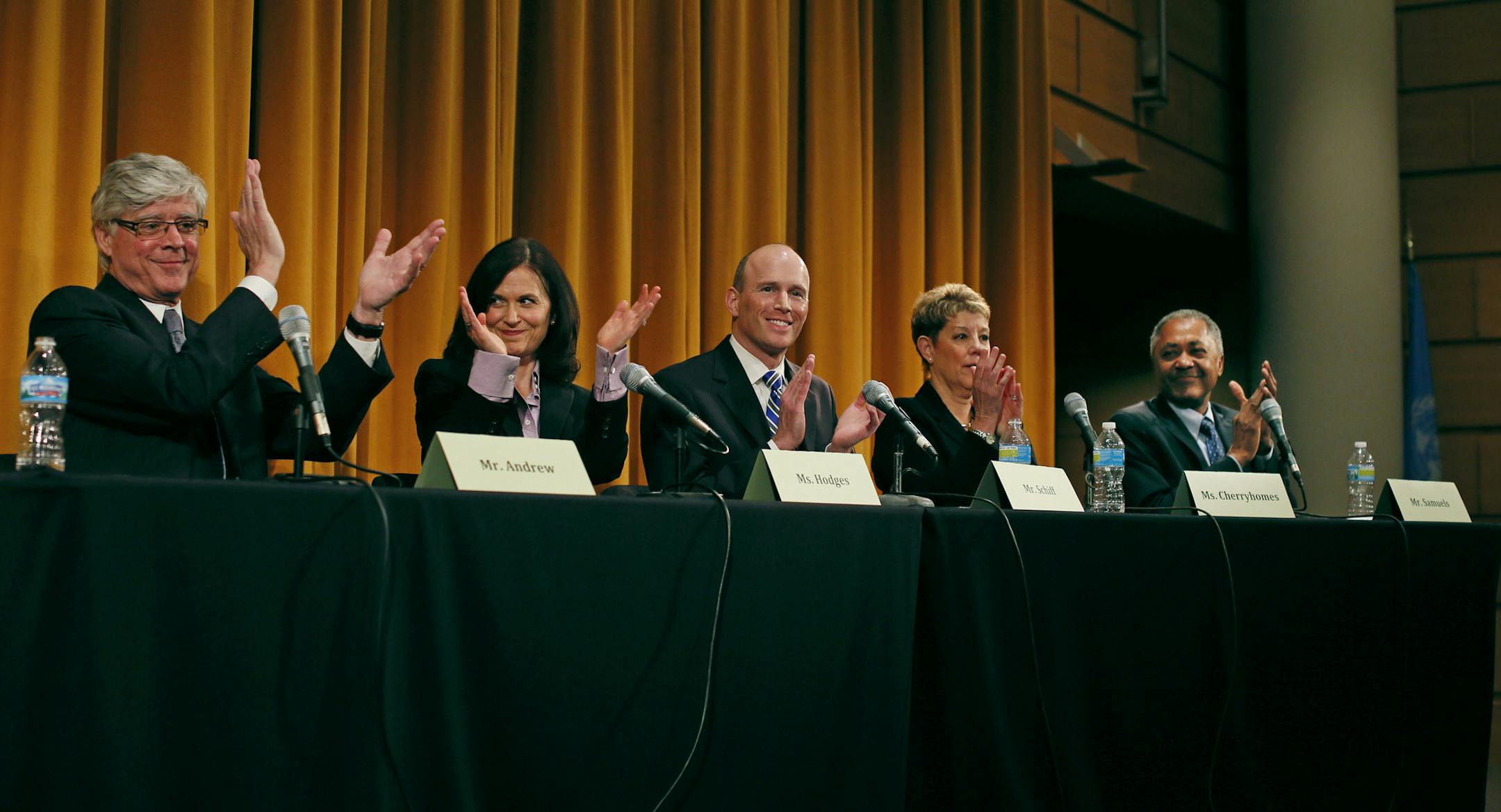
It was 2001, and neighborhood activists and political newcomers were shaking up the old guard DFL in Minneapolis City Council and mayoral races.
An indictment of a sitting council member triggered a purge mentality. In the mayor's office, Sharon Sayles Belton had orchestrated downtown business developments, such as Block E and the Target store on Nicollet Mall. But their cost of more than $100 million irked city taxpayers — even before Block E became a disaster.
A political novice with mismatched socks was joking about "tackling old ladies" to get their votes for mayor, and national heavy-hitters such as former Vice President Al Gore and U.S. Sen. Bill Bradley were stumping for candidates.
A headline in this newspaper read: "With four main contenders and no front-runner, next week's primary has experts stumped."
Hamline's David Schultz was one of them, and he sees a similar pattern emerging this year, as the DFL heads toward a rough game of musical chairs at Saturday's convention.
Minneapolis will have a new mayor this year, the first since R.T. Rybak won that 2001 race. Candidates span the spectrum of throwback party stalwarts to novices. With new ranked-choice voting, none seems to have the traction to capture the needed 60 percent of votes. That means a messy campaign.
Three challengers for the council are endorsed over incumbents, and a fourth wasn't endorsed at all. Three seats are open because those members are running for mayor, meaning the council might see six or seven new faces.
Who's on first?
Even longtime DFLers, such as former City Council Member and Park Board Member Walt Dziedzic, need scorecards and can't guess a winner.


