

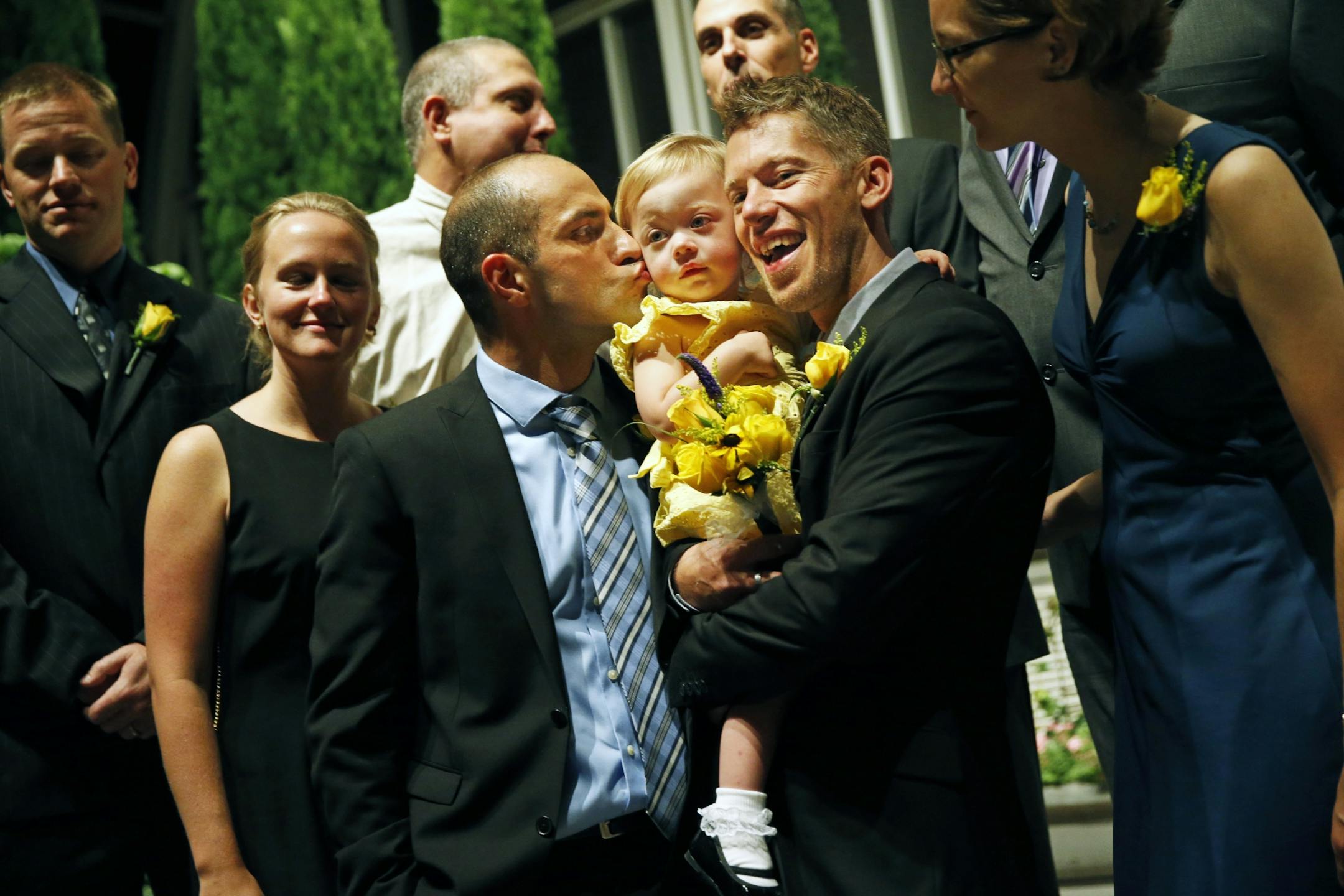
They used to call the neighborhood where I live "Homo Heights."
The adjacent neighborhood was sometimes referred to as the "Homolayas." Since the days after World War II, the area around Loring Park was the place where homosexuality was pushed into the shadows.
Men cruised for surreptitious sex, and often were mugged and beaten.
On Thursday, a dozen or so same-sex couples proclaimed their love openly in Loring Park, turning history with a kiss and a pledge.
I couldn't help but be dumbstruck both by how long it had taken and how quickly it had transpired. The long, torturous slog, then the tipping point in November when Minnesotans first rejected a ban on gay marriage, then the vote to allow gay partners the same rights my wife and I have enjoyed the past 25 years.
And I couldn't help but reflect on my own feelings about homosexuality and gay rights, and how they evolved in an intolerant society over the past decades.
My first recollection of the issue was as a child attending St. Stephen's Catholic Church in south Minneapolis. The church caused an uproar when it allowed some of the first public meetings of gays and lesbians in the city. Parishioners boycotted and protested outside.
Eventually, a meeting place opened across the street from my apartment. The space was known in the neighborhood as "The Gay House." My parents were good, compassionate people, but like most were ignorant of gay people, and thus suspicious. I was warned not to get too close to The Gay House.


