

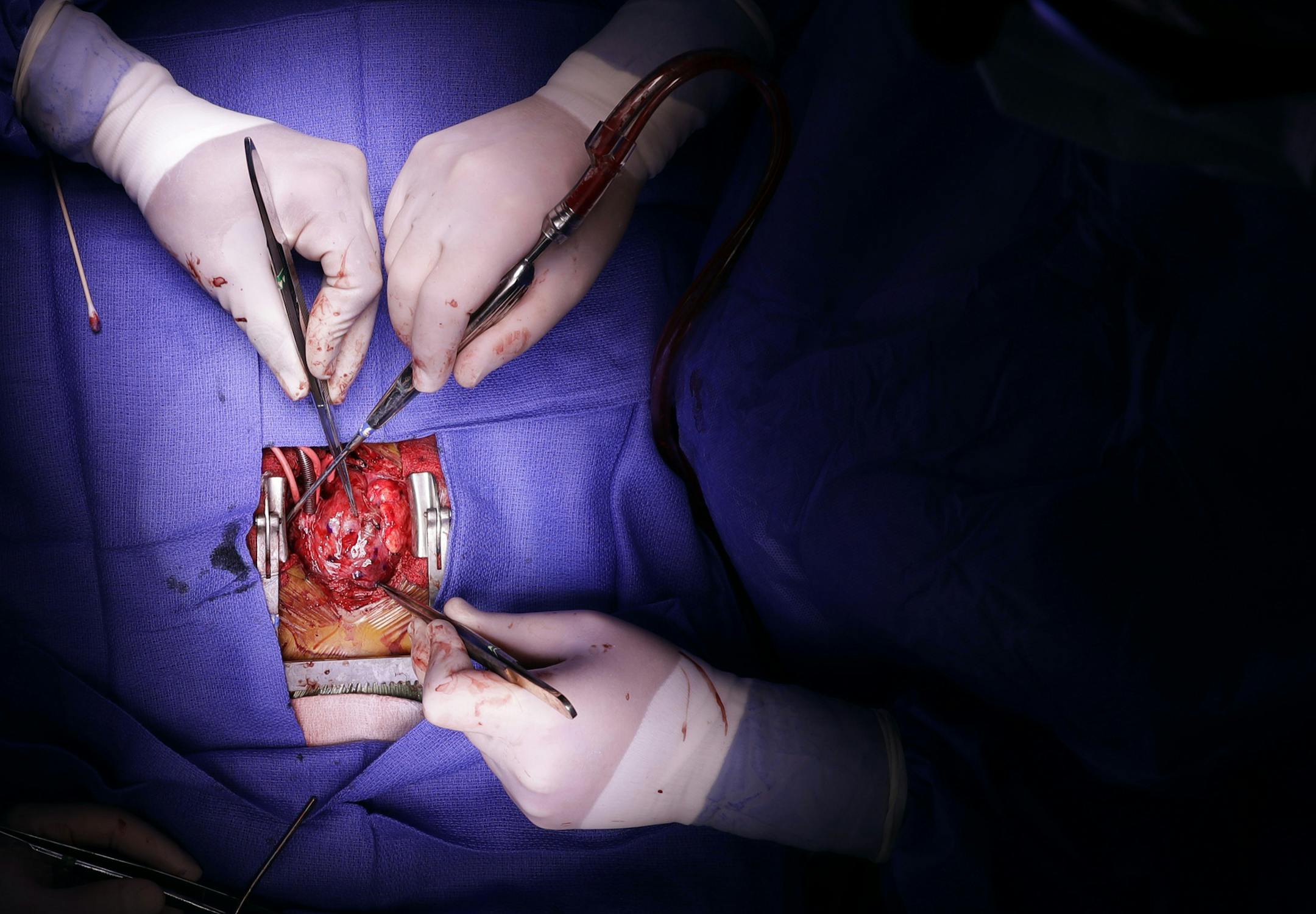
The 4-month-old on the operating table has a shocking birth defect, nearly half his heart too small or even missing. To save him, surgeons will have to totally reroute how his blood flows, a drastic treatment that doesn't always work. So this time they are going a step further. In a bold experiment, doctors injected donated stem cells directly into the healthy side of Josue Salinas Salgado's little heart, aiming to boost its pumping power as it compensates for what's missing. It's one of the first attempts in the U.S. to test if stem cells that seem to help heart attack survivors repair cardiac muscle might help these tiniest heart patients, too.
"We think the young heart is able to be more responsive," said Dr. Sunjay Kaushal, chief of pediatric cardiac surgery at the University of Maryland Medical Center, who is leading the study in partnership with University of Miami researchers.
Kaushal bent over the baby's right ventricle, the part of the heart that will take over for the abnormal left side. The surgeon had repaired as much as possible for now. Next he measured where to place eight shots of precious stem cells.
Then the bustling operating room went silent as Kaushal helped fellow surgeon Dr. Si M. Pham guide tiny needles into the ventricle's muscle.
"We're not saying we're going to cure it," Kaushal said of the birth defect, called hypoplastic left heart syndrome. But, "my whole quest is to see if we can make these little kids do better."
Josue's parents knew there was no guarantee the experimental injections would make a difference. But their son had been hospitalized since birth and needed open-heart surgery anyway for a chance to go home. Teary-eyed, they clasped hands and prayed over Josue's crib moments before nurses wheeled him to the operating room.
"We are marching ahead with God," said Josue's father, Hidelberto Salinas Ramos, speaking in Spanish through a hospital interpreter.
Nearly 1,000 babies are born with hypoplastic left heart syndrome in the U.S. each year. It's the most complex cardiac birth defect.


