

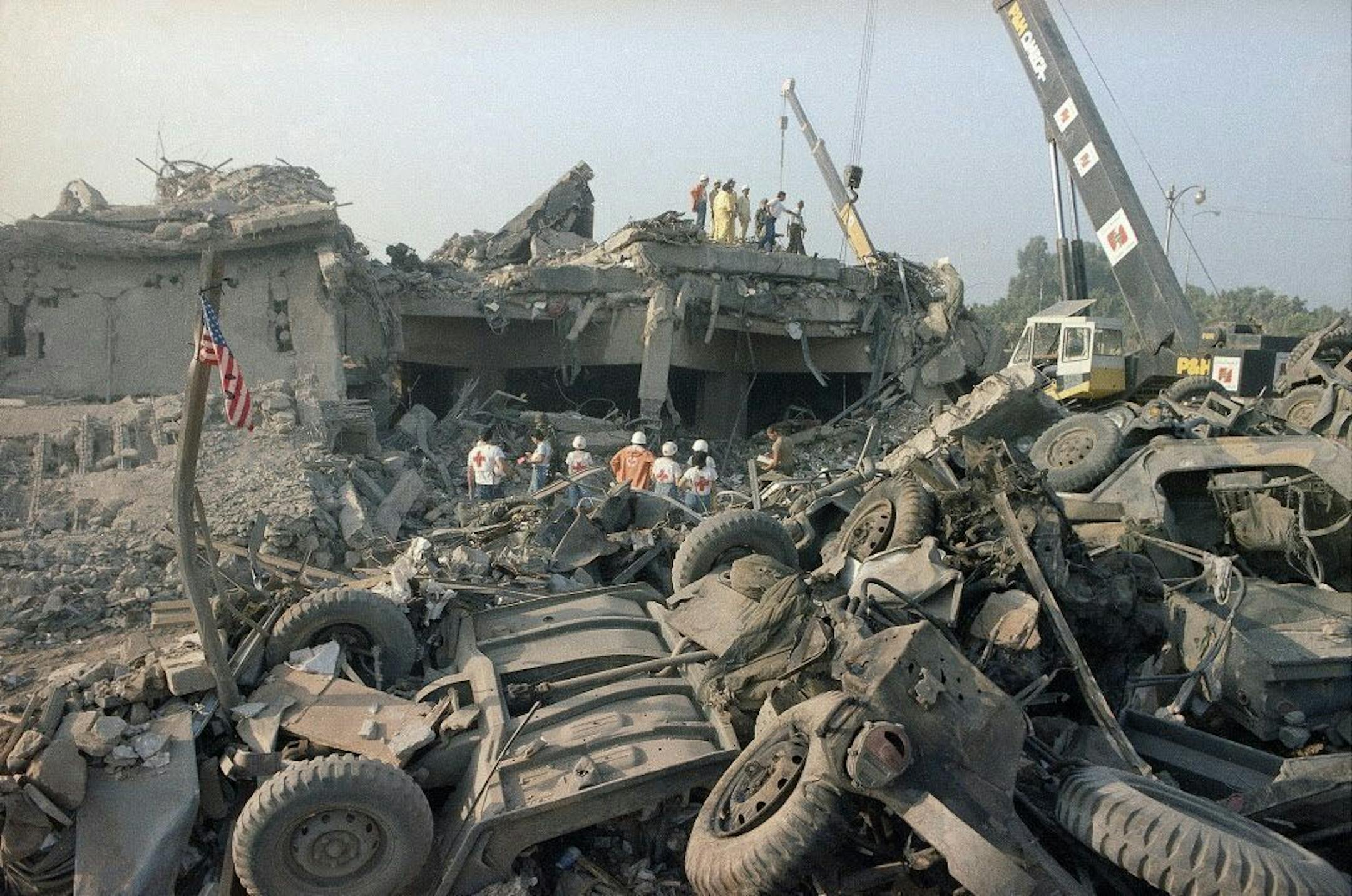
WASHINGTON — The Supreme Court on Wednesday cleared the way for families of victims of the 1983 Marine barracks bombing in Beirut and other attacks linked to Iran to collect nearly $2 billion in frozen Iranian funds.
The court's 6-2 ruling directly affects more than 1,300 relatives of victims, some who have been seeking compensation for more than 30 years. They include families of the 241 U.S. service members who died in the Beirut bombing.
Other families who are not covered by Wednesday's decision also could benefit because they now stand to reap a larger share of a government-administered fund intended for victims of state-sponsored terrorism.
The decision, issued amid a warming in relations with Iran, is important because it is the first time Iran is being made to feel the sting of its past support for terrorism, said Notre Dame law professor Jimmy Gurule, a former Treasury Department official.
"Hopefully, it's also going to have a deterrent effect, or least cause Iran to think twice about supporting terrorist activity going forward," Gurule said.
The ruling also comes as controversy swirls over pending legislation in Congress that would allow families of the Sept. 11 attacks to hold the government of Saudi Arabia liable in U.S. court.
The Obama administration, which supported the families in the Supreme Court case, opposes the bill. President Barack Obama met with King Salman in Riyadh Wednesday at the start of a brief trip to the country.
Justice Ruth Bader Ginsburg wrote the opinion for the court rejecting efforts by Iran's central bank to try to stave off court orders that would allow the relatives to be paid for their losses. The money is sitting in a federal court trust account.


