

The House Rules Committee held a tense and abridged debate over a constitutional amendment to require all voters to show a photo ID before using its Republican majority to approve the measure and send it to the House floor.
The committee vote 13-10 to recommend that the bill pass, with all the "yes" votes coming from Republican members and all the "no" votes coming from DFLers.
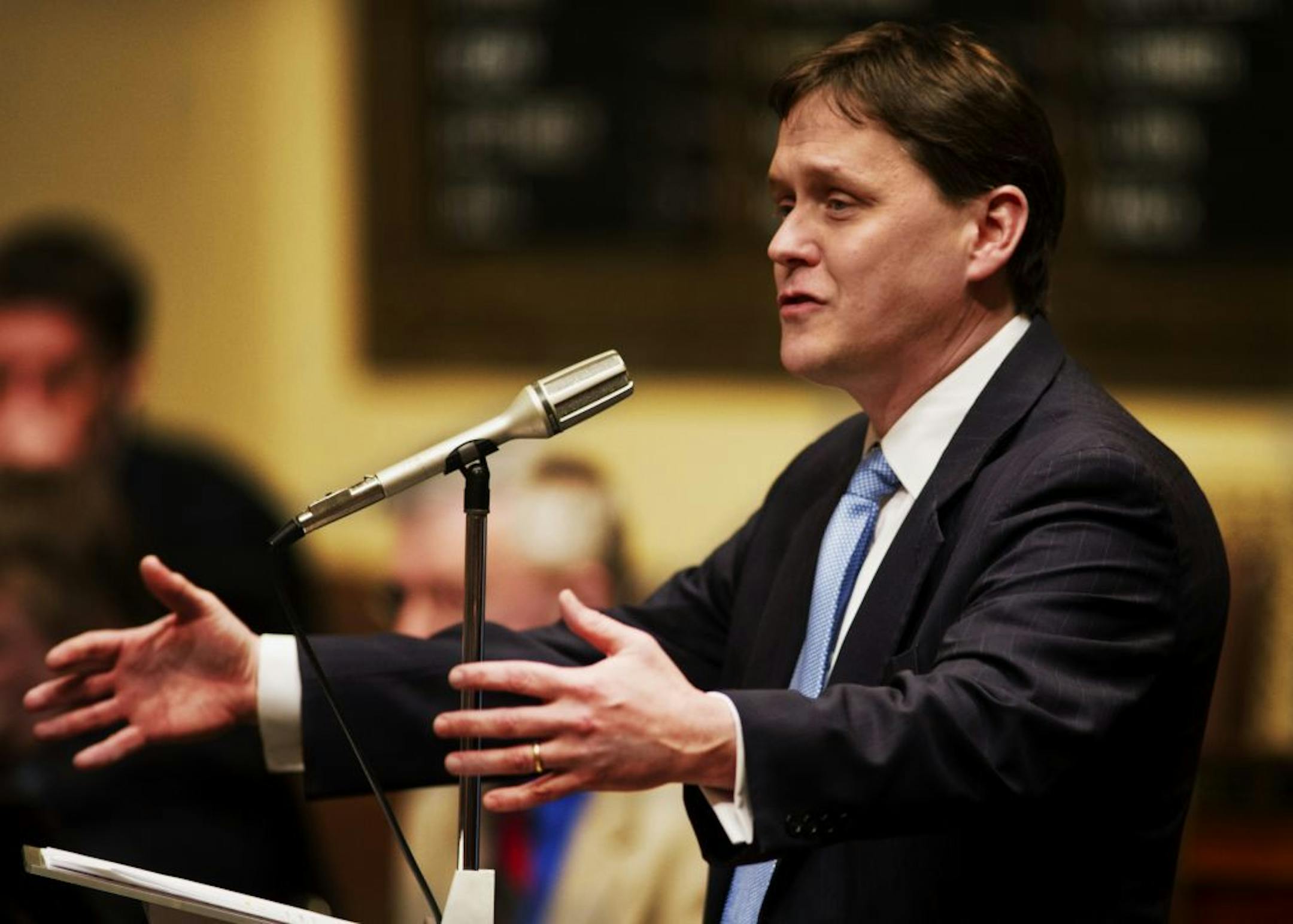
The vote followed a showdown between the committee chairman, House Majority Leader Matt Dean, R-Dellwood, and House Minority Leader Paul Thissen, DFL-Minneapolis, a member of the committee.
Dean sought to restrict the debate over the bill to determining if the language of the constitutional amendment is proper. DFLers like Thissen and Rep. Kate Knuth, DFL-New Brighton, sought to question the sponsor, Rep. Mary Kiffmeyer, R-Big Lake, on how absentee and military voters would be treated.
The language of the proposed ballot question to be put to voters is: "Shall the Minnesota Constitution be amended to require all voters to present valid photo identification on election day and that the state provide free identification to eligible voters?"
DFLers noted that the statute legislators will be approving states that "all voters must be subject to substantially equivalent eligibility verification prior to a ballot being cast or counted." They asked Kiffmeyer what the words "substantially equivalent" mean, and whether that would require voters who are not present at the polling place -- including absentee and military voters -- to somehow attach a photo ID.
Kiffmeyer said, " 'Substantially equivalent means that -- equivalent, substantially." She suggested it could allow for flexibility in determining how absentee and military votes are treated. She noted that current law allows such voters to write in numbers of drivers licenses, military IDs and passports to confirm their identity.
Thissen said "substantially equivalent" must mean that absentee and military voters would somehow have to show photo IDs. He tried to get the committee to strike this language from the statute but failed. When it did, Thissen said he is concerned "we have voted to disenfranchise our folks serving overseas."


