

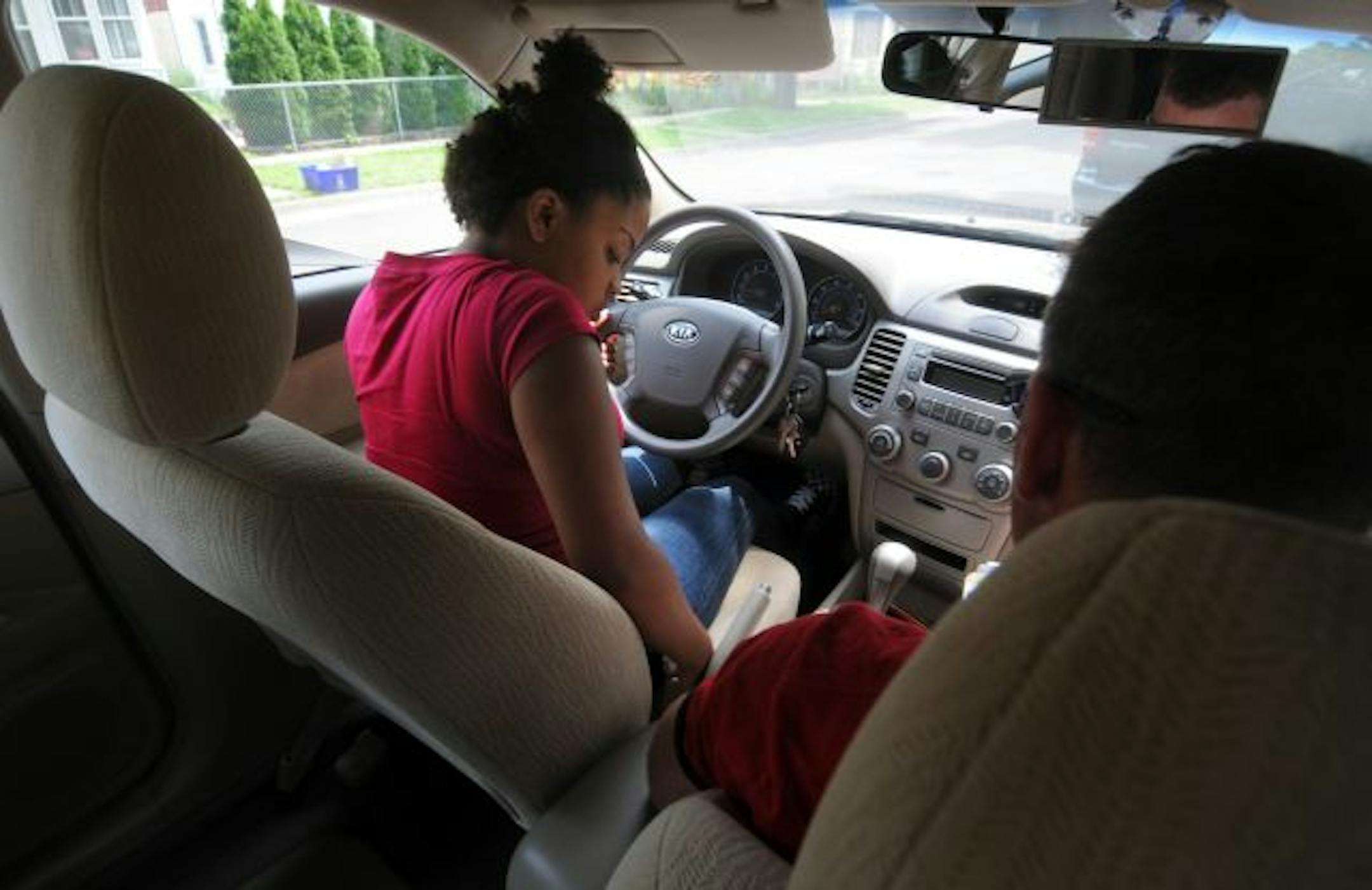
On the day she turned 16, Susan Bye said, "I dragged my poor mother out to the driver's license testing place -- I was not waiting." ¶ But when her son Alex turned 16, there was no such sense of urgency. "I was just kind of lazy, I guess," Alex said, "and kind of busy." ¶ Now that Alex, a Minneapolis Southwest High student, is a year away from college, "I'm getting more and more busy, so maybe I should just wait until I turn 18" in January to get the license. ¶ The Minneapolis teenager is far from an anomaly. He and many of his peers are waiting longer to get behind the wheel. Last year, fewer 16- and 17-year-old Minnesotans got licenses than at any time since 1991, according to the Department of Public Safety. ¶ Inertia is hardly the only orange cone on the road to a license. Every aspect of driving is costly. The state's road test is more difficult than it used to be. Teens in the city can ride bikes or take public transportation to many destinations. And some adolescents are simply intimidated about operating such heavy machinery. ¶ "I'm actually scared of driving and cars," said Ariana Wentzel, 18, of St. Paul. "Plus my dad refuses to drive with me, and my mom is just a spaz when it comes to driving." ¶ Wentzel's parents insist that if their children want to drive, they have to pay for insurance, which can be expensive for teens. ¶ The minimum rate for a 16-year-old, said Christe Kress, manager of Minneapolis AAA's insurance agency, would be "about $100 a month, for an occasional operator of an average vehicle." Factors ranging from grades to gender to the parents' insurance score can ratchet up the premium rate.
State toughens up
But car insurance for teenagers always has cost a lot. Other obstacles arose with two changes in the late 1990s:
• In 1997, the state made the road test considerably tougher. "We evaluate drivers on a technical performance of handling the car and more of a cognitive, reactionary basis, how they make adjustments to risks in a driving environment," said Deb Carlson, the state's driver exam program manager. During recent years, she said, failure rates on the road test have hovered around 43 percent in the Twin Cities.
• In 1999, the state instituted a three-tiered permit/license system that mandates a provisional license and extensive, expensive classroom time for those under 18. Since then, many 16- and 17-year-olds have gotten a permit (meaning an over-21 licensed driver must be in the car) but waited until they turned 18 to get a full license, thus avoiding the classroom time and fee.
"I think kids, especially in the city, manage to get around," said Pam Weiss, longtime driver education assistant with St. Paul Community Education, which conducts classes for the city's high schools. "You see a lot of students riding bikes or taking public transportation. They have varying access to cars through friends."
"And their schedules, some of them are so tight, it's unbelievable. That might be why a bunch of them are content to have a permit. They get the plastic ID card and can drive."
That's part of the reason why, as State Farm agent Tim Walstrom of Maplewood notes, "16-year-olds don't seem to be in as big a hurry to get their license these days."

