
Teens rule mobile Web, parents play catch-up

With teens leading the way in mobile Internet usage, adults get a glimpse of what's to come -- and a new set of worries.

March 21, 2013 at 10:09PM
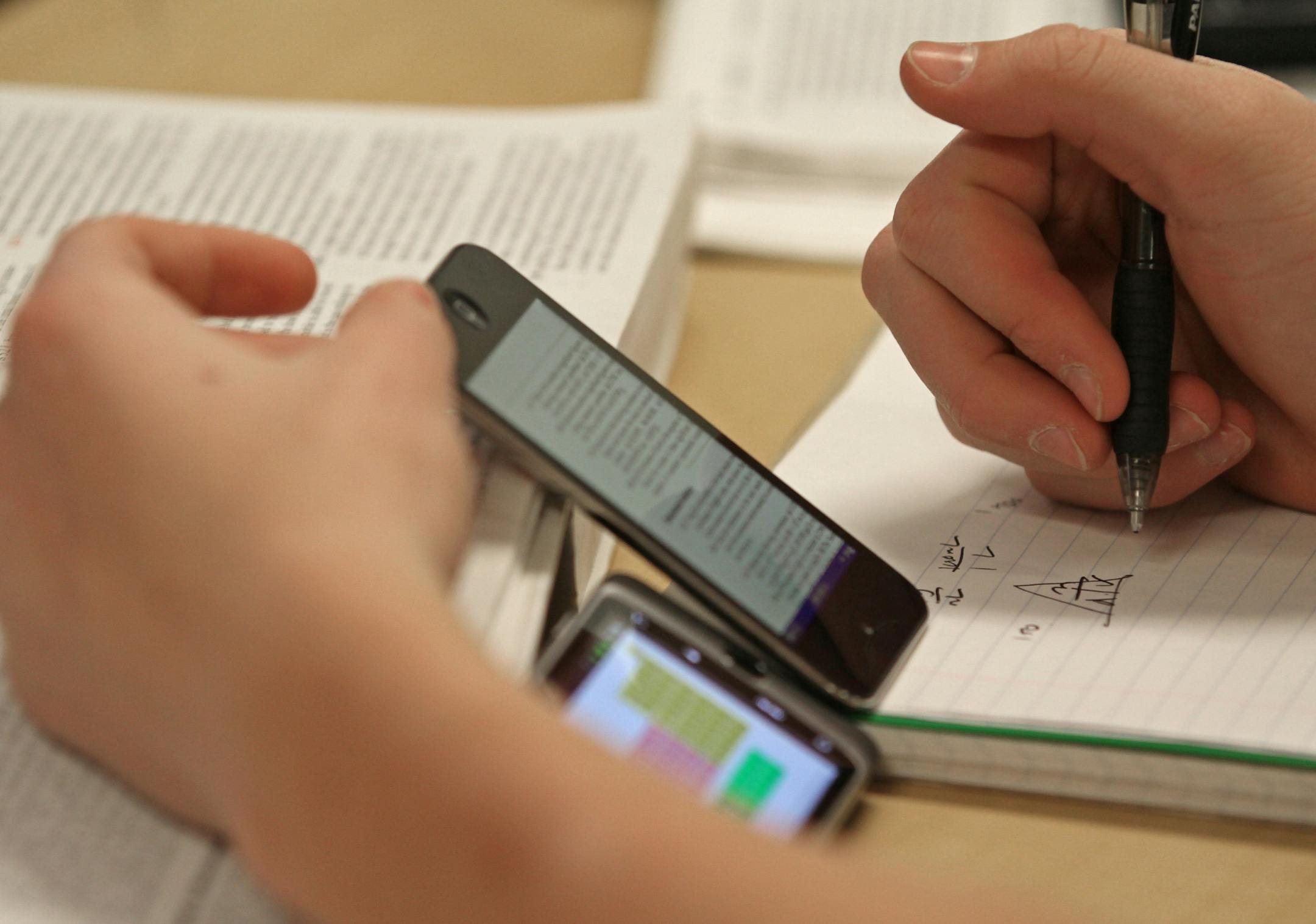
(center) A Lakeville South High School student used an Iphone to access a virtual textbook during Jason Just's AP chemistry class at the school on 1/31/12. The students were using netbooks, smart phones, laptops and tablets to access the class materials. Lakeville is looking to become one of the most high tech districts in the state. It will start by making all of its schools wireless by April and include giving handheld devices or laptops to every kid and teacher in grades 3-12. Among the pione
Among teen smartphone users, 50 percent use the devices for primary access to the Internet, according to the Pew Research Center. (The Minnesota Star Tribune)

For a snapshot of the mobile future, look no further than 16-year-old Lara Breedlove.

"I use my phone for everything," said Breedlove, of Chanhassen. "You have so much power with this little device."

On her iPhone4, she texts, talks, posts to Instagram and Facebook, plays word games, even tracks practical stuff like schedules. It's also her de facto gadget for searching the Web on a moment's notice.

As smartphone prices drop and parents pass along their hand-me-downs, teens like Breedlove are eager to play with these new tech toys. Thirty-seven percent of U.S. teens now have smartphones, and they're showing adults how the mobile world works. They're also giving parents one more thing to worry about, roaming the Web largely unsupervised via handheld devices.

Among teenage smartphone users, 50 percent use that device for primary access to the Internet, according to the Pew Research Center. For adults, that number falls to 25 percent.

"Teens see the utility," said Amanda Lenhart, a senior researcher at Pew Research Center. "The teens who do use [smartphones] show us a potential window into our future."

The mobile frontier has people and businesses scurrying to develop websites and smartphone apps to make life easier, from mobile payment systems to location-based marketing and social networking. For some parents, those advancements are troubling. Teen enthusiasm can propel a game or app to popularity, as seen recently with the photo app Snapchat.

As more teens acquire cellphones, the question shifts from "How young is too young?" to "What are kids doing with these devices?" For teens, much of the adaptation to cellphone browsing is a matter of convenience.

"Teens, unlike many adults, don't sit in front of a computer all day long," Lenhart. "That cellphone in your pocket really does become the easiest way to look up something online."

There's also the classic teenage wish to escape the prying eyes of Mom or Dad, something they can't do on the family computer in the living room.

"This screen is something you can look at in the privacy of your own room," Lenhart said. "It's not something your parents look at or generally know how to monitor."

But parents are acutely aware of the cost of smartphones.

Steve Boland of St. Paul offered smartphones to his three teenage kids, with the caveat that there would be no pricey data plans — the teens would have to rely on free Wi-Fi for Internet connections.

"This could get really expensive really fast," said Boland, himself a tech enthusiast.

One of the teens opted for the upgrade to a smartphone while the others stuck with less advanced cellphones. All of them have been part of continuing conversations about appropriate uses and cellphone etiquette. If there are problems, with the phones or otherwise, "phone suspension is the de facto punishment in our house," Boland said.

Samara Postuma of St. Michael, Minn., is working through those issues with her stepchildren, 11-year-old Maddie and 14-year-old Tyler. Both were given smartphones last year, and use them mostly for texting, games and social networking with friends.

The family has had discussions about privacy, online safety and information overload. So far, Postuma said, everything has gone smoothly, even if she sometimes has to remind the kids and their friends to stop Instagramming and actually play together.

"It can be a great tool and it can also be a really scary thing for a parent," Postuma said. "We are learning and figuring this out as we go."

Katie Humphrey • 952-746-3286

about the writer

about the writer

Katie Humphrey

Regional Team Leader

Katie Humphrey edits the Regional Team, which includes reporters who cover life, local government and education in the Twin Cities suburbs.

See Moreicon

More from No Section

See More
FILE -- A rent deposit slot at an apartment complex in Tucker, Ga., on July 21, 2020. As an eviction crisis has seemed increasingly likely this summer, everyone in the housing market has made the same plea to Washington: Send money — lots of it — that would keep renters in their homes and landlords afloat. (Melissa Golden/The New York Times) ORG XMIT: XNYT58
Melissa Golden/The New York Times

It’s too soon to tell how much the immigration crackdown is to blame.