

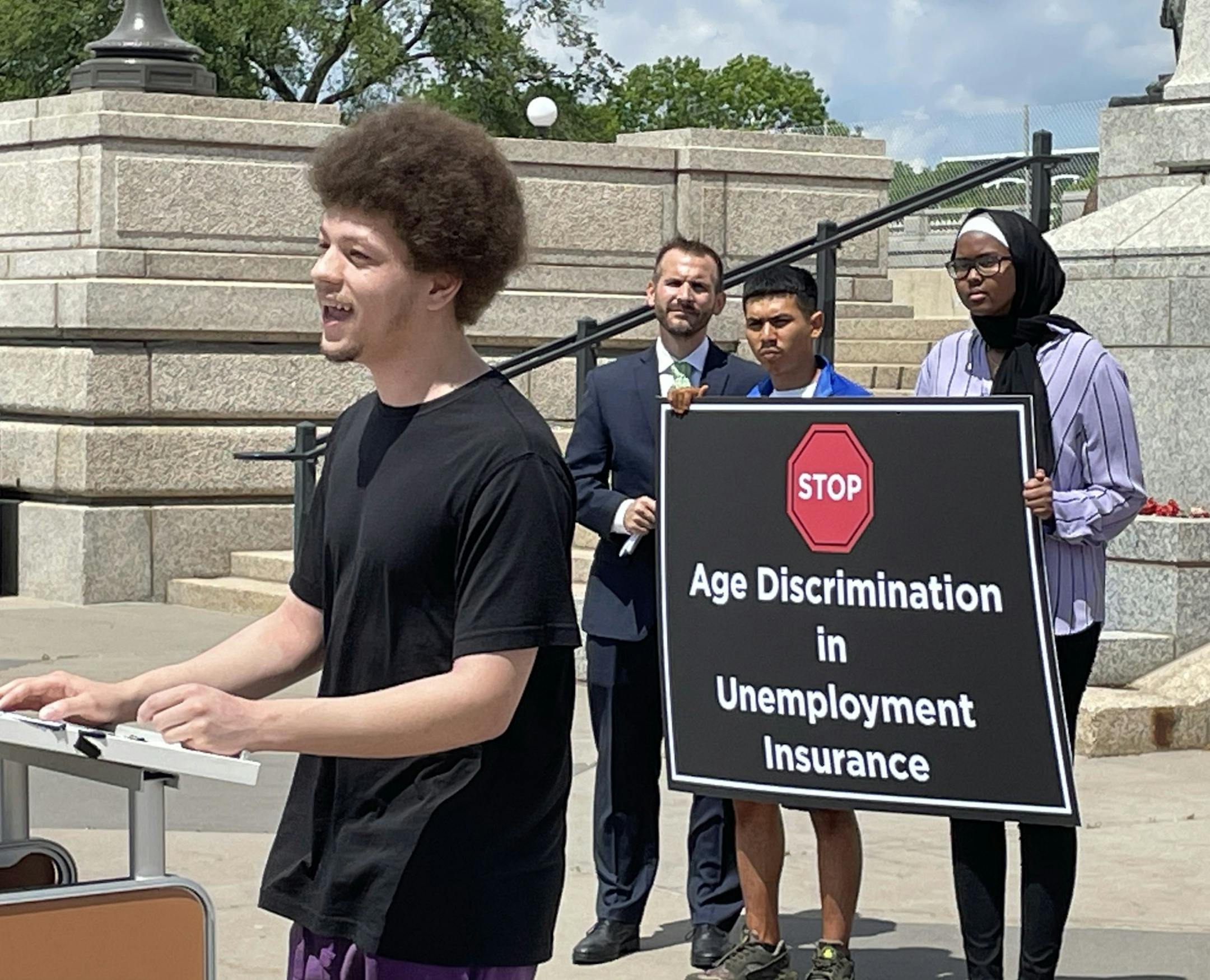
Three years ago at age 16, Cole Stevens received a call from his father saying he wasn't sure how he was going to pay his bills. Stevens was living with his mother at the time and made the difficult decision to move in with his dad, continue working while finishing up high school, and help his dad pay off his debts.
That experience in persevering through hardship prepared Stevens well for his senior year of high school.
The coffee shop where he worked closed shortly after the COVID-19 pandemic hit. Stevens was initially paid by the state for lost wages, but just after he'd used all the money to pay bills and put food in the fridge, he learned that high school students in Minnesota were legally barred from receiving unemployment assistance. He was asked to repay the money.
The wrinkle stems from a Minnesota Department of Employment and Economic Development (DEED) interpretation of a 1939 state law that prevents students from collecting unemployment. State officials applied the earlier law to all federally issued unemployment aid related to COVID-19.
Stevens felt the interpretation was shortsighted and didn't reflect current realities. Many students, like Stevens, were helping their families financially, or were paying for their own living and school expenses.
He quickly became an activist, joining forces with other teenage workers cut off from deeply needed pandemic assistance.
With his friend Walter Cortina, Stevens co-founded a youth-led nonprofit called Bridgemakers. Its mission is to give low-income and BIPOC youth the mentorship and tools necessary to become future leaders.
But the young activists also tapped the other end of the age spectrum, seeking guidance from experienced nonprofit leaders, legislators and other professionals who understood the system and how to navigate it.


