

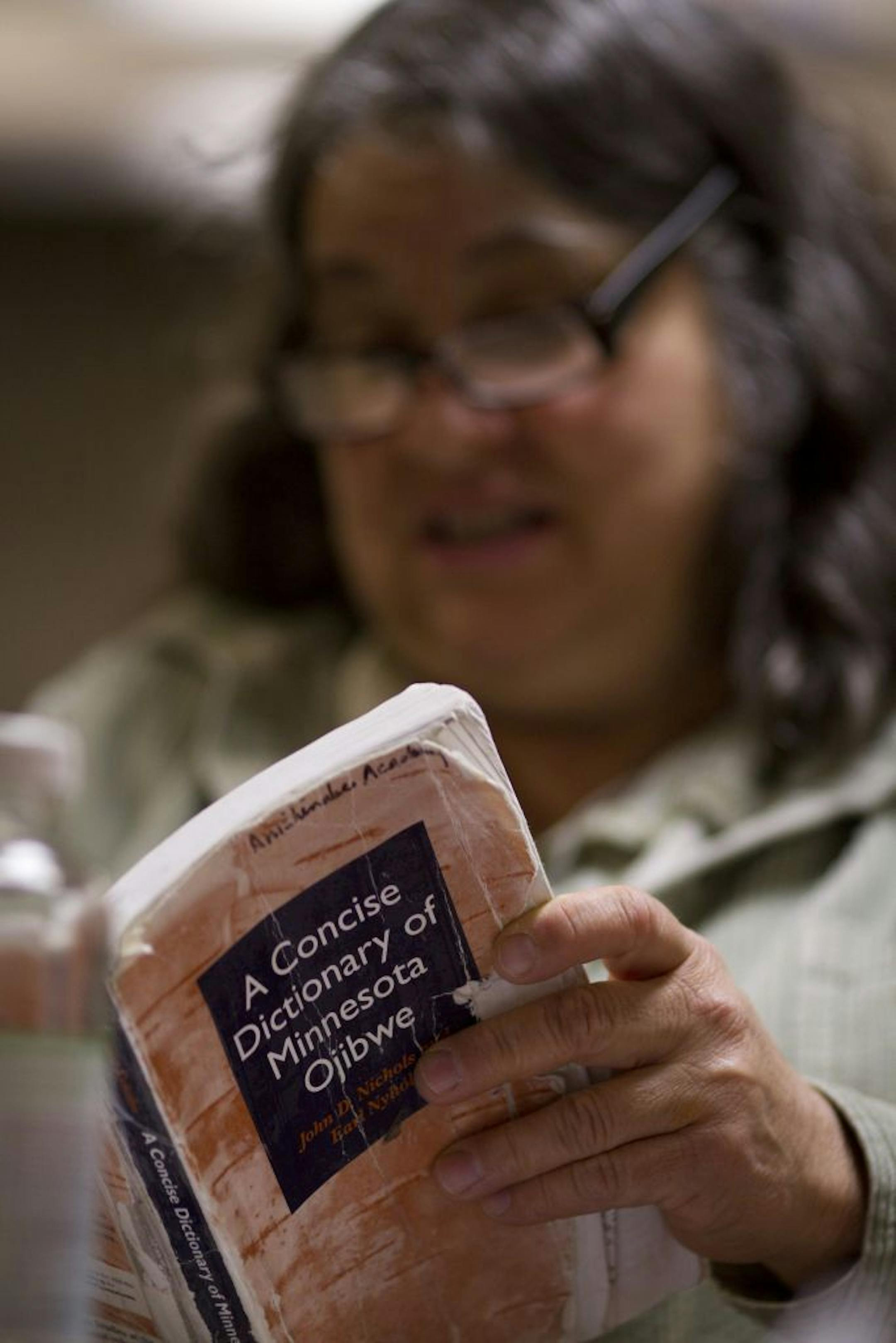
This dictionary is no dusty old tome.
The online Ojibwe People's Dictionary features not just words but the voices of native speakers, not just drawings but historic photographs.
Professors and students at the University of Minnesota will launch the dictionary this week as their contribution to an urgent effort to preserve the Ojibwe language and spur a new generation of speakers.
Across the world, linguists and activists, often with the help of universities, are increasingly using digital technology to capture little-spoken languages before they are lost to dominant cultures. Ojibwe is the heritage language of about 200,000 people in the Great Lakes region and Canada, experts estimate, but just a few thousand speak it today.
"The language is where we turn for knowledge about medicines, culture, ceremony, philosophy," said Prof. Brenda Child, chairwoman of the U's Department of American Indian Studies. "We can communicate in English and still be native people, of course.
"But we think there is going to be something tremendously lost to us if we don't make an effort to keep people speaking Ojibwe in this generation."
U students and professors gathered the voices for what they call a cultural, or sometimes "talking," dictionary.
Search the dictionary for "wild rice" and you'll find entries on black ("makade-manoomin"), green ("ozhaawashko-manoomin") and popped ("gaapizigan"), plus words to describe the process of ricing. A chorus of voices, belonging to native speakers with different dialects, pronounces each.


