

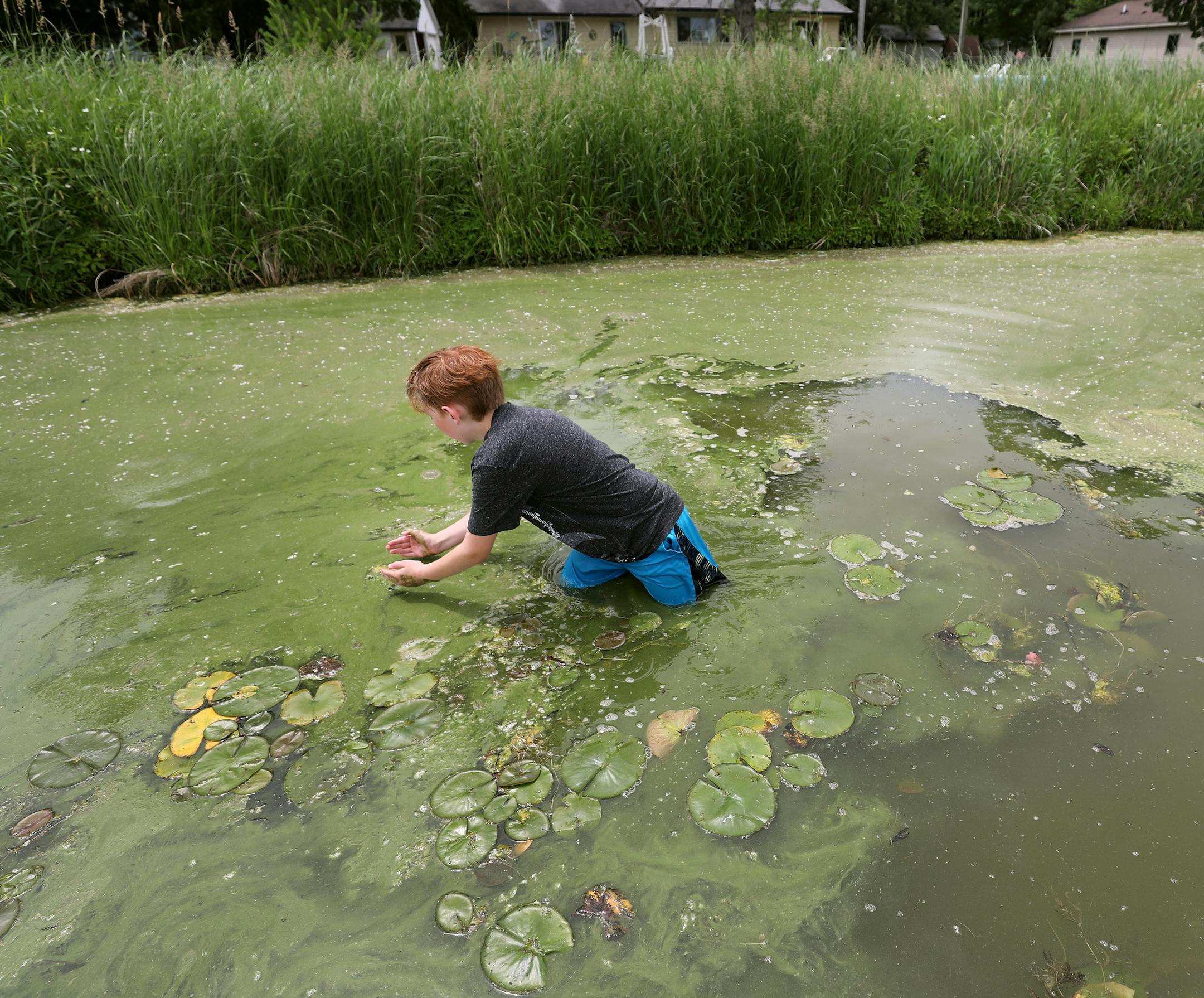
For years, the water in Little Rock Lake has turned green by midsummer, choked with algae that makes Benton County's largest lake look from the air like a golf course fairway.
A blue-green algae bloom in 2007 was so bad that the Minnesota Pollution Control Agency conducted tests and found algal toxins considered a health risk.
Now, with the help of a hydroelectric dam, some native plants and 500 Boy Scouts, there might be hope.
On Aug. 1, the Eagle Creek Renewable Energy will let enough water pass through its dam in Sartell, Minn., to allow for a 3-foot drawdown of lake levels. Boy Scouts and others carrying thousands of dollars worth of native bulrush plants will seed the shoreline over two weekends in August.
By next summer, those plants should suck up phosphorus and other nutrients as they take root in the lake bed, said Eric Altena, a DNR fisheries manager based in Little Falls, Minn. The plants could dramatically improve water quality, he said. "We're looking at the lowest cost, most effective option," Altena said.
Drawdowns have been used in lakes and portions of the Mississippi River to restore water quality, help improve fish and wildlife and fight erosion. The plan has been years in the making and wasn't too popular when the DNR suggested it to the Little Rock Lake Association, Altena said. "They almost ran me out of the meeting," he said.
Today, association president Kellie Gallagher said she wholeheartedly endorses the drawdown. Numerous people have stepped forward to support it, starting with area farmers, she said.
The lake's disastrous algae growth was stimulated largely by runoff from nearby farms that loaded the lake with nitrates and phosphorus. The Benton County Soil and Water Conservation District worked with local farmers for the past five years, writing more than 70 individual management plans for farms within the Little Rock Lake watershed.


