

All together now: We like democracy because … why? The pathologies of the U.S. version are so obvious in the aftermath of the latest averted crisis that we need to ask ourselves whether it's worth it — and why electoral democracy hasn't self-destructed before.
There is an answer: Democracy is self-correcting, at least where it works. The key to the process is a version of supply and demand. When a politician acts in a way that doesn't serve the voters' interests or desires, demand for that person's services should decline. Another candidate who fills the demand will get elected.
Some democratic systems do this at the level of the individual candidate, some at the level of the party. In a winner-take-all district-based system as in the U.S. Congress, the market is structured to drive elected officials toward the median voters in their districts, and a two-party system usually emerges. In a proportional-representation parliamentary system, the market allows for multiple niches of interest-based parties, which then form coalitions that satisfy their voters' policy preferences.
So why isn't the U.S. system working as it usually does to produce moderate elected officials? As recently as the 1990s, critics of two-party democracy charged that its virtue was actually a flaw: that the Democrats and Republicans were so similar as to be indistinguishable on core economic issues. The United States, they charged, had no meaningful liberal (or conservative) option to satisfy the preferences of voters who wanted radical change.
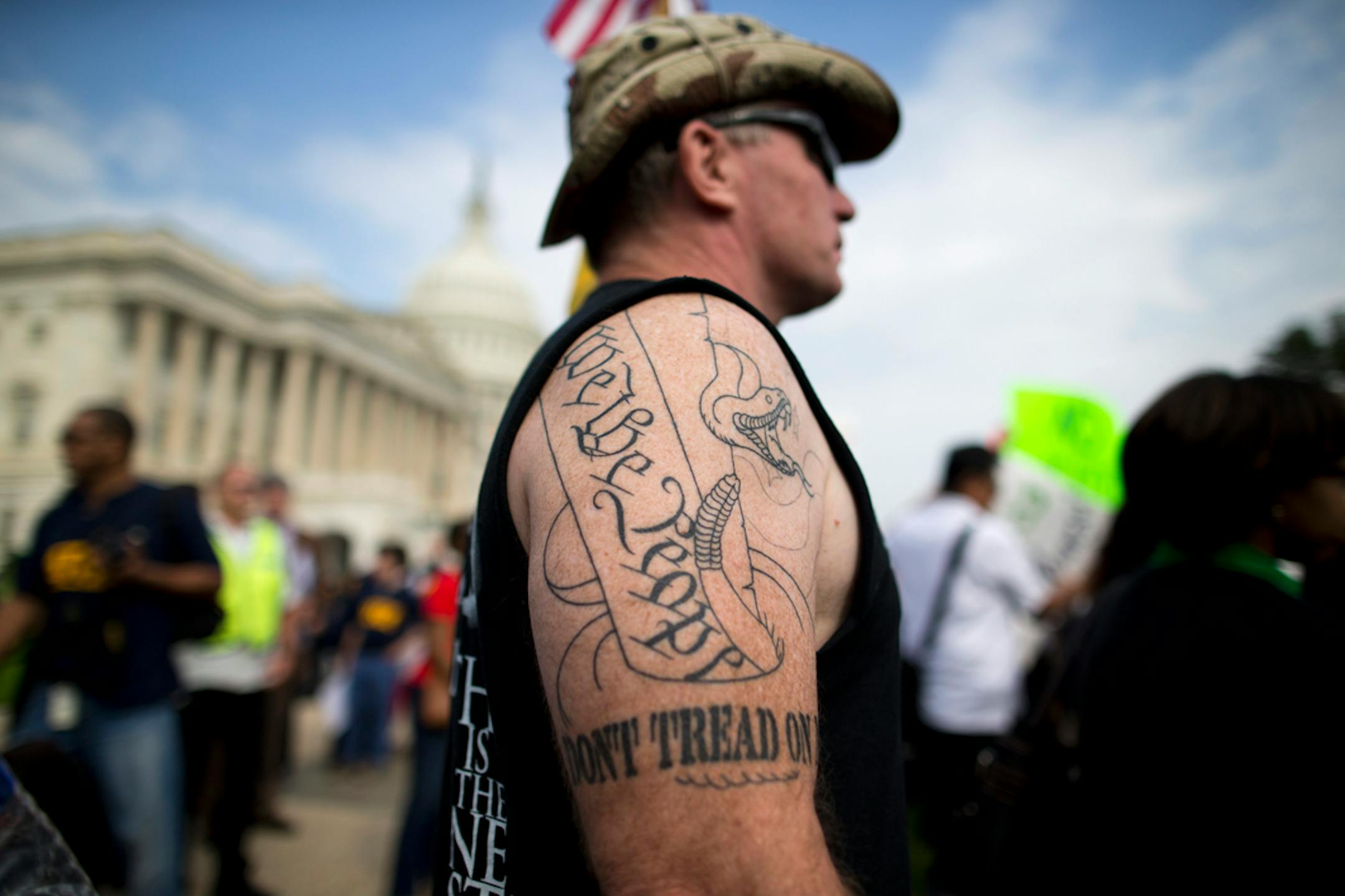
Then came the Tea Party movement, born of two shifts in U.S. politics. One is a growing demand among some voters for meaningful fiscal discipline. After the George W. Bush administration failed to reduce the deficit and even expanded discretionary spending, some Republican voters decided their party's mainstream couldn't be trusted to achieve this aim. The Tea Party movement began as a challenge within the Republican Party by members who weren't seeing their preferences served.
Under ordinary circumstances, the party would've had to balance this internal pressure against the necessity of capturing the median voter. Yet here the second weird feature entered the picture.
During roughly the same period of the Bush administration, Republicans captured control of the legislatures in many majority-Republican states. Once in office, they systematically redistricted (the polite word for "gerrymandered") to ensure safe Republican seats in Congress, dividing Democratic voters among majority Republican districts.
Democrats challenged these changes in the courts — and lost. The U.S. Supreme Court held, more or less, that political gerrymandering was part of the game, permissible so long as it wasn't motivated by race. This posed a small technical challenge for the redistricters, because black and Latino voters skew Democratic. Their ingenious solution, consistent with the letter of civil-rights law, was to create Democrat-dominated districts that would elect racial minorities, keeping the numbers of minority representatives stable while still reducing the number of Democratic districts.


