
Rash: More than just a night at the movies, Twin Cities Film Fest is a celebration of storytelling

Highlighted by “Hamnet,” more than 150 films will screen between Oct. 16-25.

Columnist Icon
The Minnesota Star Tribune
October 15, 2025 at 10:00AM
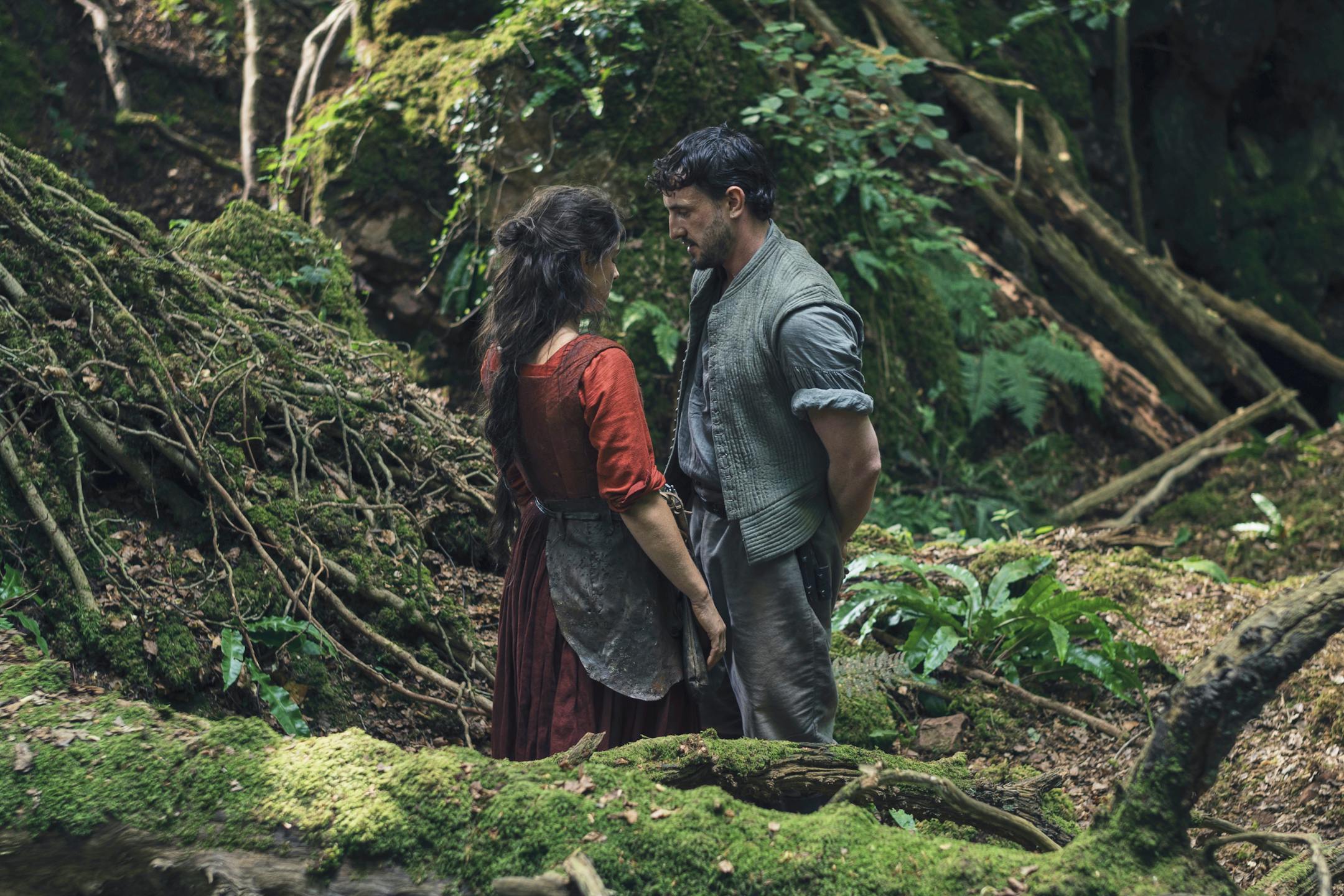
This image released by Focus Features shows Jessie Buckley, left, and Paul Mescal in a scene from "Hamnet." (Agata Grzybowska/The Associated Press)

Opinion editor’s note: Strib Voices publishes a mix of commentary online and in print each day. To contribute, click here.

•••

All the world’s a stage. Or a screen — at least starting Thursday at the Twin Cities Film Fest, which opens with “Hamnet,” the cinematic version of the superb novel by Maggie O’Farrell about events that inspired William Shakespeare’s eternal “Hamlet.”

The movie version awed audiences and critics alike at the recent Toronto Film Festival, winning the People’s Choice Award. It will open wide late November (just in time for awards season) but premiere locally at the fest on Thursday at the Marcus West End Cinema in St. Louis Park, which, along with the Edina Mann Theatre, will screen more than 150 films through Oct. 25.

“Hamnet” is getting Oscar buzz for best picture, best actress (Jessie Buckley) and especially best director and screenwriter (Chloé Zhao). Regarding the film festival, lightning may strike twice: The last Zhao film to open the fest was “Nomadland,” which then went on to win Best Picture.

Beyond “Hamnet,” another stage-inspired film, “Hedda,” an updated version of Henrik Ibsen’s “Hedda Gabler,” will have its local debut. Other hot Hollywood titles include “Christy,” about a boxer, starring Sydney Sweeney. Among several others is “Bugonia,” starring Academy-Award winner Emma Stone.

There are also many Minnesota-made (or -themed or -starred) feature films, documentaries or shorts, with some in key categories the film fest emphasizes, including the “HER series” — movies made by, for and about women. Another 40% of films focus on stories from Black and Indigenous people and people of color.

“A story is a story, but it matters who tells it and how they share it,” said Jatin Setia, the film festival’s founder and executive director. “That’s what’s key for us: to make sure that we’re able to celebrate stories from all walks of life that are relatable. And with discussions afterwards you just get deeper into it. And we bring community partners on board to help us celebrate and help us add context from a subject-matter expert standpoint as well.”

Some of those subjects are tough, like domestic trauma, which will be examined in the “TCFF Changemaker Series” of films, including a short, “The Seventh Turn,” from Minnesotan Eric D. Howell that will be followed by a community discussion — a key feature of the fest, Setia said.

Such conversations are part of what differentiate a film festival from just going to the movies, said Setia, who used one word to describe the dynamic: community.

“At the end of the day, that’s what we’re all about; we want to bring the community together in celebration of storytelling, and the way we do that is through film and physical connection.” While many of the titles can be screened through a streaming option, Setia said that “physical experiences are what we’re all seeking right now.”

It certainly was what he was seeking as a kid growing up in India, where he watched Bollywood films in a one-screen, 1,000-seat theater. “The soundtrack for those films had been out for like a month, so we all knew the songs that are going to be in it,” recalled Setia. “And everybody goes in and sits down, the lights go down, and that’s when equality happens, because you’re sitting in the theater with strangers, 1,000 of whom are dancing in the mezzanine level because they know this particular song.”

Despite a stratified society, Setia added, everyone paid the same price and forgot about their daily lives for a few hours. Even today, he said, “if there’s two people sitting there, I feel like I’m part of a community.”

There will be plenty more than two people in the theaters for the fest’s 16th edition. Just like there are scores who annually attend the locally based, internationally driven Minneapolis St. Paul International Film Festival that runs in the spring, or other cinematic series like the Walker Art Center’s “Landscapes of Myth: Westerns after ‘The Searchers‘“ (which was director John Ford’s seminal western) that runs Nov. 7-29. Elsewhere, essential films highlight the Heights Theater in Columbia Heights, and an eclectic mix of movies screen at the Trylon Cinema in Minneapolis. Other theaters contribute to make Twin Cities cinema a cultural force multiplier.

“The more we put out there to the world from an arts perspective, the better the world becomes,” said Setia. “The more stories we share, the better we connect as human beings with each other. And for us, the Twin Cities Film Fest is not here as a competition to any of the other festivals and series and media organizations; we’re complementary.”

It’s a compliment to Minnesota that so many complementary events are indeed “put out there.” And it’s well worth it to put ourselves out there to create community in a ritual that spans Shakespeare to Chloé Zhao — and if the Twin Cities Film Festival has anything to say about it, well beyond.

about the writer

about the writer

John Rash

Editorial Columnist

John Rash is an editorial writer and columnist. His Rash Report column analyzes media and politics, and his focus on foreign policy has taken him on international reporting trips to China, Japan, Rwanda, Kazakhstan, Turkey, Lithuania, Kuwait and Canada.

See Moreicon

More from Columnists

See More
Travis Pennings uses a pair of binoculars to look for deer in the early morning hours, Nov. 3, 2018, during opening weekend of the season in Sandstone, Minn.
Anthony Soufflé/The Minnesota Star Tribune

The crisp November weather and a healthy deer population make this season a great setting for a first-time hunter.

card image
card image