
Tax bite declines on metro homes

While many Twin Cities homeowners will see a drop, taxes on other properties will rise.

December 3, 2012 at 11:24AM
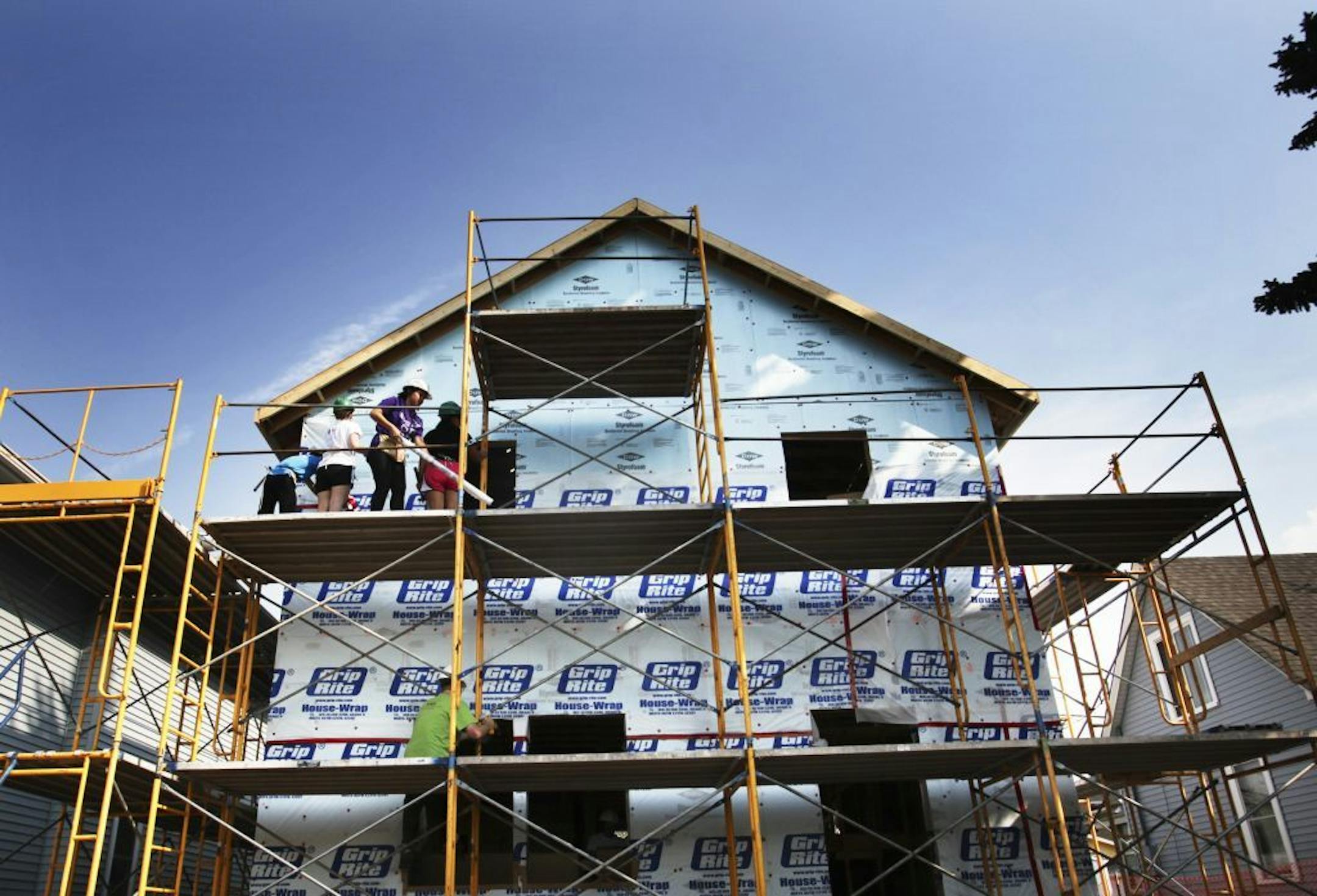
High School students and other volunteers work on the exterior of the four bedroom home that when finished will house a family of seven Thursday, Aug. 30, 2012, in St. Paul, MN.
A four-bedroom house under construction in St. Paul. (Dml - Star Tribune/The Minnesota Star Tribune)

For only the second time in the past decade, Twin Cities area homeowners are opening tax notices signaling widespread savings next year.

But enjoy it, because a steadily improving housing market means more homeowners could be vulnerable to higher property taxes in coming years, doing their share to relieve other classes of property -- commercial buildings and large apartment complexes, for example -- from picking up as big a part of the property-tax tab, officials say.

"This year is probably going to be the best year we'll see in a little bit as far as residential property is concerned," said Ken Rowe, a manager in the property tax division of Hennepin County.

In Minneapolis, the owner of a home with a median taxable value of $170,500 can expect a 5.8 percent reduction in 2013, according to notices sent to property owners in November. In St. Paul, where the median taxable value is $108,500, the projected decrease is 16 percent, but that's before calculating in passage of the school levy, which still leaves a reduction of about 5.6 percent.

Most homeowners would see decreases in 56 of 85 metro area communities, compared with nine in which increases have been projected. The remaining 20 communities show both increases and decreases, with differences depending on a homeowner's school district.

The projected tax bills are calculated based on levies proposed by local governments this fall -- figures that can be trimmed but not increased when final votes are taken this month.

They do not include the effect of school levies approved by voters in November.

Lower tax burdens for homeowners have come at a cost for commercial property owners like Bill Feist, who owns a car repair business in Golden Valley. The typical homeowner in that city can expect about a 2.5 percent tax reduction. But the tax bill for Feist Automotive Fuel & Service, a 35-year fixture on Lilac Drive, is expected to rise by about 4.6 percent.

Feist also is bracing for a tax increase on his Maple Grove home, and that one-two punch led him to testify last week at Hennepin County's annual Truth in Taxation hearing, where he told commissioners that higher tax bites had forced him to abandon the idea of expanding his business.

Government should spend less, he said. "I'm here to tell you: It's tough times."

In Hennepin County, Rowe said that while levies are going up an average of 3 percent, the share of costs being borne by residential properties is going down by 5 percent, leaving commercial properties and apartments to pay greater shares. In addition, because most residential properties have declined at a similar pace, the savings projected for homeowners in 2013 are more widespread.

In St. Paul, voters passed a school district levy that means some homeowners whose notices projected a savings will instead see increases. But the owner of the median-valued home still should see a reduction next year because other properties are taking a bigger share of the tax burden and the city is collecting more revenue from the metrowide fiscal-disparities pool, said Chris Samuel, property records and revenue manager for Ramsey County.

Looking ahead, Samuel and Rowe said it is difficult to predict future taxes. Property-value changes for 2014 have yet to be finalized and state policies enacted.

But both see the housing market stabilizing, which should help bring an end to the significant shifts of recent years. Tax bills, as a result, may be influenced more by what governments levy than by differences in market-value changes, Samuel said.

Based on recent sales, Rowe said higher-valued homes -- those at $250,000 or more -- are proving the healthiest, with lower-valued homes yet to rebound in the same way. In 2014, then, the tax load may be greater on more expensive homes, he said, and the widespread reductions of 2013 just a memory.

Anthony Lonetree • 651-925-5036

about the writer

about the writer

Anthony Lonetree

Reporter

Anthony Lonetree has been covering St. Paul Public Schools and general K-12 issues for the Star Tribune since 2012-13. He began work in the paper's St. Paul bureau in 1987 and was the City Hall reporter for five years before moving to various education, public safety and suburban beats.

See Moreicon

More from No Section

See More
FILE -- A rent deposit slot at an apartment complex in Tucker, Ga., on July 21, 2020. As an eviction crisis has seemed increasingly likely this summer, everyone in the housing market has made the same plea to Washington: Send money — lots of it — that would keep renters in their homes and landlords afloat. (Melissa Golden/The New York Times) ORG XMIT: XNYT58
Melissa Golden/The New York Times

It’s too soon to tell how much the immigration crackdown is to blame.