
Tawdry politics? Some may say. But criminal? No.

Supreme Court should take up corruption case of former Virginia governor that dangerously expanded the definition of bribery.

The Washington Post
January 7, 2016 at 12:16AM
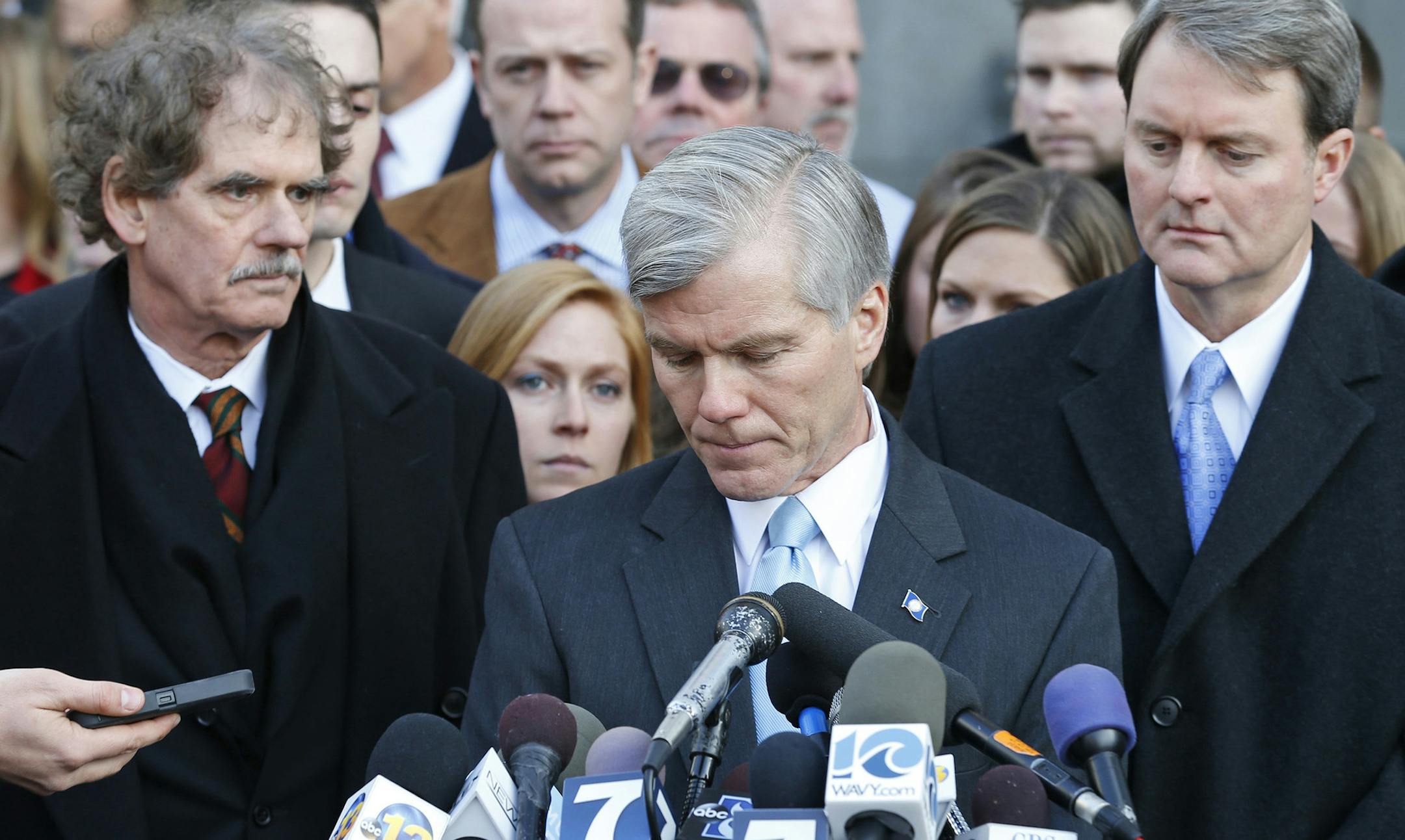
Former Virginia Gov. Bob McDonnell, center, composes himself as he addresses the media outside federal court in Richmond, Va., Tuesday, Jan. 6, 2015. McDonnell was sentenced to two years prison and two years probation in his corruption case. His attorney's Henry Asbill, left and John Brownlee, right, look on. McDonnell is to report to prison by Feb. 9. His wife, who was convicted on eight counts of corruption, will be sentenced Feb. 20. (AP Photo/Steve Helber) ORG XMIT: RIC110
Former Virginia Gov. Robert McDonnell, center, addressed the media outside federal court in Richmond, Va., in January 2015 after he was sentenced to two years in prison and two years of probation in his corruption case. His attorneys Henry Asbill, left and John Brownlee, right, accompanied him. (The Minnesota Star Tribune)

The impulse to ferret corruption from politics corrupts the criminal justice system when it causes overzealous prosecutors and judges to improvise novel interpretations of the law of bribery. Consider Robert McDonnell's case.

Virginia's former Republican governor has been sentenced to prison for actions that he could not have reasonably anticipated would be declared felonies under a dangerous judicial expansion of federal law defining bribery of public officials. On Friday, the Supreme Court will decide whether to review McDonnell's conviction.

Compelling reasons for doing so are explained in friend-of-the-court briefs submitted by, among others, 31 current governors; 60 former state attorneys general (six from Virginia filed their own); 13 former federal officials, including two former U.S. attorneys general and former legal counsels to every president starting with Ronald Reagan, and three law professors from Harvard and the University of Virginia. All agree that McDonnell's conviction resulted from unreasonably stretching the understanding of quid pro quo corruption — you do X for me, I will do Y for you.

Democratic politics is always and everywhere a transactional business. Promises are made to secure permission to wield power: If we support you, will you pursue policies we prefer? Vote for me and I will deliver this benefit for you. And for 240 years, American politicians have been attentive to supporters who contribute to those whose agendas they favor.

McDonnell had an unseemly relationship with a Richmond businessman who showered the governor with substantial gifts, loans and perquisites. Virginia law permits state officials to accept gifts, and never during McDonnell's trial did prosecutors suggest that he had violated state law.

If the businessman hoped that McDonnell would take official government actions benefiting his diet-supplement enterprise, he was disappointed. The Supreme Court and other courts have defined an "official act" as the actual exercise of government power. The businessman wanted certain acts — state funding for his firm, a state study to validate his supplement and inclusion of it in Virginia's health plan. None of these acts occurred.

Nevertheless, prosecutors presented a redefinition of "official act," and the trial judge instructed jurors that they could find an "official act" in behavior that could have some attenuated connection to a potential government decision later. An appellate court has endorsed this.

So, McDonnell faces incarceration for five things. He asked one of his aides a question about research pertaining to the businessman's company. He twice attended receptions that the businessman attended. He arranged a meeting with his staff and the businessman and suggested another meeting to an aide. The Supreme Court has held that "ingratiation and access ... are not corruption" and that the government may not target for proscription "the general gratitude a candidate may feel toward those who support him or his allies, or the political access such support may afford."
This case implicates the First Amendment right to seek access to elected officials in order to petition the government. Also, the appellate court's approval of the prosecutors' capacious redefinition of an "official act" empowers the executive branch to perform the legislative function of demarcating which "routine political pleasantries" (from the brief of the former state attorneys general) constitute "common political courtesy" and which are "indictable corruption."

Furthermore, federalism has become a casualty in this case. The former state attorneys general note that if "the sweeping definition of 'official act' " is allowed to stand, this "would federalize the law of public corruption," something Congress has not chosen to do. Absent a Supreme Court intervention now, or a congressional decision down the road, federal prosecutors will be empowered "to transform innocent political courtesies into fodder for federal prosecutions."

And McDonnell will be imprisoned for facilitating a few meetings, in violation of this bedrock principle: Due process is denied when the law does not give due notice of proscribed behavior. Such notice also circumscribes the discretion of overzealous prosecutors, of whom there is no shortage. The tawdry context of this case — McDonnell's legal but unseemly acceptance of the businessman's vulgar largesse — probably incited the prosecutors and judge to stretch the law to ensnare an unsympathetic defendant. But the criminalization of normal political interactions is especially ominous when aesthetic considerations expose a person to prosecution for actions inseparable from the quotidian business of representative government.

Supreme Court Justice Louis Brandeis: "The greatest dangers to liberty lurk in the insidious encroachment by men of zeal, well meaning but without understanding." In this case, without understanding the dynamics of democracy.

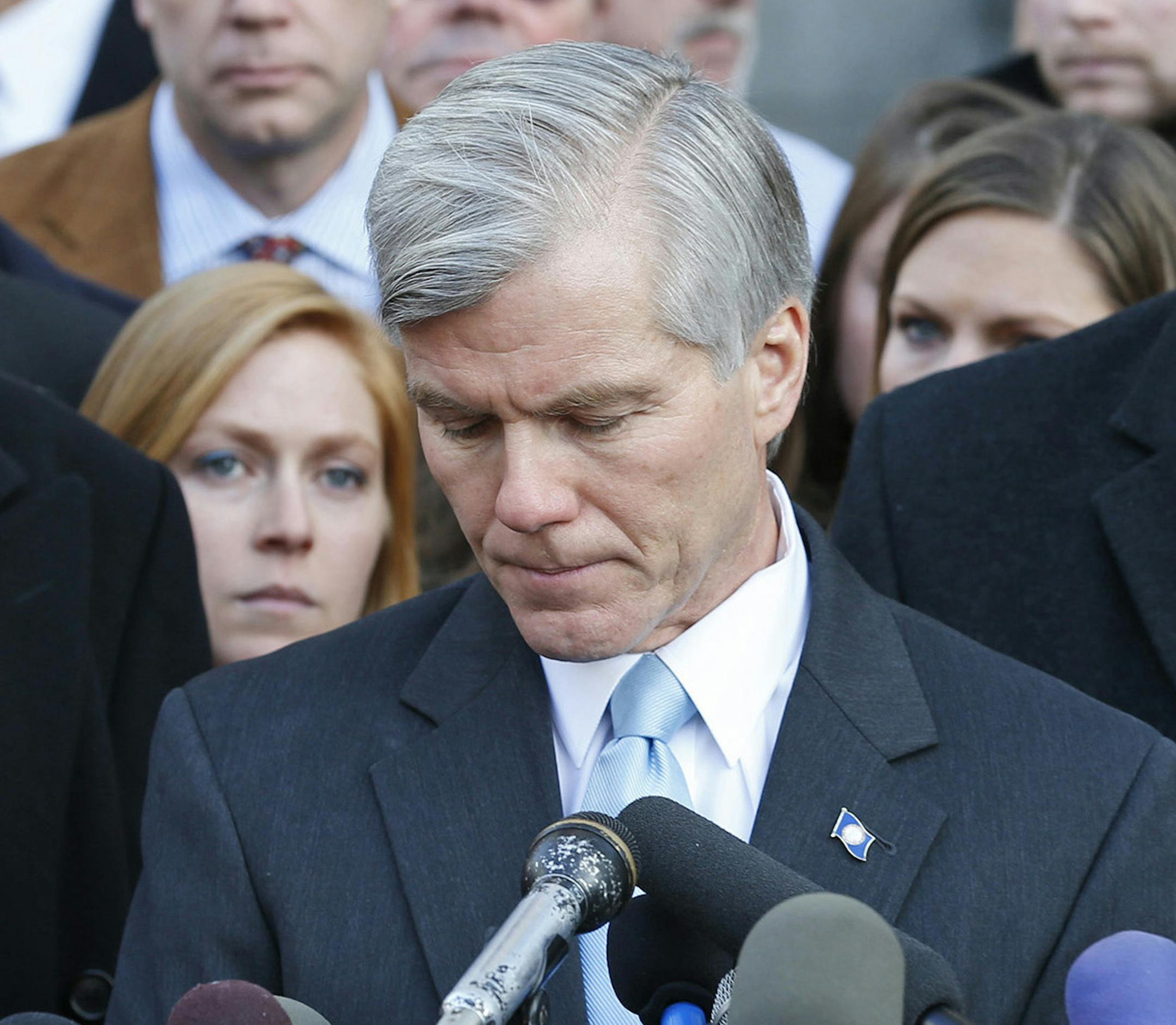
Former Virginia Gov. Bob McDonnell, center, composes himself as he addresses the media outside federal court in Richmond, Va., Tuesday, Jan. 6, 2015. McDonnell was sentenced to two years prison and two years probation in his corruption case. His attorney's Henry Asbill, left and John Brownlee, right, look on. McDonnell is to report to prison by Feb. 9. His wife, who was convicted on eight counts of corruption, will be sentenced Feb. 20. (AP Photo/Steve Helber) ORG XMIT: RIC110
In the case of former Virginia Gov. Robert McDonnell, zealous prosecutors redefined an “official act.” (The Minnesota Star Tribune)
about the writer

about the writer

George F. Will

More from Commentaries

See More
card image
Alex Kormann/The Minnesota Star Tribune

About grand juries and trial juries and the need to uphold the standards of these bulwarks against tyranny.

card image
card image