

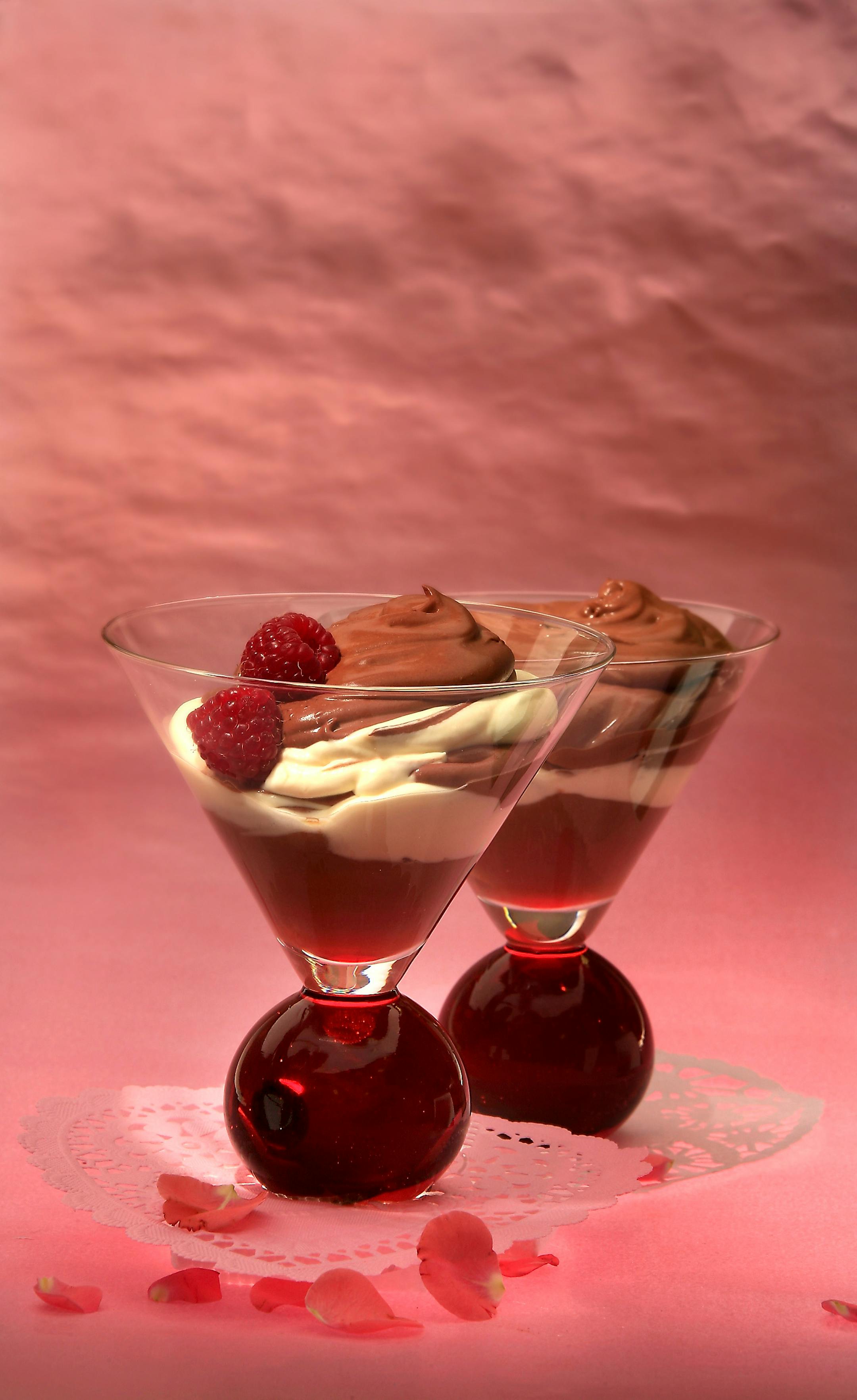
Forget love; I'd rather fall in chocolate. It's more reliable. With a pricey bar of dark smooth chocolate, paradise is but a bite away. The ancient Aztecs had it right. Their god Quetzalcoatl, gardener of paradise, guardian of the cacao tree, was the purveyor of strength and wealth. The cacao bean was used as currency at market and for taxes. On Valentine's Day, the cacao bean buys love. T4 Ø Once the cocoa pods are harvested and roasted, the nibs are extracted and ground into a thick brown paste, the "liquor," noted as "cocoa" when referred to in packaging contents. It then takes the following forms, all of them wonderful:
• Dark chocolate, bittersweet and semisweet describe any sweetened chocolate with at least 35 percent cocoa; the higher the cocoa content, the stronger it tastes. Across the pond, they call it "bittersweet"; here the terms may be used interchangeably.
• Milk chocolate must contain 12 percent milk solids and 10 percent cocoa.
• Unsweetened, baking and bitter chocolate typically contain 50 to 58 percent (sometimes more) cocoa and no sugar.
• Couverture is the term used for professional-quality chocolate that contains a higher content of cocoa butter to produce a glossy coat.
• White chocolate isn't really chocolate at all (containing no chocolate liquor) but a blend of cocoa butter, milk solids, vanilla and sugar.
• Cocoa powder is chocolate without the cocoa butter. Dutch process cocoa powder has been treated with alkaline to counter the harsh, acidic flavor. This makes it a better choice for hot chocolate, although cocoa powder's natural bitterness adds a nice edge to baked goods.
Tips for buying


