I thought I'd seen everything.
Then I discovered a remarkable collection of the world's oldest pictorial art form hiding out in Lompoc, a modest hamlet perched on the wave-dashed coast of California, north of Santa Barbara.
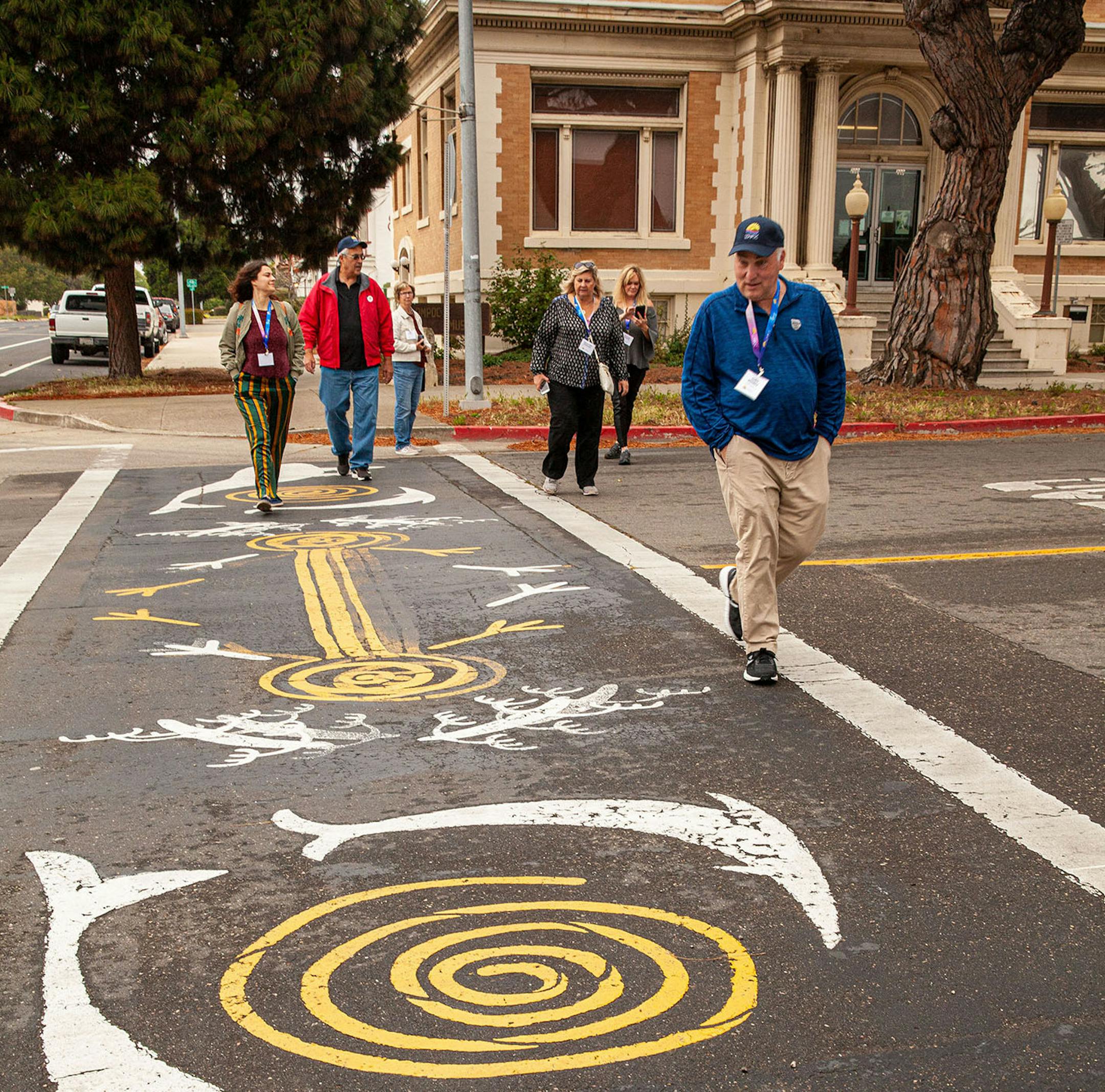
Murals are what I mean: 36 huge paintings on the walls in the Old Town district, an art form whose origins reach back 35,000 years or more to figures drawn on cave walls in Europe and elsewhere.
The who and why of cave art remains a mystery. But not in Lompoc, where the now-famous mural project was launched with a purpose, to revitalize the historic center and attract more tourists.
According to Vicki Andersen, administrator of the Lompoc Mural Society and a painter in her own right, Lompoc needed a boost after 1989, when Vandenberg Air Force Base, the community's biggest employer and customer, shut down the shuttle launch program.
Murals were suggested. But the residents wanted more than a disjointed array of big pictures. Instead, they chose a single theme: the story of Lompoc, from its earliest inhabitants — the Chumash Indians — to the present.
Naysayers wondered if a town of 43,400 people, straddling a rocky shore on a lonely corner of the coastline, had much to tell. But Lompoc surprised them. Taken together — think of them as a contemporary "book of hours" — the murals are as fascinating as any medieval manuscript.
But I'm getting ahead of myself.