

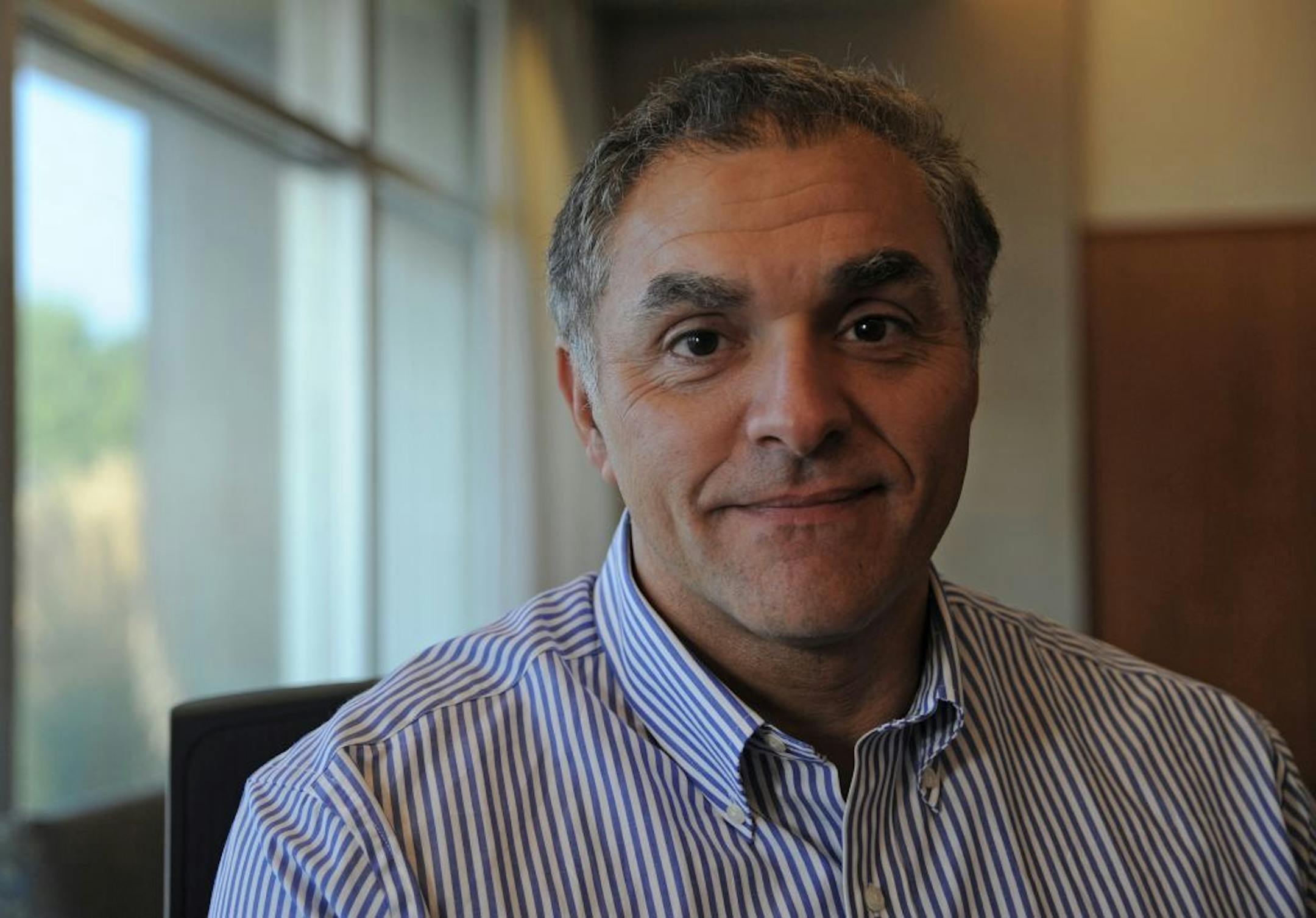
Ilya Gorodisher met scores of Freedom Fighters who took part in the 2011 Libyan Revolution that led to the ousting of Col. Muammar Gaddafi.
Ironically, he's never been to the northern African nation, and he's never met any of them face-to-face. Gorodisher met them through Twitter, and on blogs and Facebook.
With the help of editors on three continents, he collected their heroic and compelling stories about the battles they fought in the streets and how the conflict touched their lives. He tells their stories in a new 221-page book, "Voices 4 Libya."
"I'm incredulous this happened," the Stillwater resident said. "It was never meant to be, but this shows what social media can do."
Gorodisher, 49, jokes that he was "traded for a sack of wheat" when the Helsinki Accord allowed him to emigrate to the United States from his native Soviet Union in 1977. But his early life experience as a Jew behind the Iron Curtain allowed him to empathize with the plight of Libyan citizens who had lived under Gaddafi's tyrannical rule for 42 years.
That drew him to follow the uprising through news accounts on CNN and BBC. He had an insatiable appetite for more, but as coverage waned in the wake of the Japanese earthquake and Fukushima Daiichi nuclear plant meltdown, Gorodisher had to go elsewhere for coverage. He found it on blogs on Al-Jazeera's English network.
He also turned to the Internet and added his voice to blogs and tweets. He soon launched his own website and his clever limericks, which he posted using the screen name Moussa Koussa (Gaddafi's foreign minister), drew a big following. More than 100,000 logged on to www.koussa.info and Gorodisher invited a few of those he exchanged thoughts with on Al Jazeera to post on his protected website.
Within 48 hours stories poured in from civilians, lawyers, clerks, engineers, doctors and students who had stormed a military complex, created makeshift weapons, lost limbs or loved ones in battle, and treated innocent children who were struck by bullets.


