

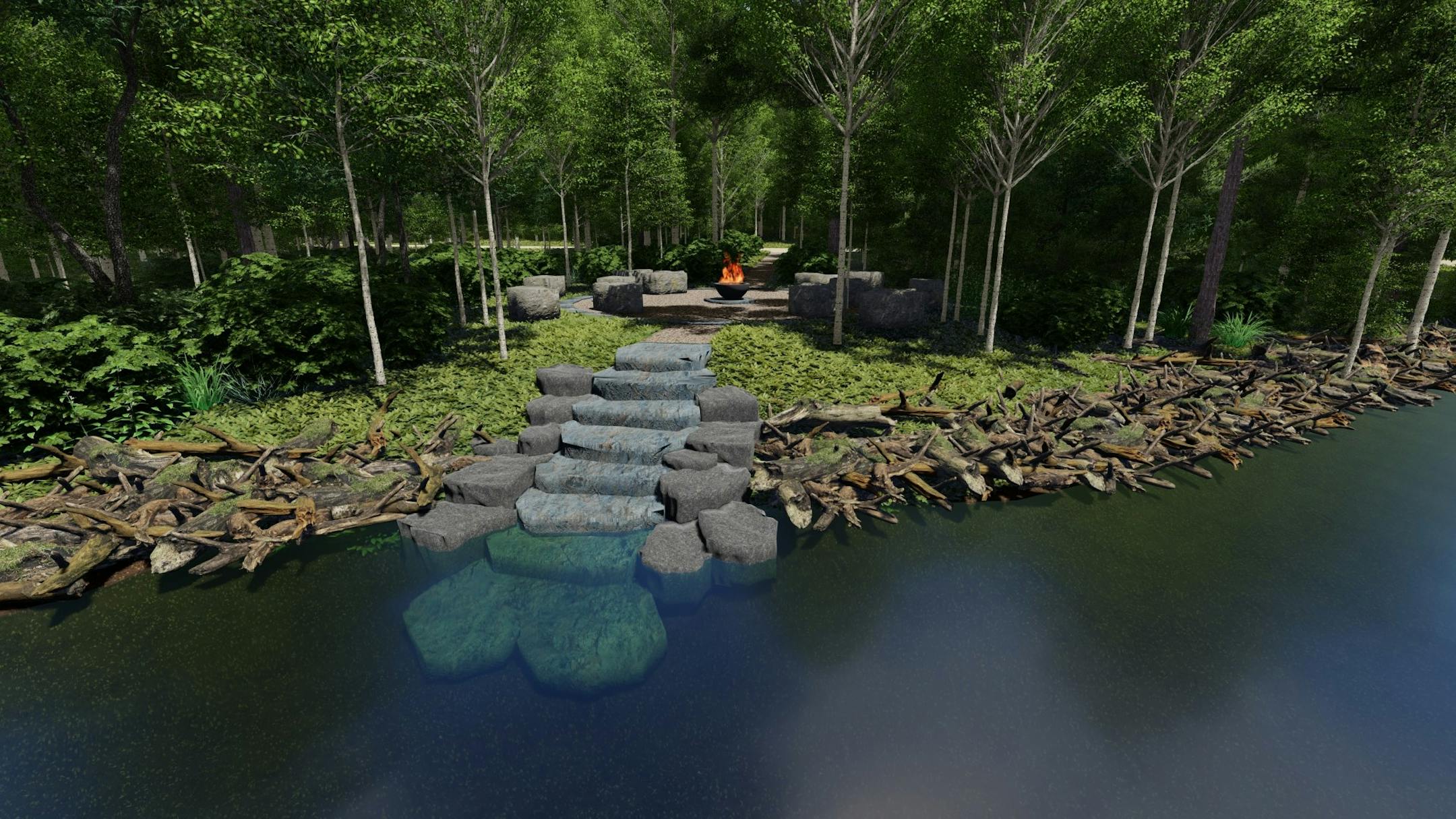
DULUTH — The St. Louis River, a sacred and spiritual place for Anishinaabe and Dakota people, will soon have an outdoor classroom and Indigenous ceremony space alongside it near Munger Landing in the western end of the city.
A water and naming ceremony was held last week near the planned site, a project shared by the Indigenous Women's Water Sisterhood and the city of Duluth.
Water walker Sharon Nagaamoo Ma'aingen Day, who has walked the length of the Mississippi and the St. Louis rivers, named the area Gichi Gami Zibi Zagiswe'iding, or Place Where We Light Our Pipes.
Attendees offered tobacco to the land and faced the river, swollen with spring snowmelt, as Day sang in Ojibwe. Sisterhood member Arianna Northbird returned the ceremonial water to the river and the group shared wild rice and smoked fish in celebration.
"We should have access to all of our sacred spots," Day said, but so many travel through private land. "It's our responsibility as Ojibwe women to take care of the water, the best way we know how."
Grant money awarded to the University of Minnesota from the Andrew W. Mellon Foundation helped pay for the design of the space, which will include a fire pit, stones and interpretive signs. The city is also using grant money to pay for construction. The area will be part of the Waabizheshikana Trail, which will eventually extend 10 miles along the river corridor to Chambers Grove Park/Nagaajiwanaang.
Once pollution remediation is finished at Munger Landing — part of federal Area of Concern legacy cleanup — the city will build the new trail segment and improve the landing with a handicap accessible canoe and kayak launch, a picnic area and restrooms and the ceremonial space. It could be completed by fall of 2024, said Cliff Knettel, a senior parks planner for the city.
Roxanne Biidabinokwe Gould is a member of the Indigenous Women's Water Sisterhood and an associate professor at the University of Minnesota, Duluth. Her research at UMD has focused on Indigenous people, climate change and water scarcity, and the sisterhood focuses on the Lake Superior watershed.


