

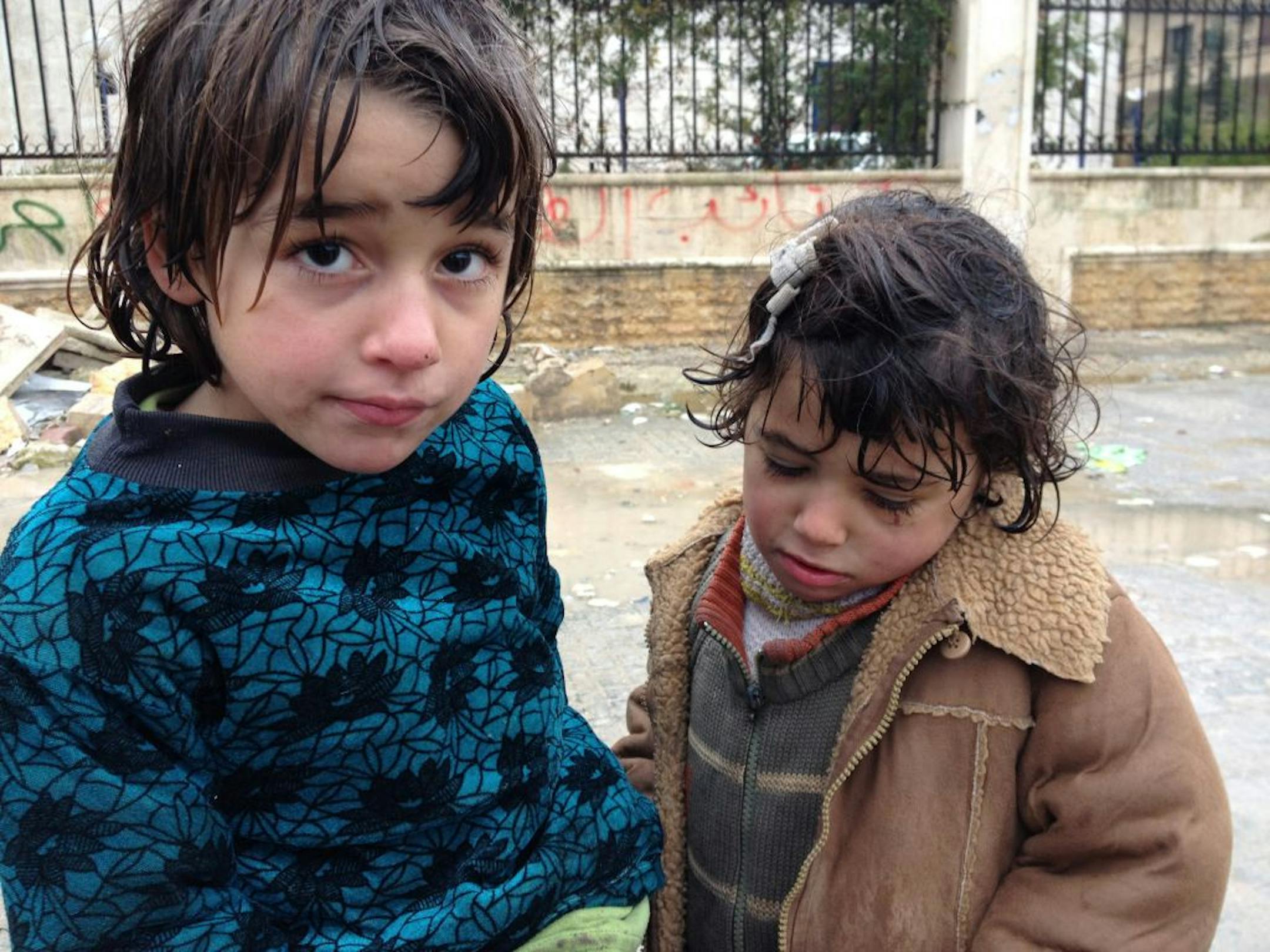
ALEPPO, Syria -- Darkness comes early to the streets of this ancient city, once a symbol of Syria's richly storied past and now at the heart of the deepening nightmare that the country's revolution has become.
By 5 p.m., people are scurrying home, down streets potholed by artillery, past piles of rubble and mountains of garbage that hasn't been collected in months, to spend the evenings huddled in the cold without heat, light or, increasingly, food.
"We just lie under blankets because it is so cold. We have no work, no money and no life," Omar Abu Mohammed, 55, one of the few remaining residents of his badly bombed neighborhood, said as he prepared to head indoors for the night.
"It is time to go now because soon there will be snipers," he added as a shell boomed softly in the distance.
Shells are exploding somewhere in Aleppo most of the time, but after five months of fighting, people have become inured to the ever-present threat. Rain and cloudy skies have deterred warplanes, providing some relief from the airstrikes that can wipe out whole apartment buildings, along with their inhabitants, in an instant.
But the onset of this second winter since Syrians rose up against their government 21 months ago is bringing new calamity to a people already ground down by violence and war. Hunger, cold and disease are emerging as equally profound challenges in the daily struggle that life has become for millions, not only in Aleppo but across Syria, where the quest for greater freedoms sparked by the Arab Spring has gone horribly wrong.
"You can hide from the shelling, but if your child is hungry and there is no bread, what can you do?" asked Abdullah Awuf, 29, a driver who struggles to feed his infant son amid sky-high prices for fuel and food.
Aleppo is not the only place in Syria where conditions are dire. Across the country, reports are emerging of people foraging for food in garbage, stripping buildings for firewood and lining up for hours for scarce bread as the government-run distribution network breaks down.


