WASHINGTON – A flurry of last-minute dealmaking on the Senate floor on Thursday rescued President Obama's ambitious trade agenda from defeat, breaking a filibuster to advance legislation that would empower the president to complete a sweeping, 12-nation Pacific trade accord.
For the second time this month, Democratic opponents nearly brought down a carefully brokered deal to give the president authority to complete a trade accord spanning the Pacific and encompassing 40 percent of the world's economy on products from airplanes to running shoes.
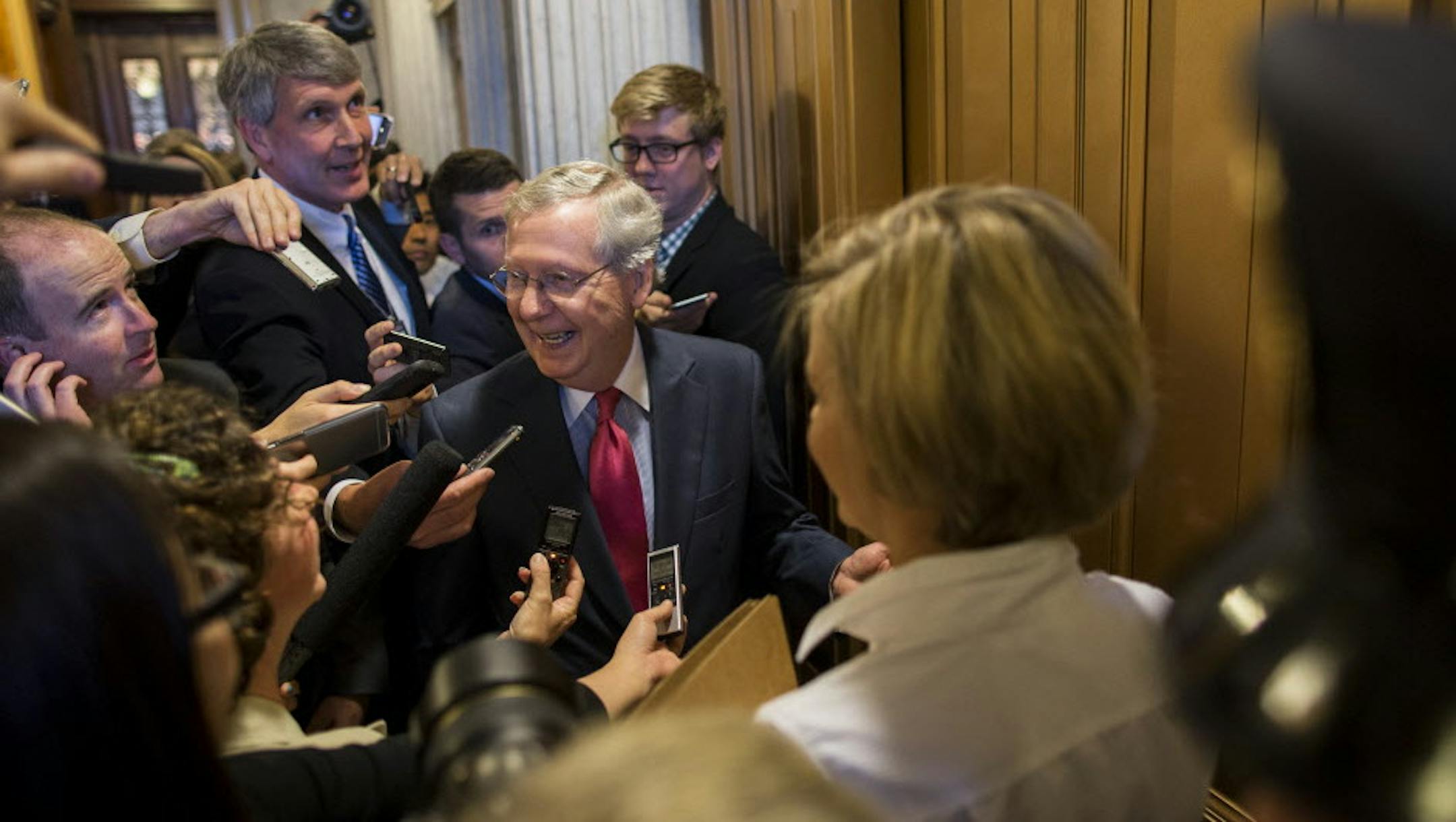
But with the legislation seemingly headed to defeat, Senate Majority Leader Mitch McConnell, R-Ky., began dealmaking, primarily to persuade enough Democrats to support the measure. He agreed to bring an extension of the Export-Import Bank to a vote before its authorization lapses June 30, and he promised Ohio's senators a vote on an amendment to aid the embattled steel industry.
Those deals brought along 62 senators, just above the 60-vote threshold to keep the trade bill from falling to a filibuster.
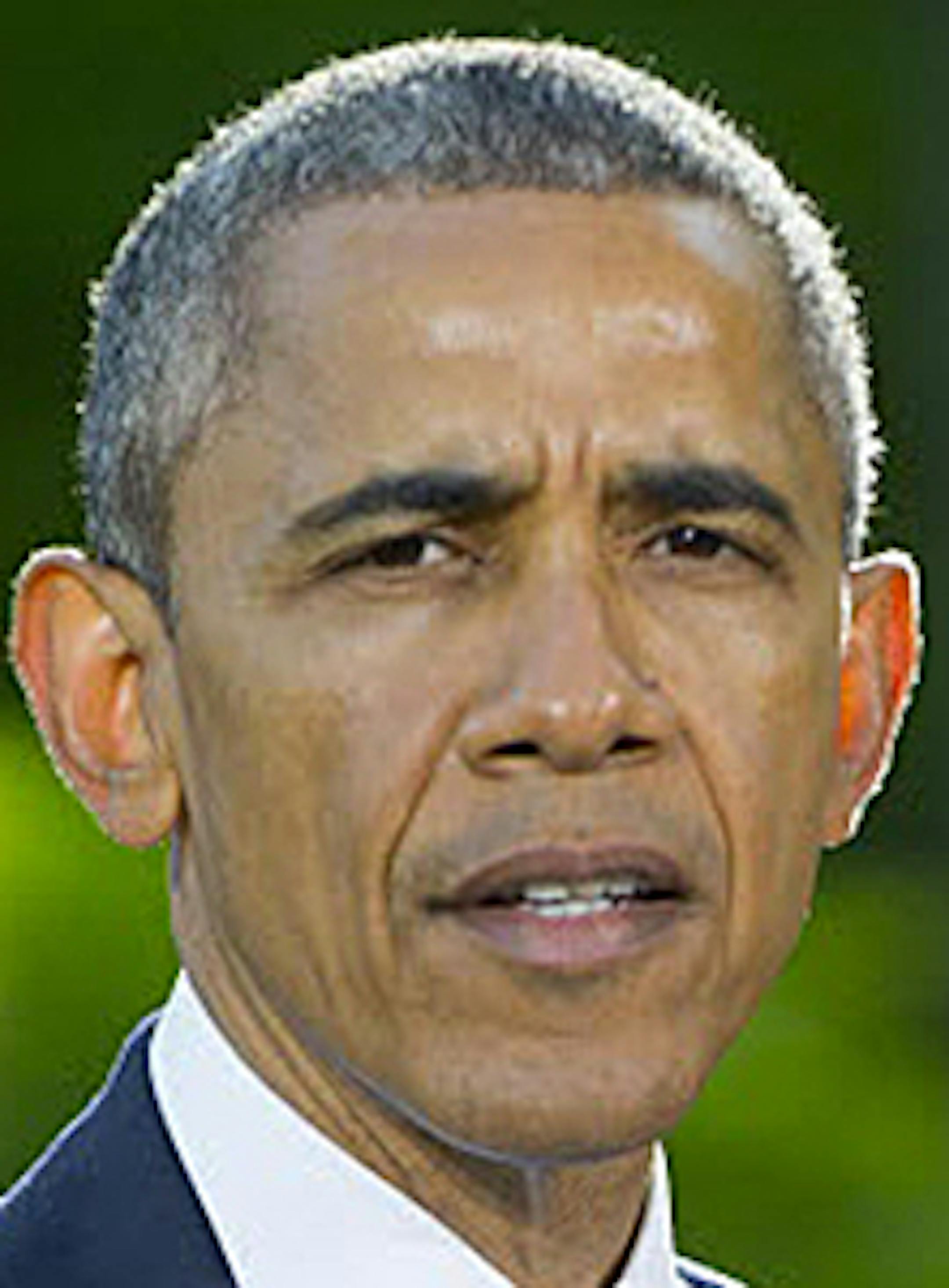
"I want to thank the bipartisan group of senators who took a big step forward this morning on a trade agenda that is consistent with strong labor standards, strong environmental standards and access to markets that too often are closed even as these other countries are selling goods in the United States," Obama told reporters at the White House.
The fate of the trade promotion bill remains in doubt. The Senate must still vote on a series of amendments — some highly contentious — before a final vote on the trade legislation, probably on Friday. If, as is now likely, it passes the Senate, it faces strong, bipartisan opposition in the House.
"We understand we've got work to do," said Rep. Ron Kind, D-Wis., who is leading efforts to round up Democratic votes for trade promotion authority in the House.
Still, Thursday's vote was a high and difficult hurdle. It clearly established that trade negotiating authority has the votes it needs in the Senate, and it vindicated the strategy of McConnell, who strictly limited the number of amendments to the trade bill and jammed it into the last week before the Senate's Memorial Day recess.