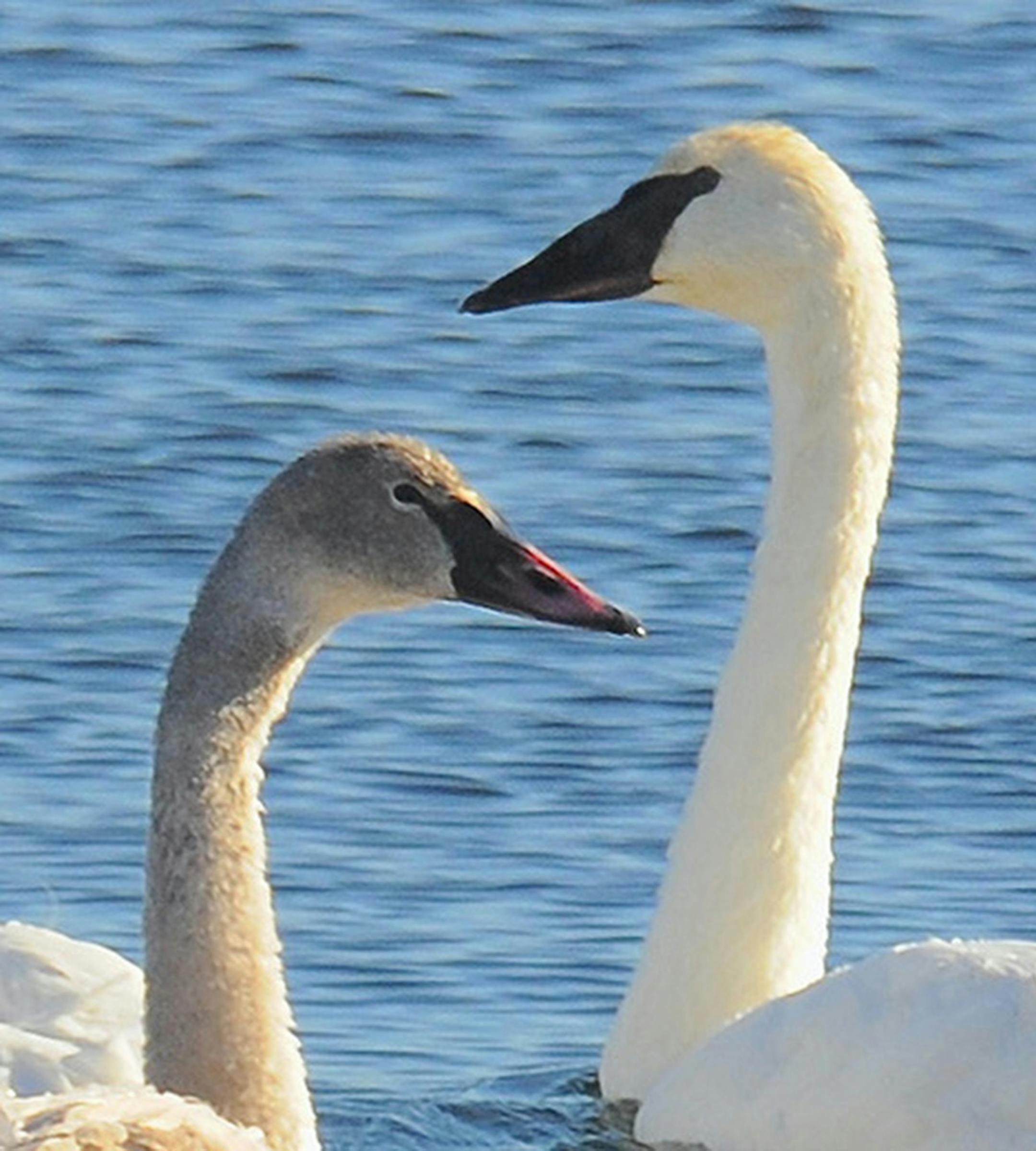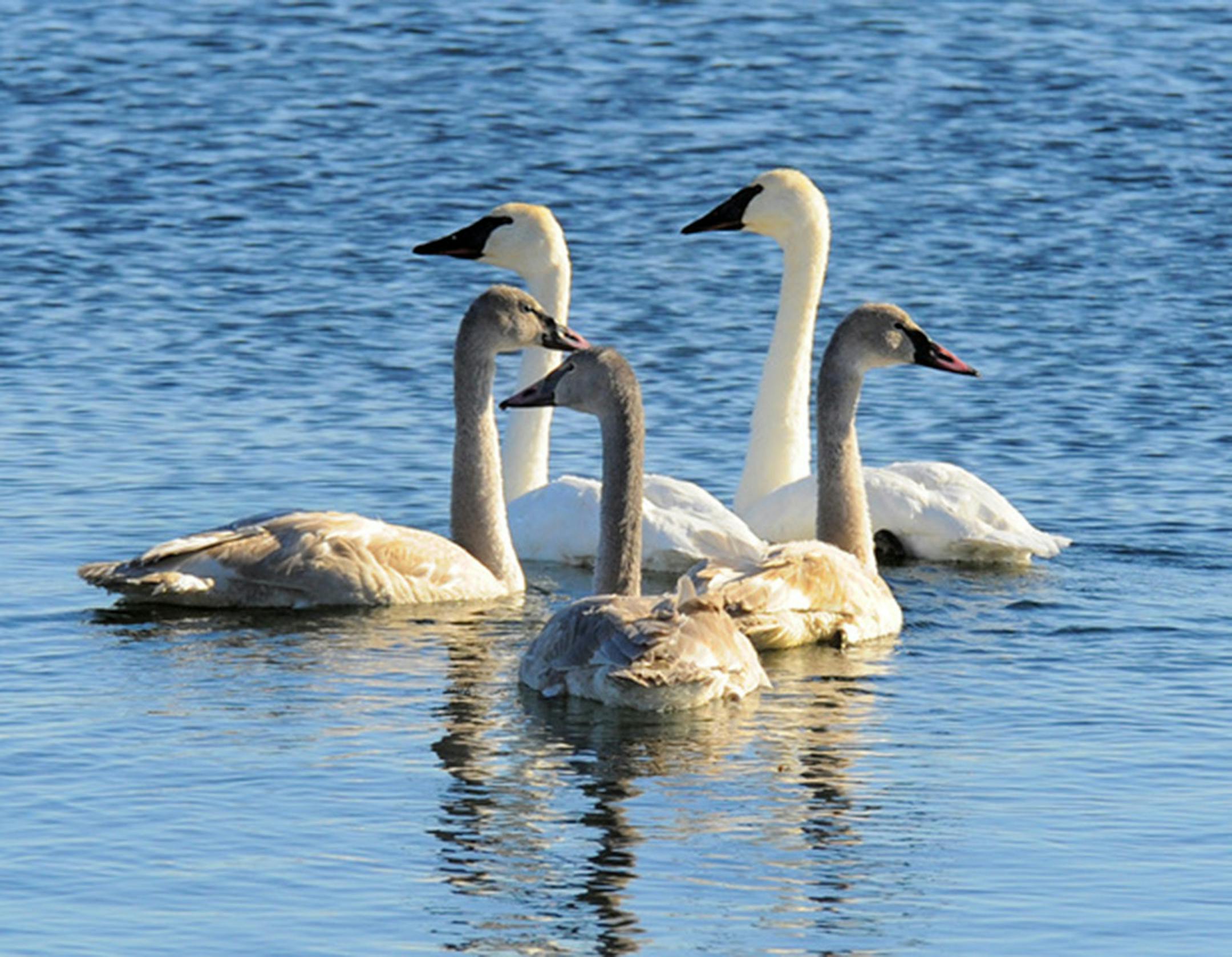
Q: Would it be unusual for swans to have nested right here in Roseville? I thought I saw a swan family on the small lake along Larpenteur Avenue between Rice and Dale streets in early August.
A: I was surprised to learn that swans appear to be nesting in such an urbanized spot, so I contacted several local swan experts for their views. According to David Wolfson, a University of Minnesota doctoral researcher with the Interior Population Trumpeter Swan project, many trumpeter swans nested in the metro area this year.
"While swans seem to avoid lakes and wetlands that have a lot of boating and fishing disturbance, they seem much less picky about people being in the general area," Wolfson noted. Young swans don't gain flight ability until September, so we know the Roseville swan family was on or near its nesting lake.
And Carrol Henderson, who until he retired headed up the DNR's Nongame Wildlife Program, noted that the statewide swan population now numbers around 25,000 to 30,000 trumpeter swans. The fact that swans are raising their cygnets in a suburb "says a lot about the value of preserving wetlands in the metro area," he added.
And it says a lot about the restoration efforts headed up by Henderson at Nongame and staffers at Three Rivers Park District, among others, because about 50 years ago there were no wild trumpeter swans in the state at all.
Is stadium safer?
Q: I contacted you in 2016 about U.S. Bank Stadium and bird casualties from running into the building's glass. Now that we're five years into the stadium's life and about to start the 10th migration season, I'm wondering how things are going with bird mortality.
A: Good, timely question. I contacted Jerry Bahls, with the Audubon Chapter of Minneapolis, which has been pressing for change at the stadium for some years, and he indicated that the ball is in the Minnesota Sports Facilities Authority's court.
A consultant hired by the authority and the Minnesota Vikings studied the issue of bird deaths at the stadium and reported back in November 2019, with three key findings that could benefit birds: reduce night lighting for night-migrating birds, avoid vegetation near glass walls and then the big one — reduce the expanse of untreated glass.